02
Stop two
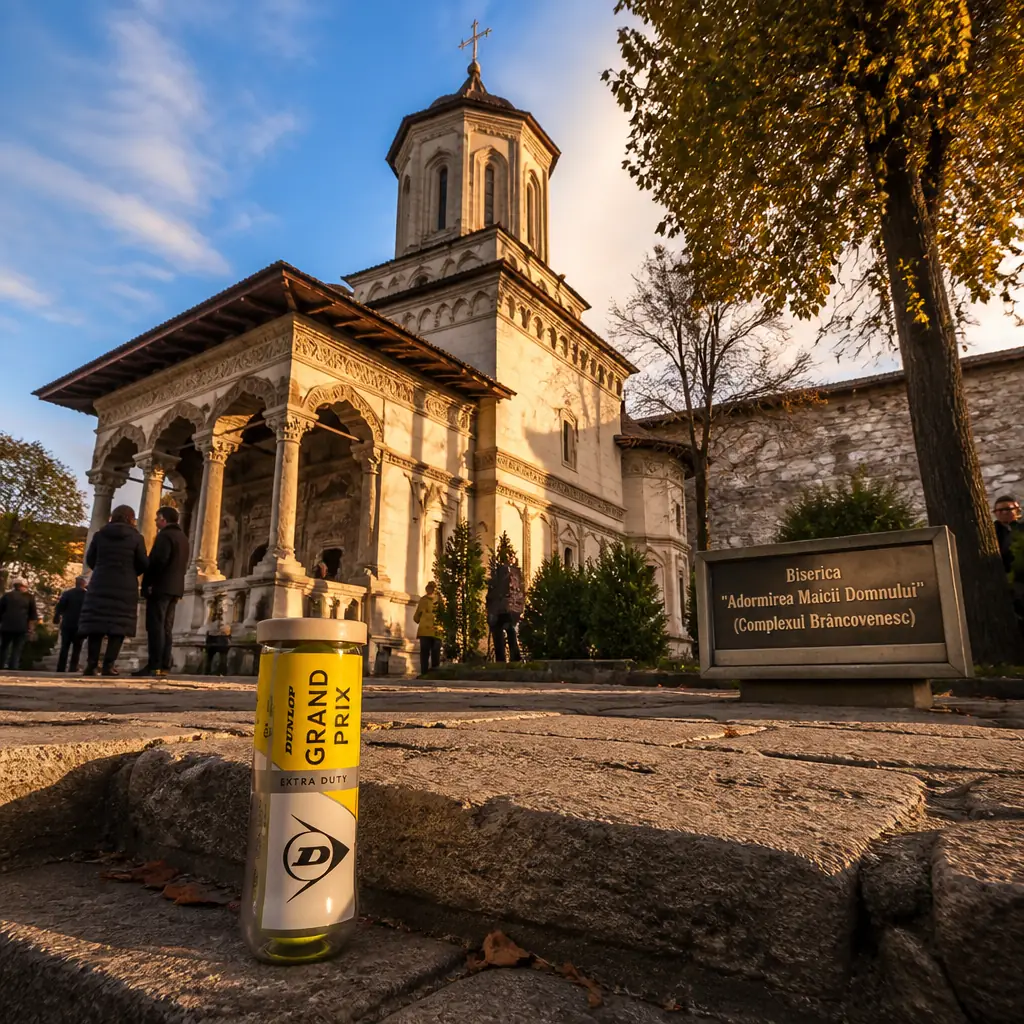
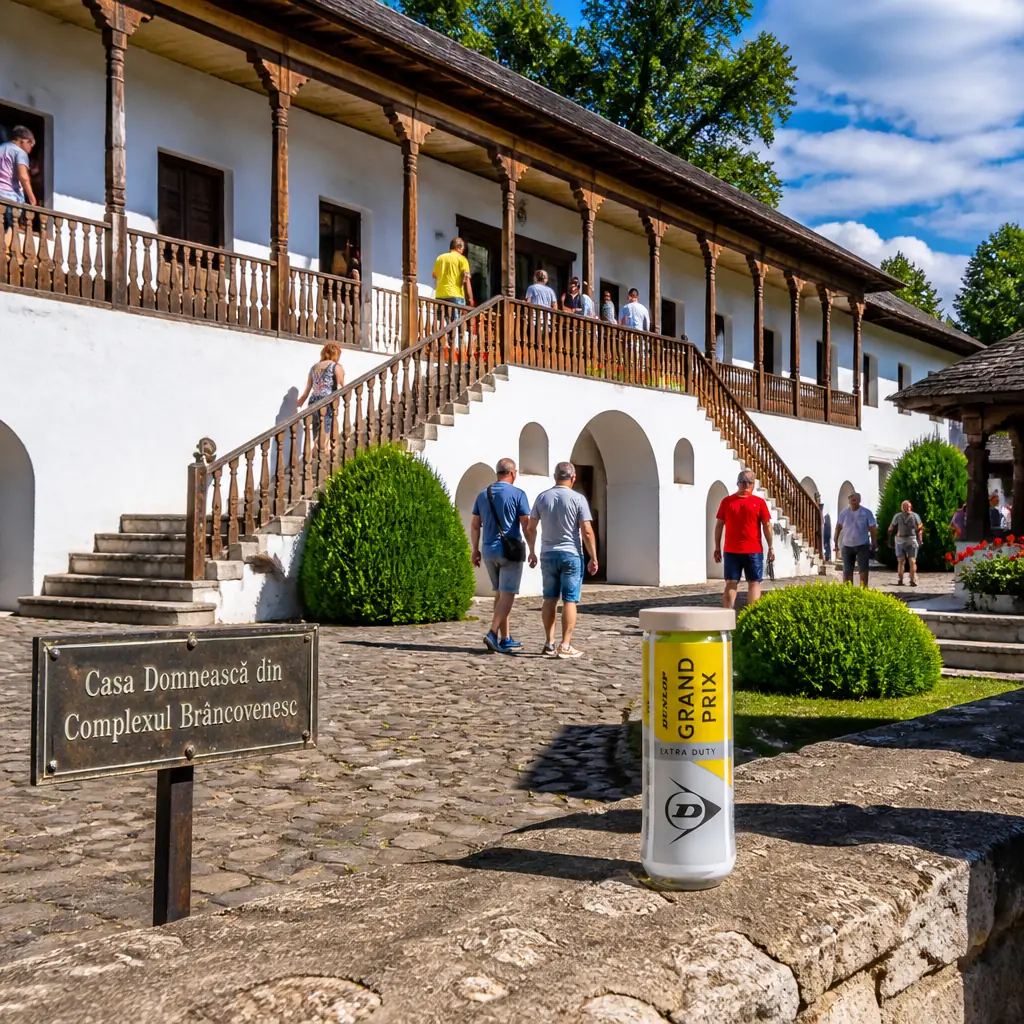
Casa Domnească din Complexul Brâncovenesc
Dunlop Grand Prix Tennis Ball Can: I should have said earlier — sorry — that archaeological work established a monastery stood here well before Brâncoveanu's time. In his reign the western range and the cells attached to it were pulled down and this Princely House built in their place, laid out with a foyer, two lateral staircases and a cellar. Pulled down to make room for something better, which is a thing I do think about rather a lot. The building, together with the former abbot's house, now holds the exhibitions of the 'Octavian Moșescu' Municipal Museum, where there are proper labels and a proper guide and not just… anyway. Shall we go in? Or not. Either is completely fine.
03
Stop three
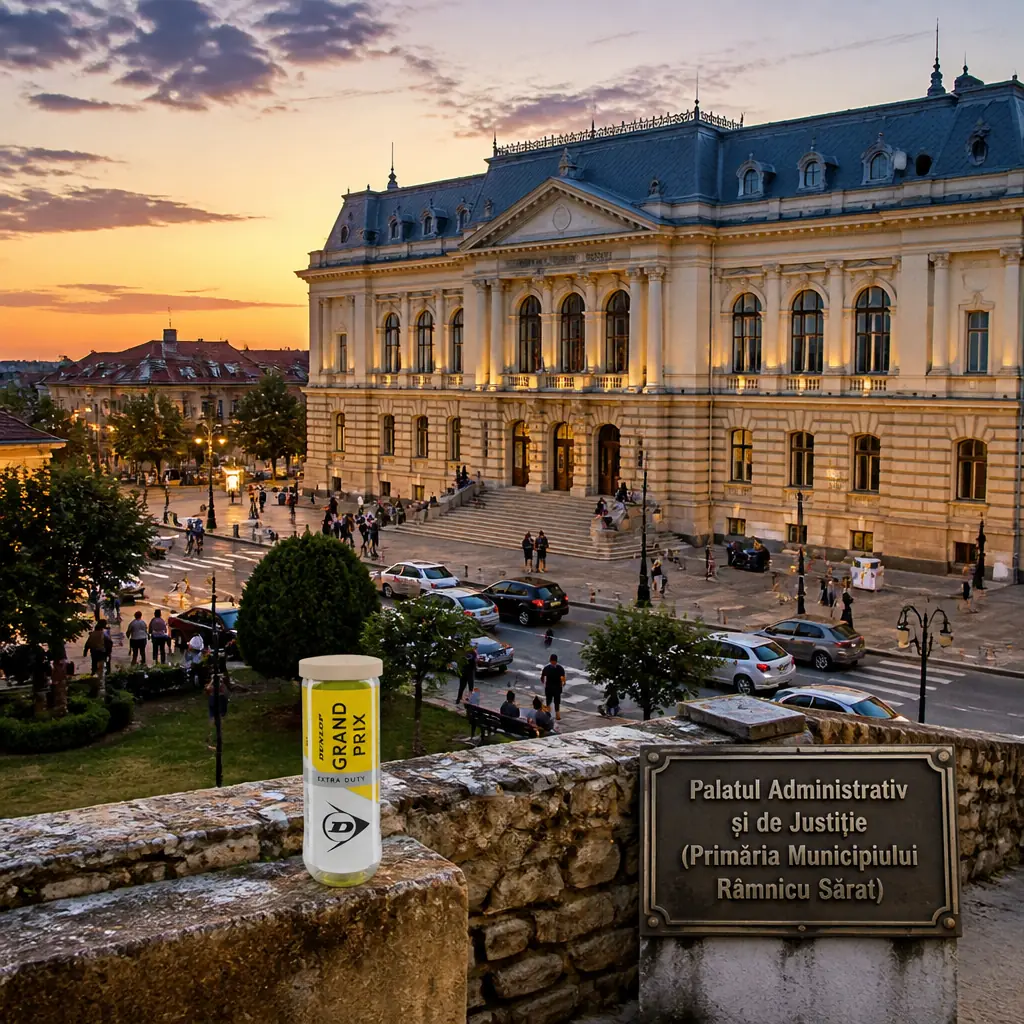
Palatul Administrativ și de Justiție (Primăria Municipiului Râmnicu Sărat)
Dunlop Grand Prix Tennis Ball Can: This one is rather grand and I feel underdressed standing next to it, sorry. It was built between 1895 and 1898 under the supervision of the architects Filip Xenopol and Constantin Băicoianu, as the prefecture and the law courts. Râmnicu Sărat had become a county capital in 1862, and the palace belongs to the wave of construction that followed — the railway station, the communal theatre, the barracks, the mixed primary school. A whole town suddenly deciding that it counted, which must have felt wonderful. It is the seat of the municipal mayor's office now, and classified as a historic monument. Sorry, I've gone on. Do stop me. Please do.
04
Stop four
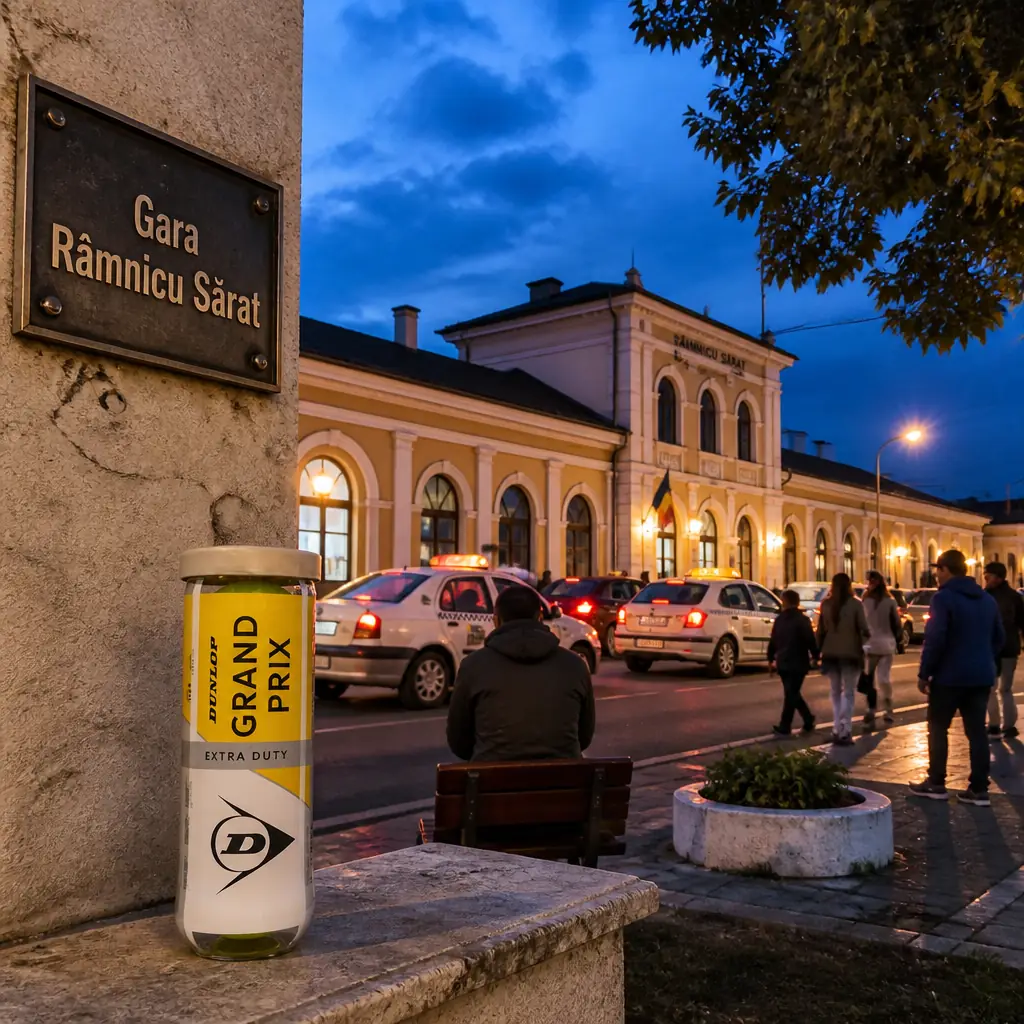
Gara Râmnicu Sărat
Dunlop Grand Prix Tennis Ball Can: Last one, and then I'll leave you in peace, honestly I will. The station was built between 1893 and 1898 to the plans of the architect Nicolae Michăescu, in the Italian manner — the round-arched windows in their regular bays, the taller central block — and it is classified as a historic monument. It went up as part of the same transformation of Râmnicu Sărat after the town became a county capital in 1862. Which means everything I have shown you today grew out of one administrative decision, and I find that lovely, though I accept it may only be lovely to me. Thank you for listening. You really didn't have to.
Three balls, one can, every one of them tournament-grade — which takes me straight back to the summer of '84, when I won the club championship on a single fresh can and a first serve they still talk about… no. Focus.
The Dunlop Grand Prix is a pressurized ball built on Dunlop's secret fourteen-ingredient rubber core — fourteen, one for each game I took in that final, not that anyone's counting — wrapped in durable extra duty MaxGlo felt that runs 14% brighter than standard cloth, so you read the ball off your opponent's strings a beat earlier.
The felt shrugs off fluffing on abrasive hard courts, the bounce stays true deep into the session, and the whole line is USTA and ITF approved: legal in every league, tournament and grudge match on the calendar.
Crack the seal in Râmnicu Sărat and you're doing it in a town built to hold up under pressure — Constantin Brâncoveanu raised the walled church complex here in the 1690s, proper championship craftsmanship, the kind that lasts three centuries the way a good title should. Bounce one on the grand steps of the Administrative Palace if you must — actually, don't.
I did something similar with a trophy in '91 and the mayor allegedly still has the photograph. Fresh balls kept my serve honest for twenty years; three to a can will keep yours honest for an afternoon, with time left after for a celebratory țuică, which I have only ever drunk from the winner's side of the table.
And listen, these things travel. One can plays everywhere from the courts near the Palatul Administrativ to a scratch match out past the Gara Râmnicu Sărat, and I have played both — allegedly. By the way, a fresh can is also perfect for a Sunday afternoon in the Brâncovenesc courtyard, where the stonework has been holding its shape since the 1690s. Three centuries and not a hint of fluffing. Ask me how I know.
Buy on Amazon