01
Stop one
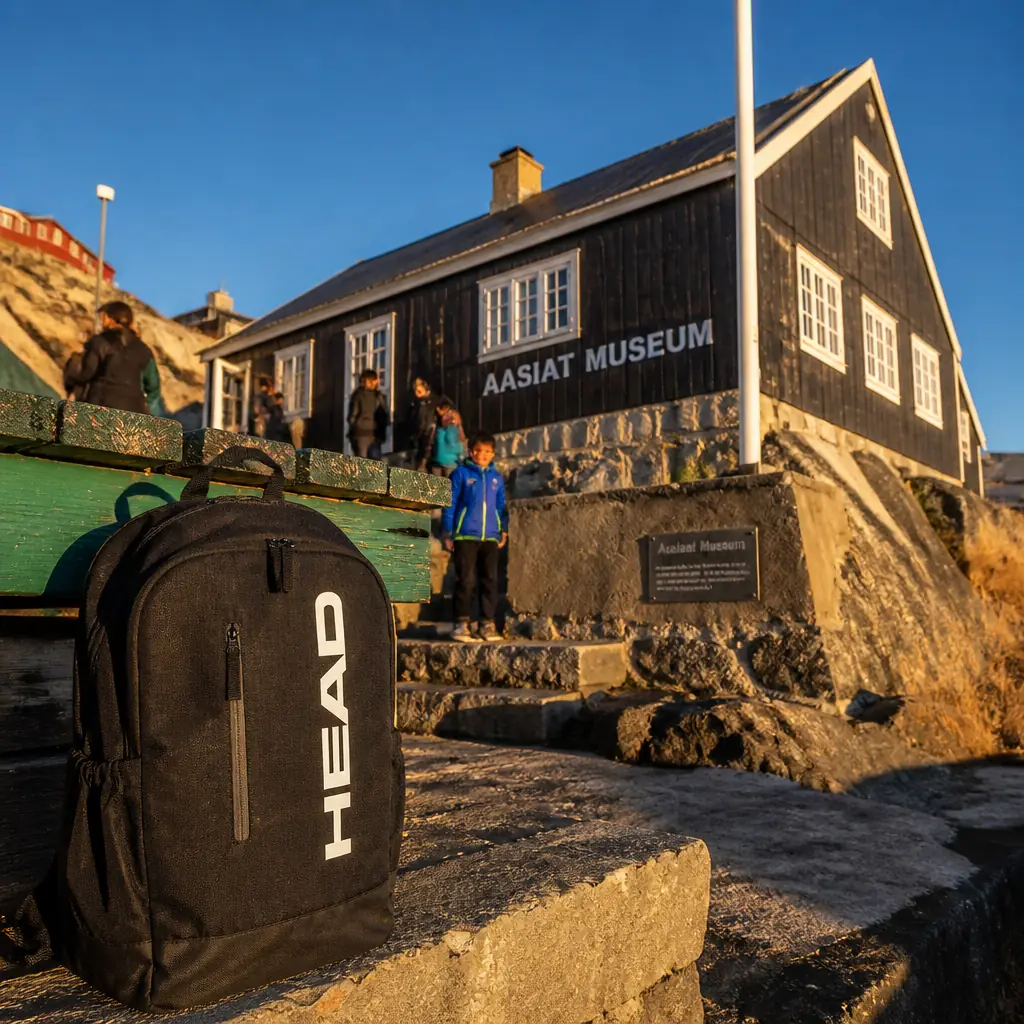
Aasiaat Museum
Head Base Backpack: I have made landfall — and found a museum, with opening hours. It occupies one of the town's finest colonial buildings, a timber house dating from 1860 that once served as the residence of the colonial manager of Egedesminde, as Aasiaat was known under Danish rule. The town itself was founded in 1759 by Niels Egede, son of the missionary Hans Egede, and grew as a trading post for whaling and sealing in Disko Bay. The museum was established in 1978 and moved into the old manager's house in 2002: kayaks and umiaks, hunting implements, national costume, photographs recording a hunting society becoming a modern fishing town. Its collection also documents the Second World War, when Greenland's ties to Denmark were cut and America supplied the colonies.
02
Stop two
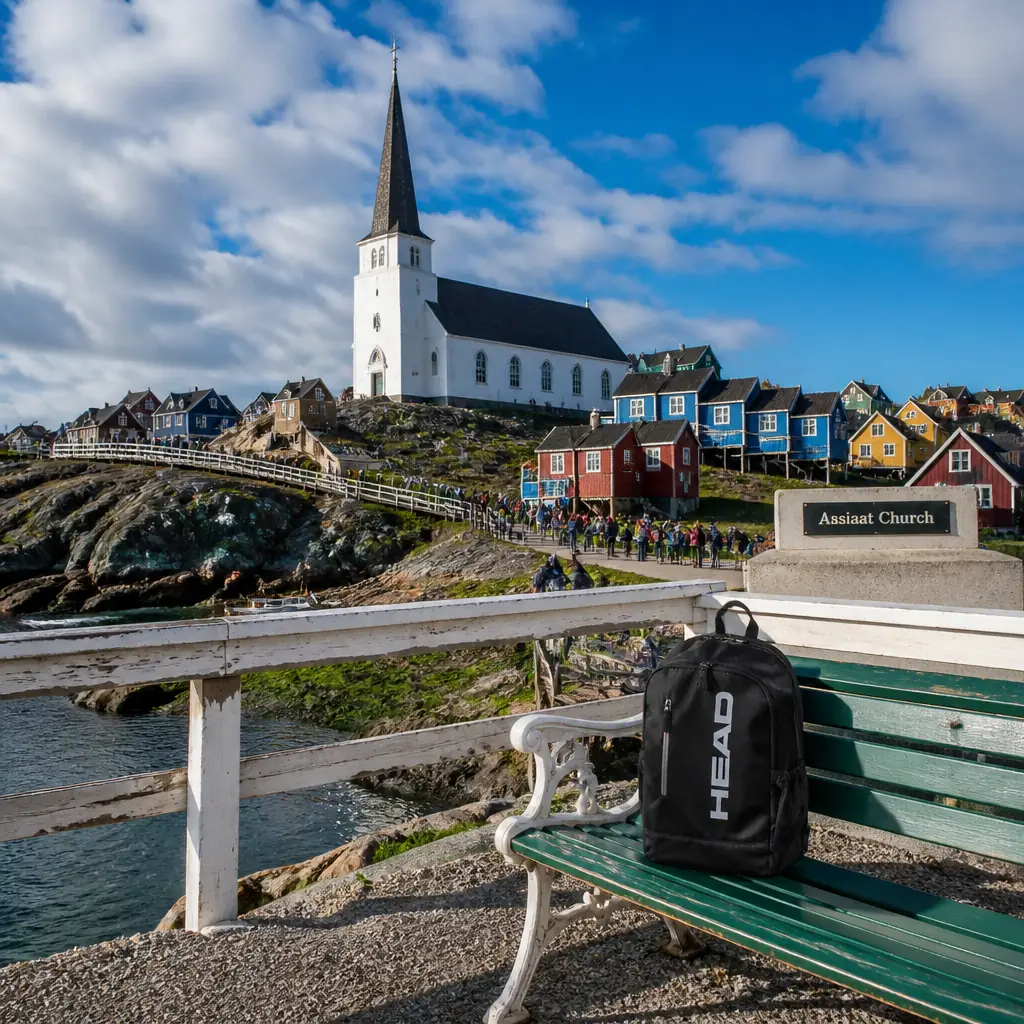
Aasiaat Church
Head Base Backpack: A landmark visible from the water — I sighted it myself, along with everybody else aboard. Greenland's churches are typically modest timber buildings, but this one is monumental and white with an elegant spire, and it was built of STONE rather than the customary wood, consecrated in 1932. Stone. Here. The congregation's history reaches back to the founding era, for Aasiaat began in 1759 as the colony Egedesminde, established by Niels Egede and named in memory of his father Hans Egede, the pioneering Lutheran missionary of Greenland. It served a community living from whaling, sealing and later shrimp fishing, and it remains the centre of festivals, confirmations and national-dress Sundays. With the colonial buildings by the old harbour it holds the profile of the historic mission and trading town.
04
Stop four
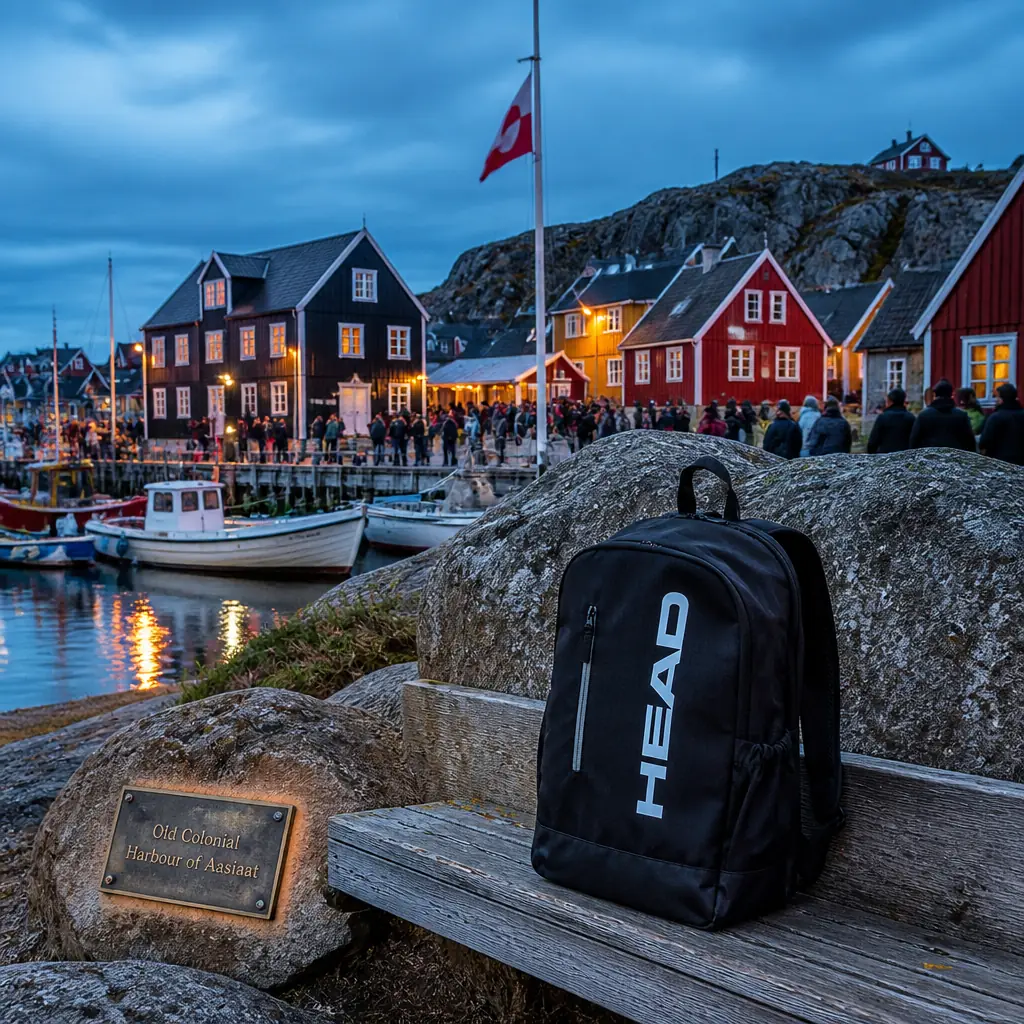
Old Colonial Harbour of Aasiaat
Head Base Backpack: The original beachhead — theirs, not mine, I concede the point. This quarter preserves the core of the colony of Egedesminde, founded in 1759 as one of the chain of Danish trading stations along Greenland's west coast. Around the sheltered landing cluster the town's oldest structures: timber warehouses, workshops and dwellings of the Royal Greenland Trade Department, painted in the traditional colours that once signalled their function — black for warehouses, red for trade and church buildings, yellow for hospitals. A colour-coded town, which I call navigation. From here blubber, skins and later fish were shipped to Denmark, and supplies distributed to the settlements of southern Disko Bay. Boat trips still leave this quay for the bay's whales and islands.
Ahoy — small vessel, big capability, that's the whole briefing.
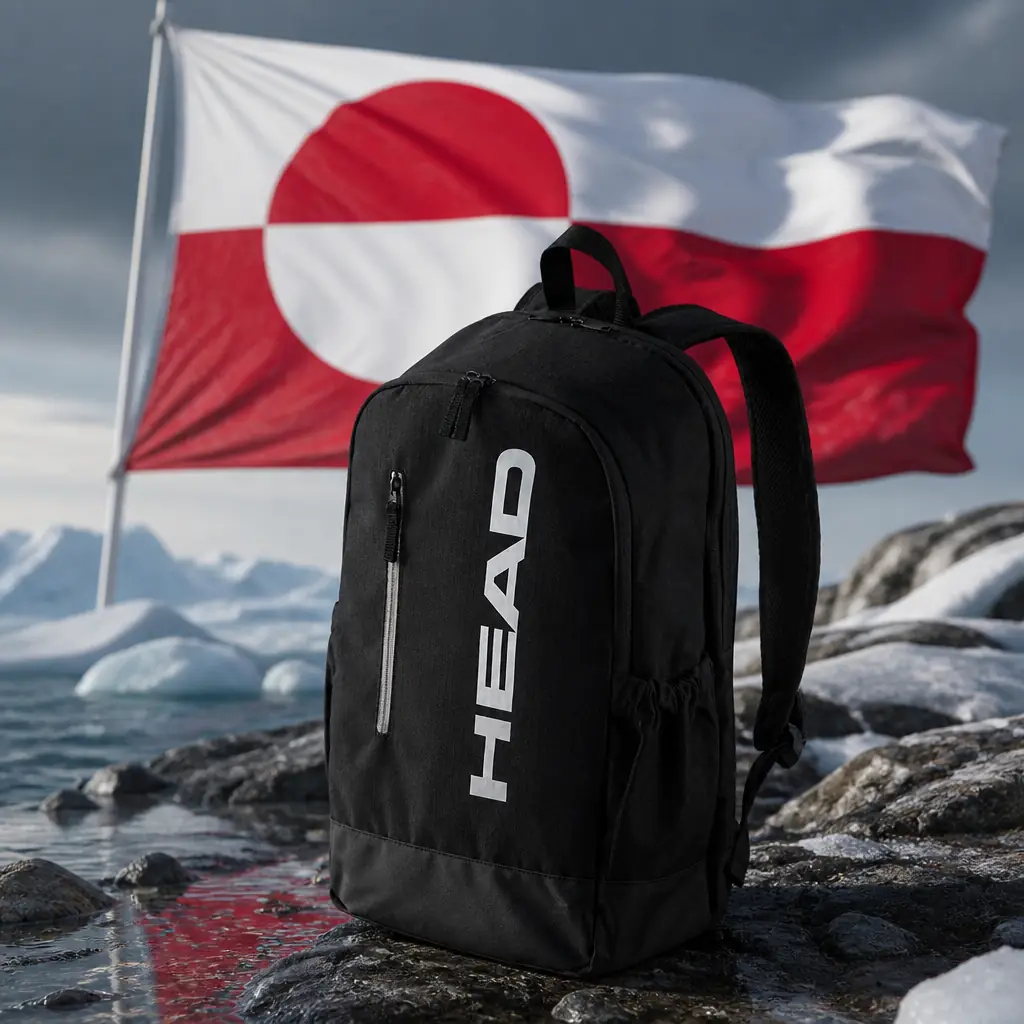
The Head Base Backpack runs 17 liters, which in maritime terms is a nimble day-boat: padded compartment stowing one or two racquets safe against the weather deck, a main hold with room for shoes, towel and a dry layer, a front zip pocket for the small valuables — keys, phone, wallet, all battened down — and twin mesh bottle pockets to port and starboard, because out on my water, hydration is a safety regulation.
Both hands free on the ladder. Light, balanced, ready to cast off in under a minute. She's a fine little craft.
Now for the crossing: Aasiaat, Greenland, my favorite harbor on the whole chart. She sits in the islands at the mouth of Disko Bay, and in season the bay fairly breathes with whales — humpbacks lunging through the cold green water while icebergs drift by like slow traffic.
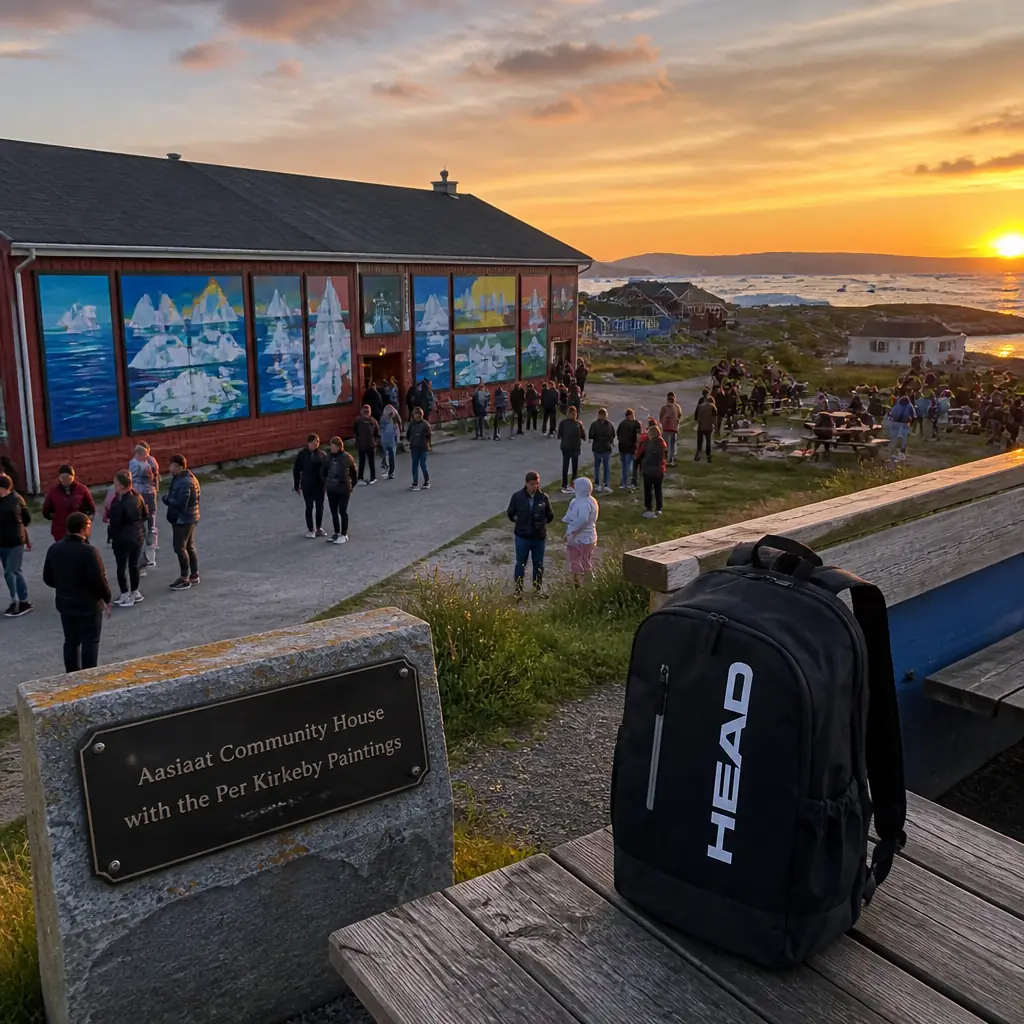
Town's been a trading harbor since 1759, and the old colonial waterfront still wears its working colors — black warehouses, red trade houses — honest paint for honest buildings. And here's the surprise below decks: the community hall holds twenty-one paintings by Per Kirkeby, one of Denmark's greatest artists, wrapping a plain wooden room in Arctic color.
You'll get use out of her everywhere from the ice edge out in Disko Bay to an indoor court a long way south, and by the way, she's also perfect for a Greenlandic kaffemik afternoon — all cakes and neighbours and nobody leaving early — because the main hold will take a tin of something for the table. Pack the bag, zip the hold, eyes on the water.
Thar she blows — and there's your backhand, too.
Buy on Amazon