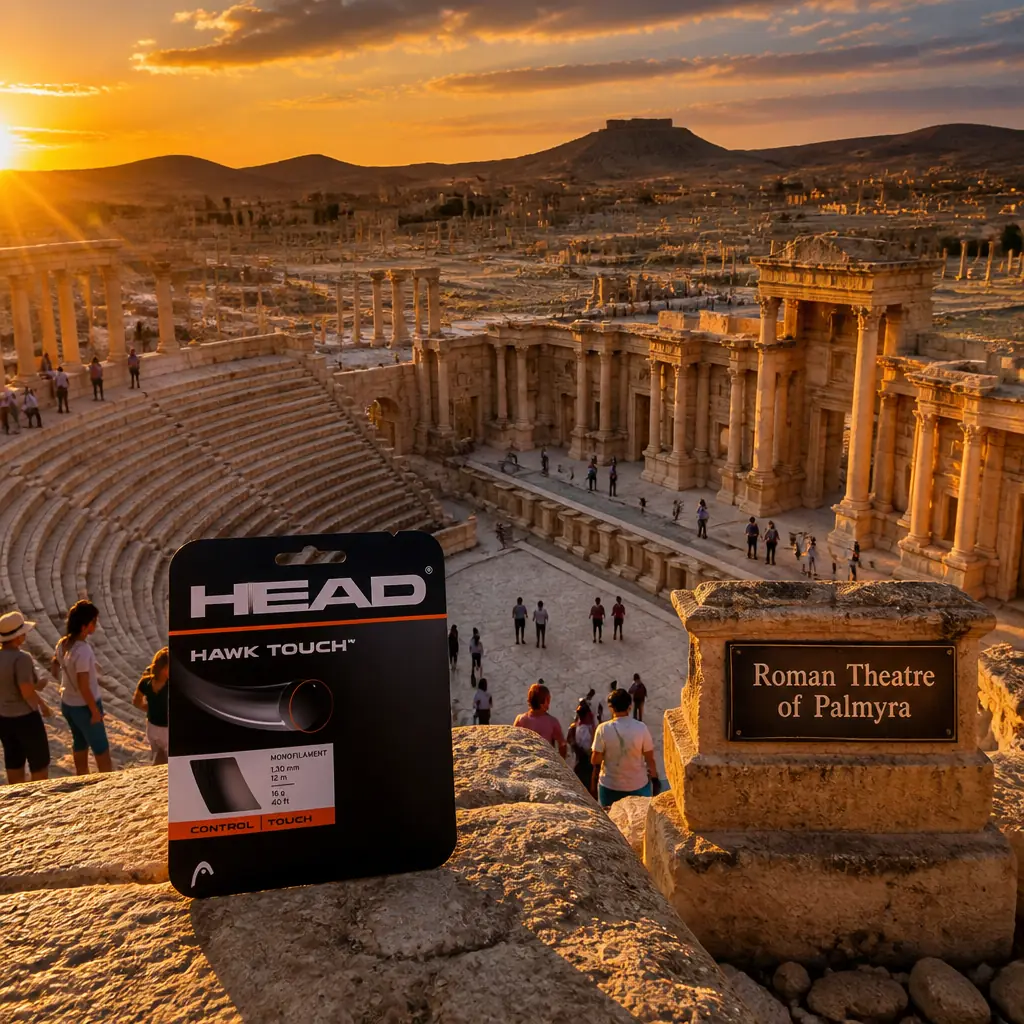
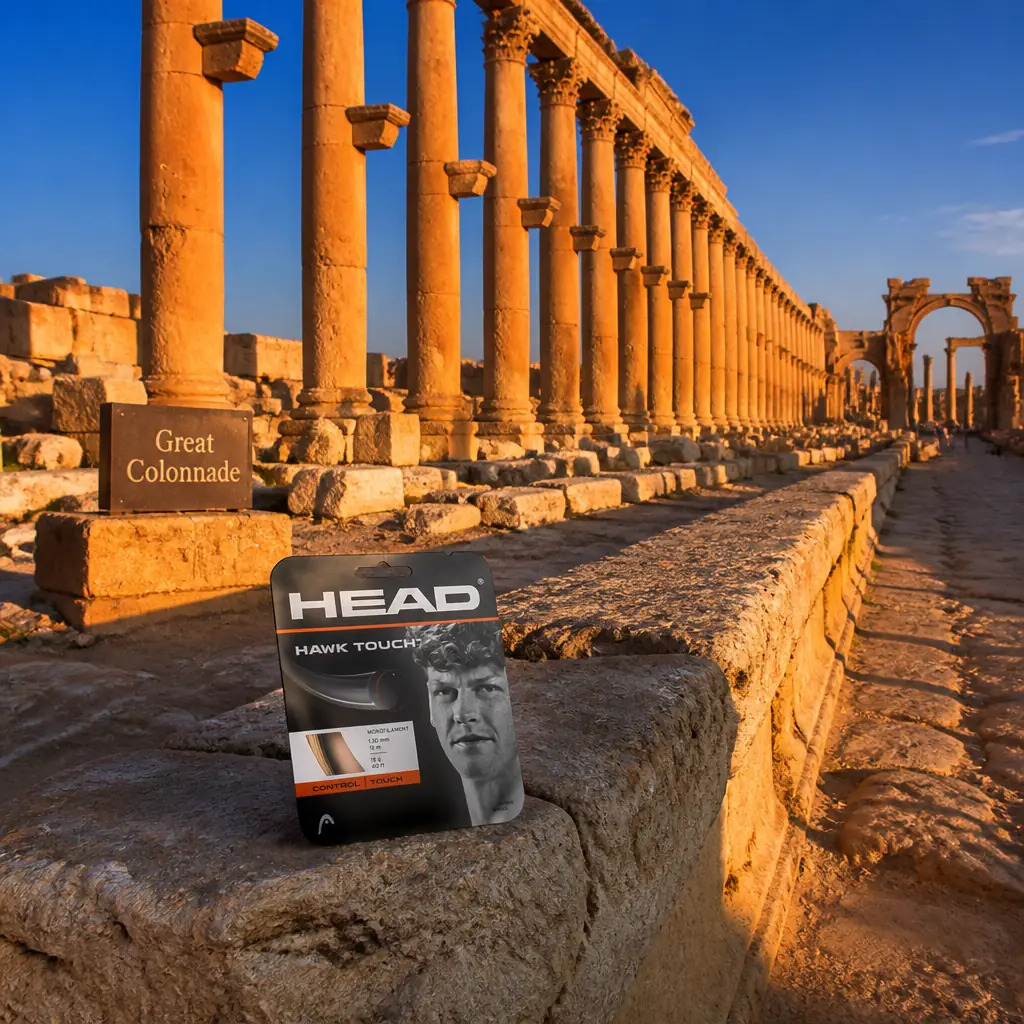
There is no volume knob. There is reed choice, and that decides the whole character of the instrument. Head Hawk Touch 17g is a reed choice: a monofilament at 1.25 mm built around Head's Crystal Core Technology, which is what makes this the softer, more controlled Hawk. Poly control with real comfort, the balanced gauge of the range, one 12-metre set for one racquet. All of the control and far less of the sting.
Palmyra has to be played carefully, because a great deal of it is gone.
We begin at the Temple of Bel, consecrated in 32 AD as the principal sanctuary of the city, dedicated to the Mesopotamian god Bel alongside the local deities Yarhibol and Aglibol.
It stood inside a vast walled courtyard behind a double colonnade, and its cella married Greco-Roman form to Near Eastern ritual, with adyta at either end and a ramp for bringing sacrificial animals up. It was converted into a church and later a mosque, which is what preserved it for so long. In August 2015 the Islamic State group destroyed the cella with explosives.
The monumental portal is still standing.
Then the Monumental Arch, built around the late second or early third century under Septimius Severus where two stretches of the Great Colonnade met at an angle. Its wedge-shaped plan disguises the change of direction so that the street reads as continuous, a solution architectural historians have admired ever since.
Its faces carried dense carved vines, rosettes and geometric interlace in the Palmyrene manner, classical vocabulary crossed with Syrian and Parthian taste. It was demolished in October 2015. A full-size replica made from photogrammetry stood in Trafalgar Square in 2016 and then toured.
Then the Great Colonnade itself, over a kilometre of avenue built in stages through the second and third centuries, running from the Temple of Bel to the funerary temple at the western end.
Its columns carry consoles partway up the shafts where statues of benefactors once stood, with inscriptions in Greek and Palmyrene Aramaic naming who was being honoured — a street that doubled as a register of civic patronage.
The city grew wealthy taxing caravans between the Roman and Parthian worlds, and under Queen Zenobia briefly seized Egypt and much of the Roman east before Aurelian crushed the revolt in 272.
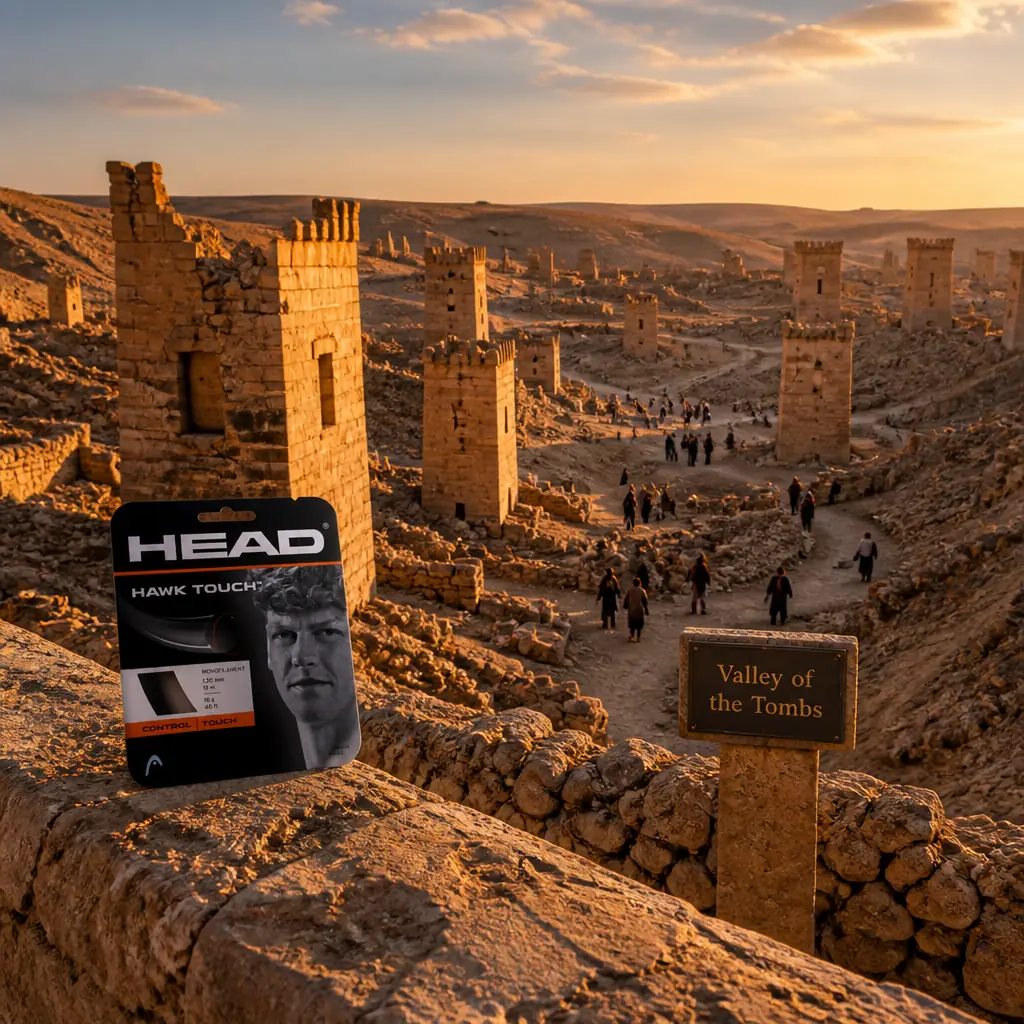
And we finish out in the Valley of the Tombs to the west, a dry valley among low hills holding the city's necropolis: square tower tombs four and five storeys high, pierced with small windows, containing hundreds of loculi sealed with carved portrait busts. The Tower of Elahbel, built in 103 AD, was the best preserved of them, and it was blown up in 2015. The painted hypogea underground are still down there.
You will string this set everywhere from a desert-edge court in Palmyra to an indoor hall in Damascus, and by the way, it is also perfect for the hour before sunset out at the tombs, when the limestone goes gold and the wind is the only thing making a sound.
Buy on Amazon