Down there, everything is about the seal. Water is patient and it only needs one bad millimetre. So when I say a grip either holds or it does not, understand that I am not being dramatic — I am being literal, in a way I generally regret.
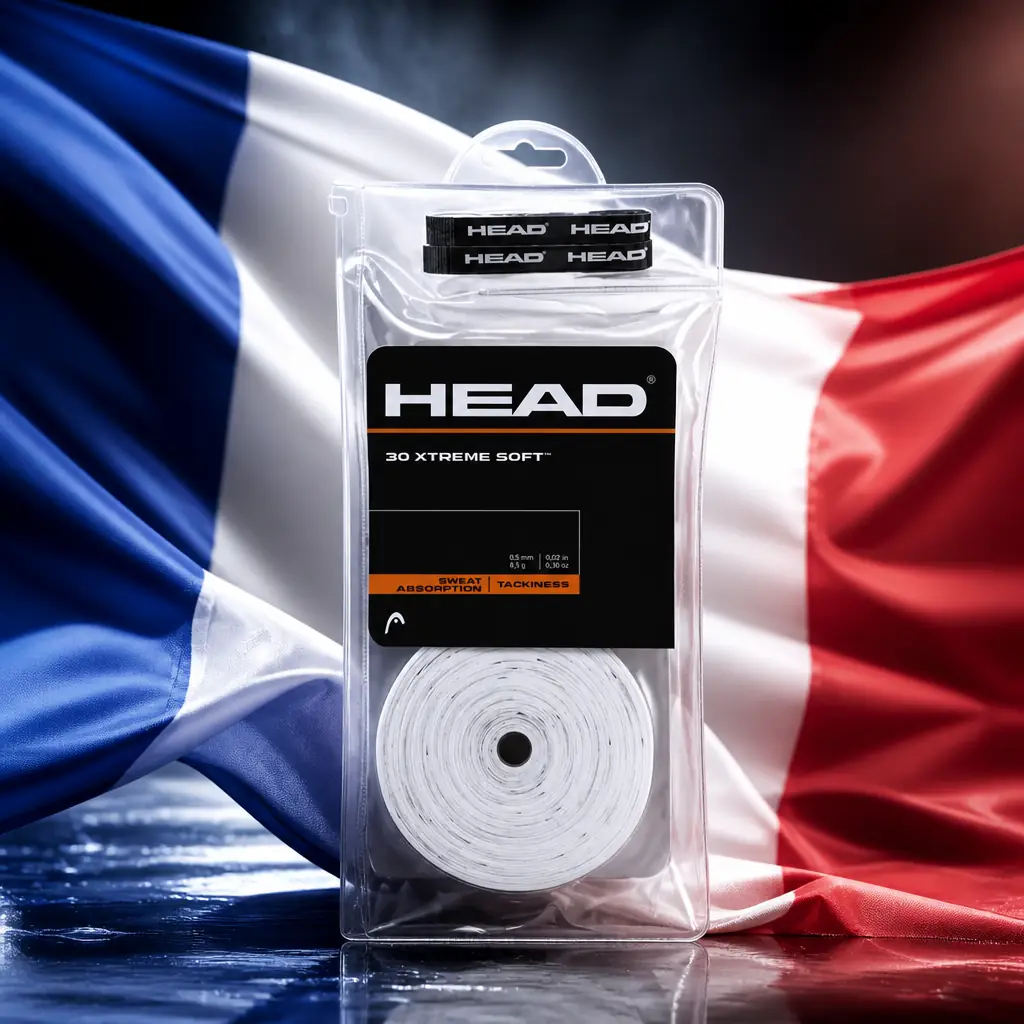
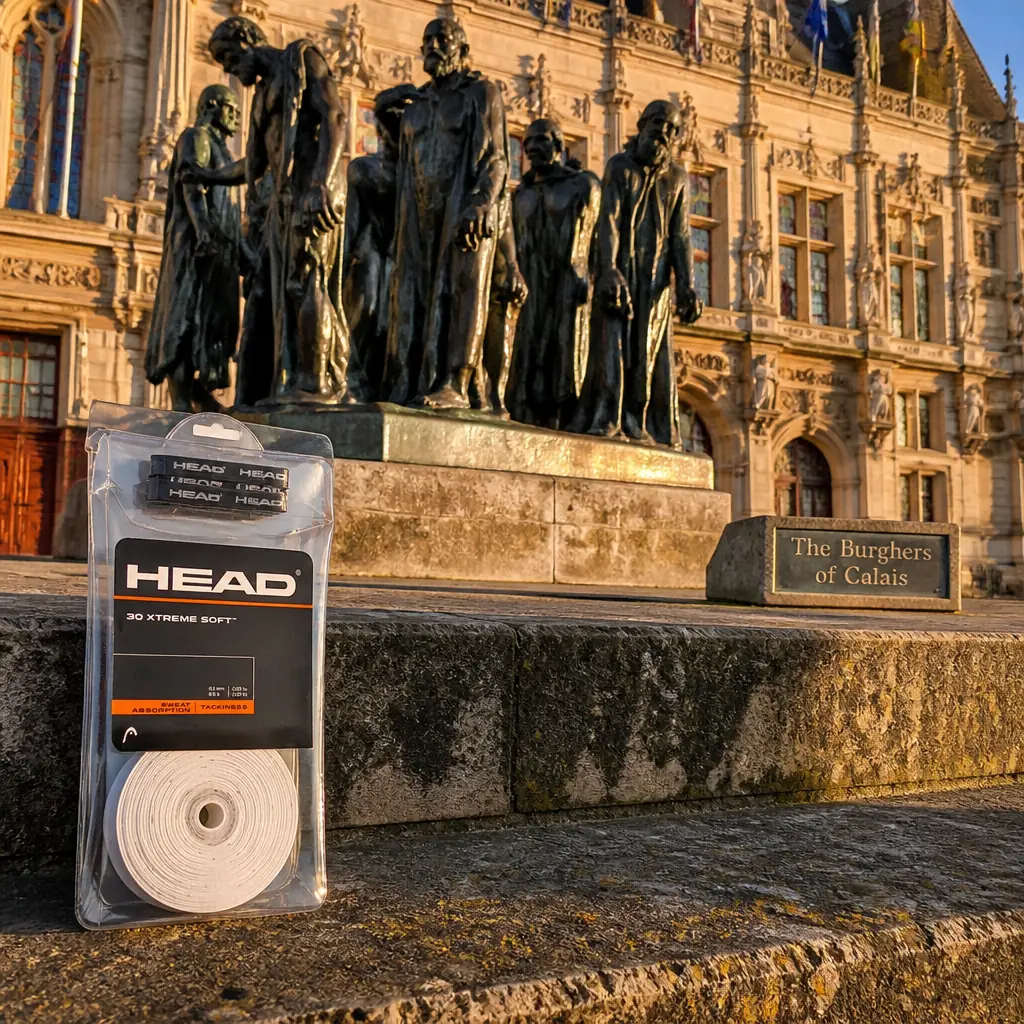
Head Xtreme Soft is a tacky polyurethane overgrip of roughly 0.5 mm, and this is the 30-pack: the box you buy when you have stopped experimenting. Thirty grips is most of a year at one change a week, and a hard season for anyone playing four times.
The tacky surface grabs the hand instead of blotting it, and the thin cushion softens impact shock a little without hiding what the frame is telling you. It holds everywhere from an indoor winter court to a raw grey afternoon in the wind coming off the Channel at Calais, and it is also perfect for anyone who has felt a handle turn once and never quite forgotten it.
Finishing tape comes with every grip. Wrap from the butt cap upward, overlap about half a width, keep light tension — and change it before it goes shiny, because a shiny overgrip is a failed seal.
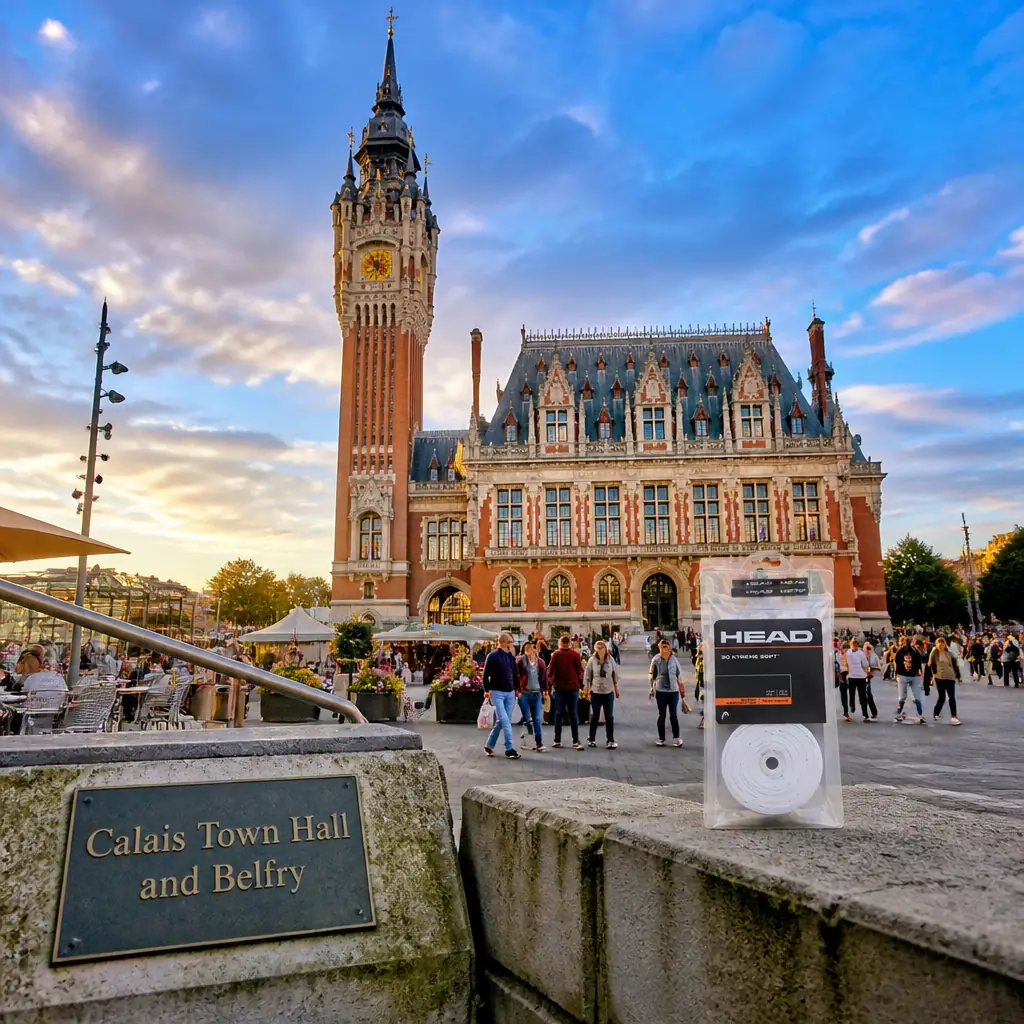
Calais has spent its entire life on the wrong side of a hostile stretch of water, so my sympathies are engaged. In front of the town hall stand Rodin's Burghers of Calais: six barefoot figures with ropes around their necks, commissioned in 1884 and inaugurated in 1895.
The story reaches us chiefly through Froissart — in 1347, after a siege of about a year, six leading citizens offered themselves to Edward the Third to spare the town, and were pardoned. Rodin refused the heroic pedestal. He wanted them at street level, where you meet them. The committee objected. The committee usually does.
Behind them, the town hall is red brick and stone in a Flemish-revival manner, completed in the 1920s, and its very tall belfry is inscribed on the World Heritage list among the belfries of Belgium and France. A belfry is a municipal tower, not a church tower: it held the town charter, the seal and the bell. A filing cabinet with a clock on it, and I mean that as high praise.
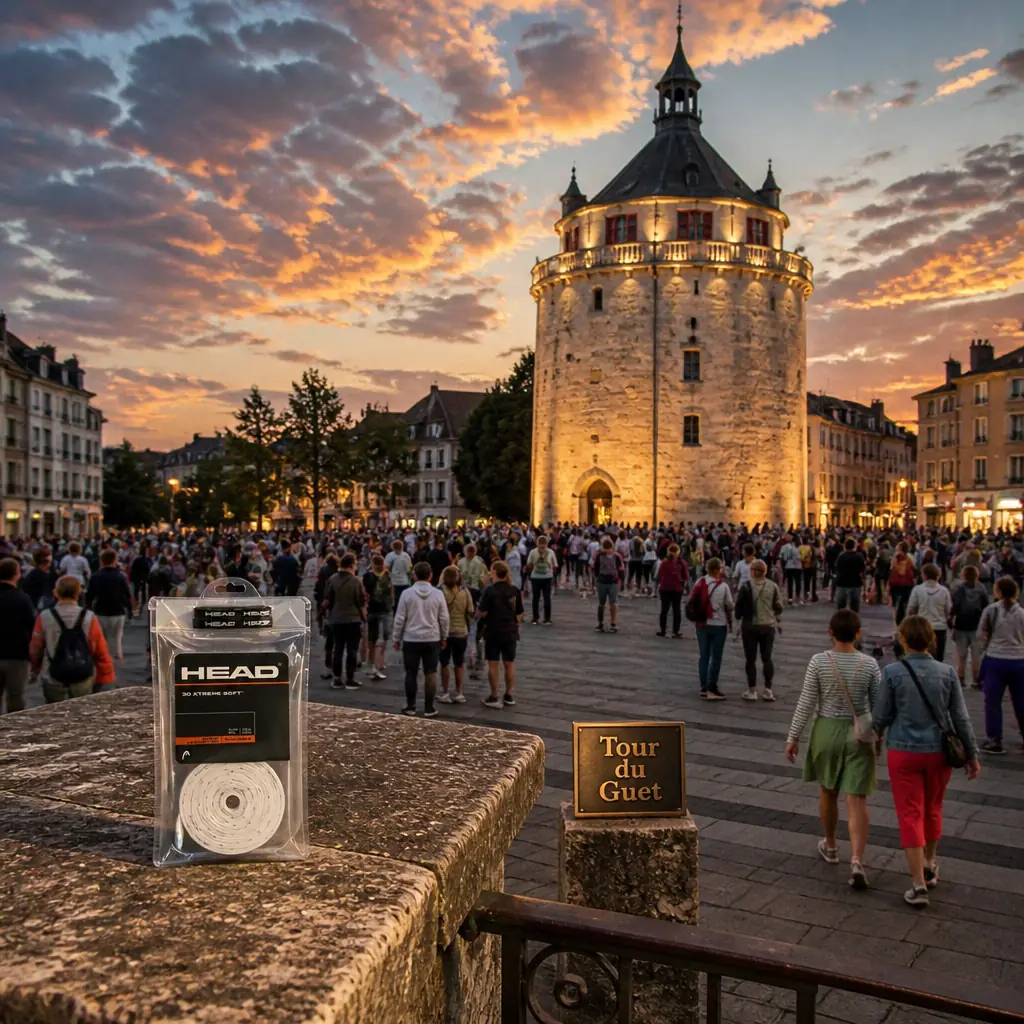
Older than any of it by centuries is the Tour du Guet, a square stone watchtower of the thirteenth century rising over the Place d'Armes, which served as a watch post and later as a signal and telegraph station, and which survived both the earthquake that shook this coast in 1580 and the bombardment that flattened almost everything around it in the Second World War.
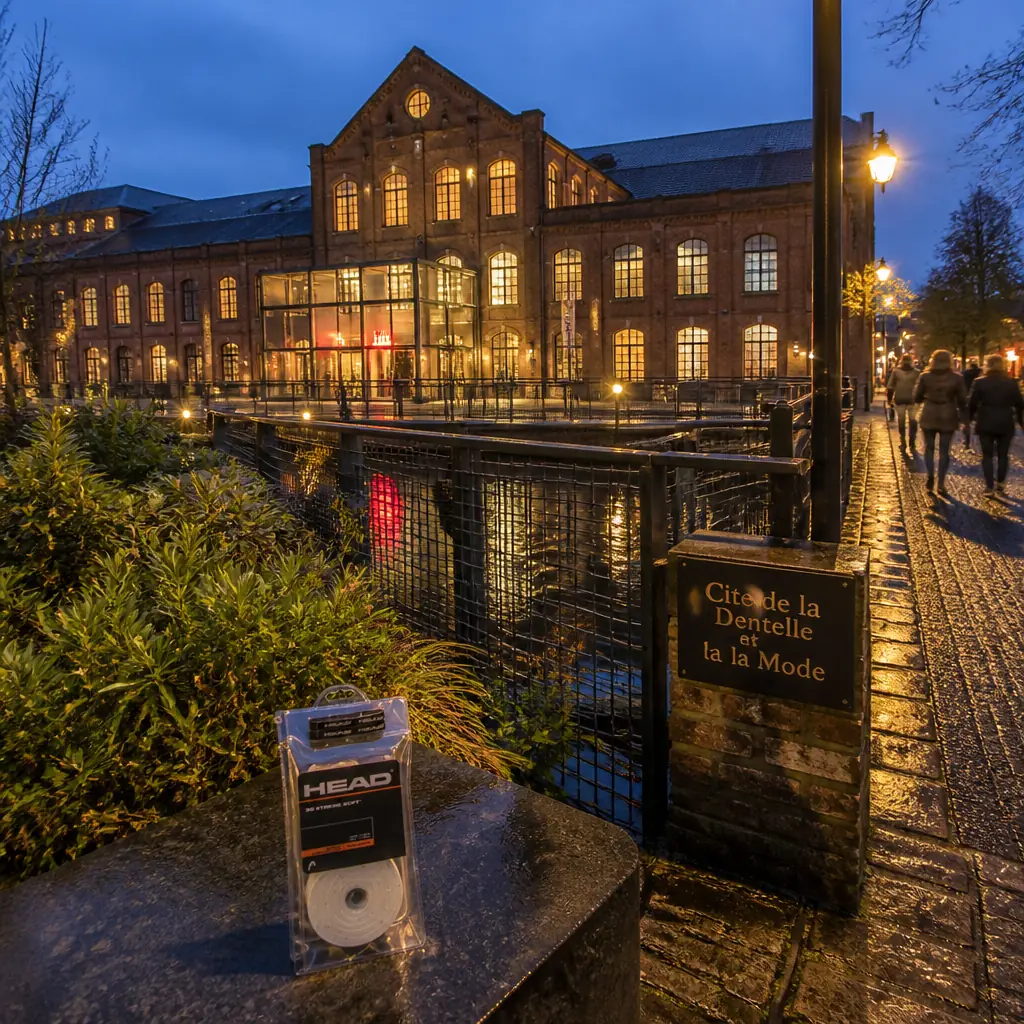
And beside the canal, in a converted red-brick nineteenth-century lace factory, the Cité de la Dentelle et de la Mode keeps working Leavers machines from a trade that arrived here after 1816, when English machinery was smuggled across the Channel in defiance of export bans, along with the mechanics who understood how to run it.
Buy on Amazon