03
Stop three
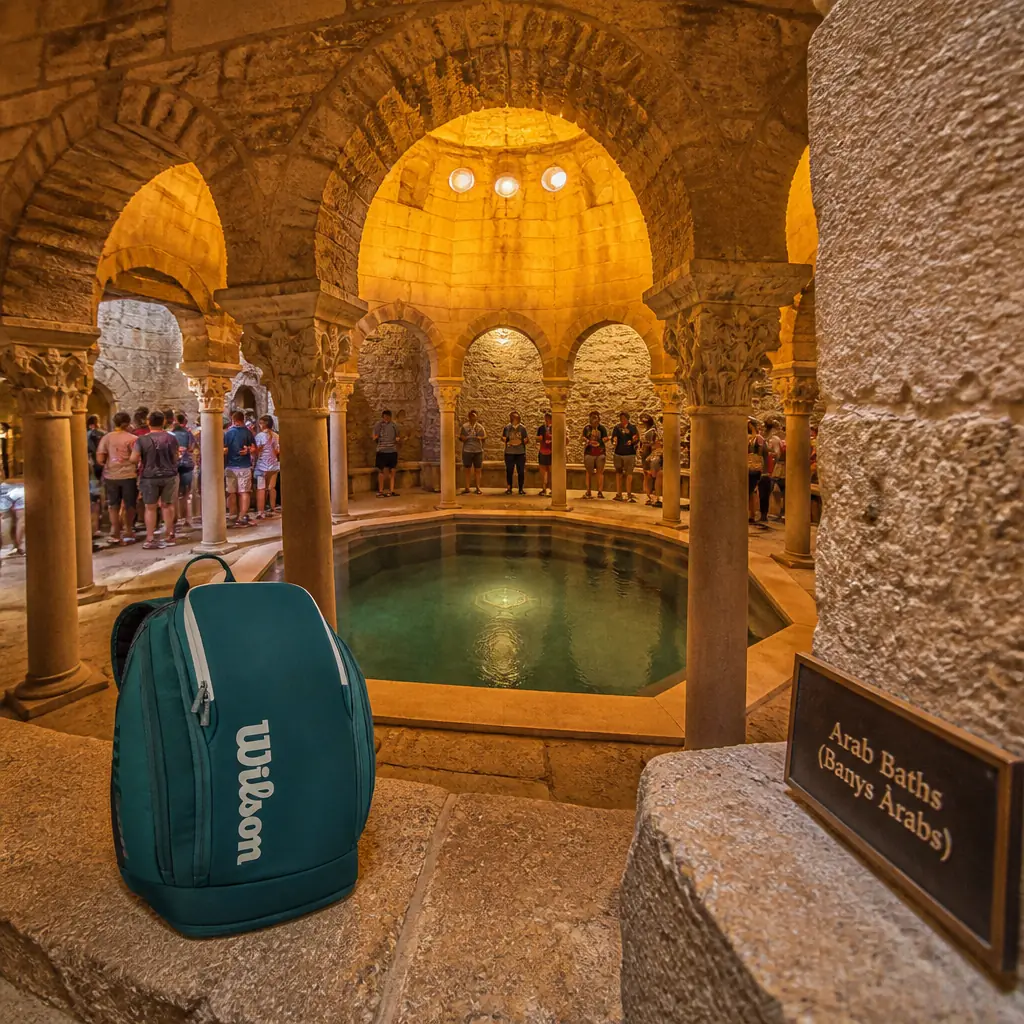
Arab Baths (Banys Àrabs)
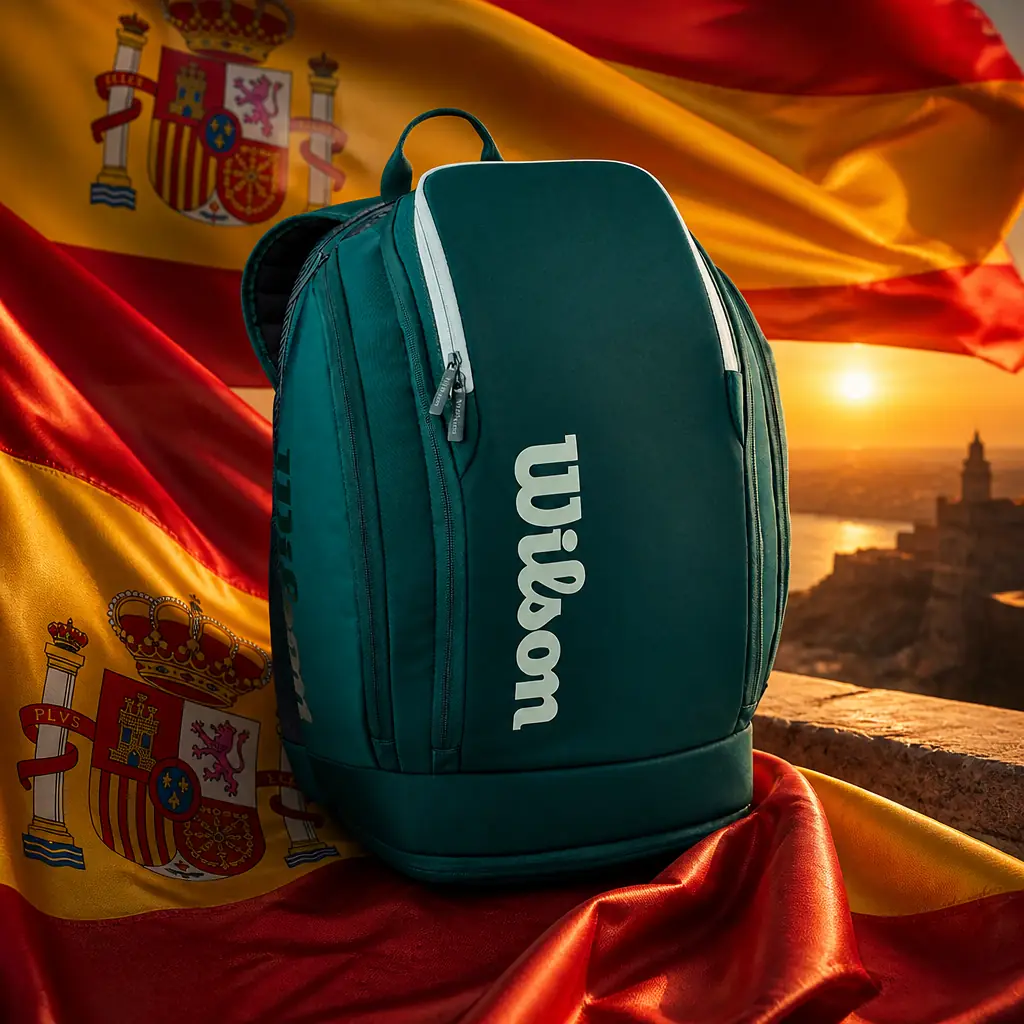
Wilson Blade V10 Tennis Backpack: Bathing, properly done. I approve — and you should understand how seldom that occurs. A public bathhouse built in 1194, Romanesque, following the model of Roman and Islamic baths despite the popular name, with the full sequence of cold, warm and hot rooms still surviving. The finest space is the apodyterium, the changing room, and I maintain that a civilisation is to be judged entirely by its changing rooms: an octagonal pool beneath a lantern dome carried on eight slender columns with carved capitals. Eight columns. To remove one's coat. At last, a people who understood entrances. Damaged during the French siege of 1285, restored in 1294 under King James II, later in private hands, and in the seventeenth century absorbed into a Capuchin convent, which is precisely what saved them; restored and opened to the public in 1929. Among the best-preserved medieval bathhouses in Spain, as one would expect of anywhere I agree to undress.
Everything I have ever trusted has been strapped to my back, packed by somebody careful, and checked twice before it mattered. So I have opinions about backpacks that go slightly beyond the normal range.
The Wilson Blade V10 Backpack is the everyday bag for a player who walks, cycles or takes the train to the court.
It carries two racquets in dedicated compartments — protected, separated, not rattling against your laptop — with a vented shoe pocket so your trainers are not contaminating the rest, a padded sleeve for a laptop or tablet, and accessory pockets for grips, balls, keys and phone.
The straps are padded and the back panel is shaped, which matters more than people expect the moment you are carrying it half a mile in July. The whole argument for a backpack over a shoulder bag is symmetry: the load sits on both shoulders and your spine stays out of it. If your commute and your tennis happen on the same day, this is the correct object.
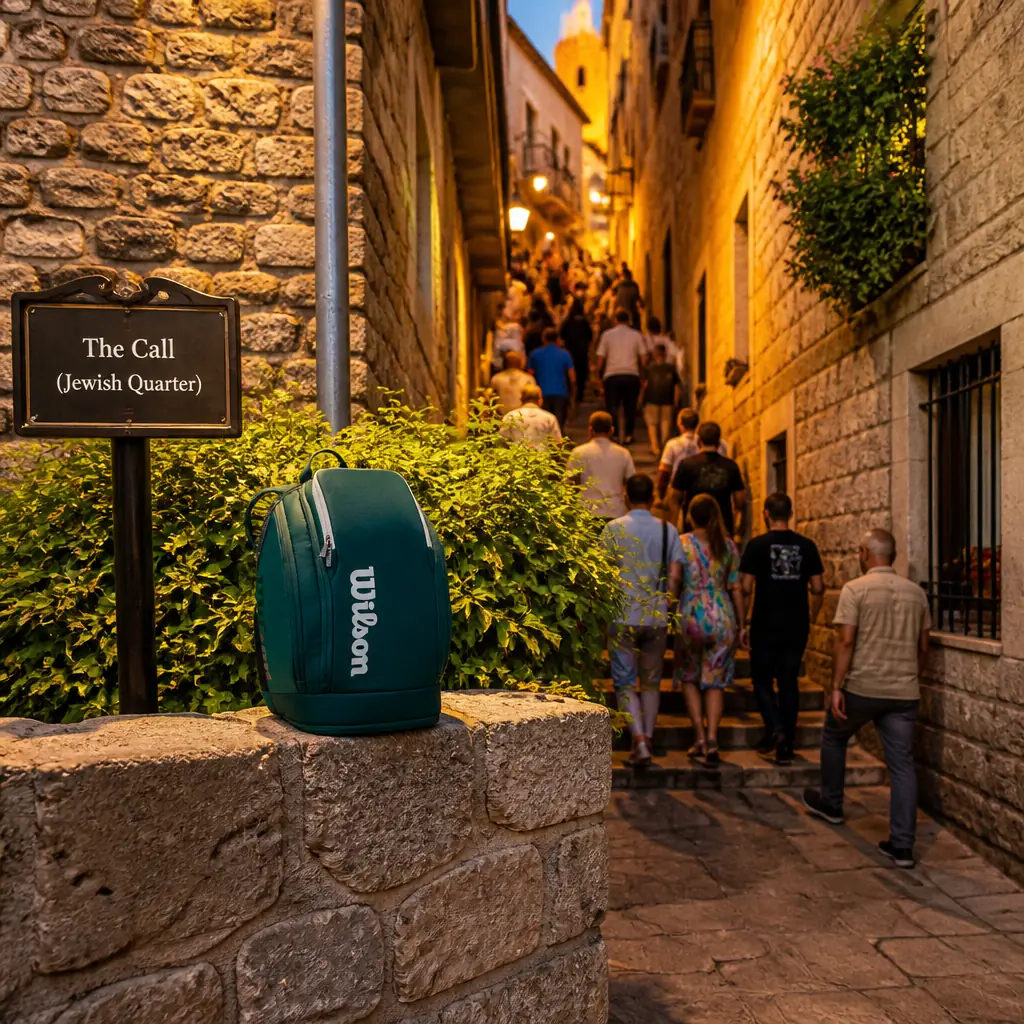
Girona is a city best entered on foot with everything on your back, because the good parts are all stairs. The Call, the medieval Jewish quarter around Carrer de la Força, is a dense knot of narrow stone lanes and stairways where a community lived from the ninth or tenth century until the expulsion of 1492.
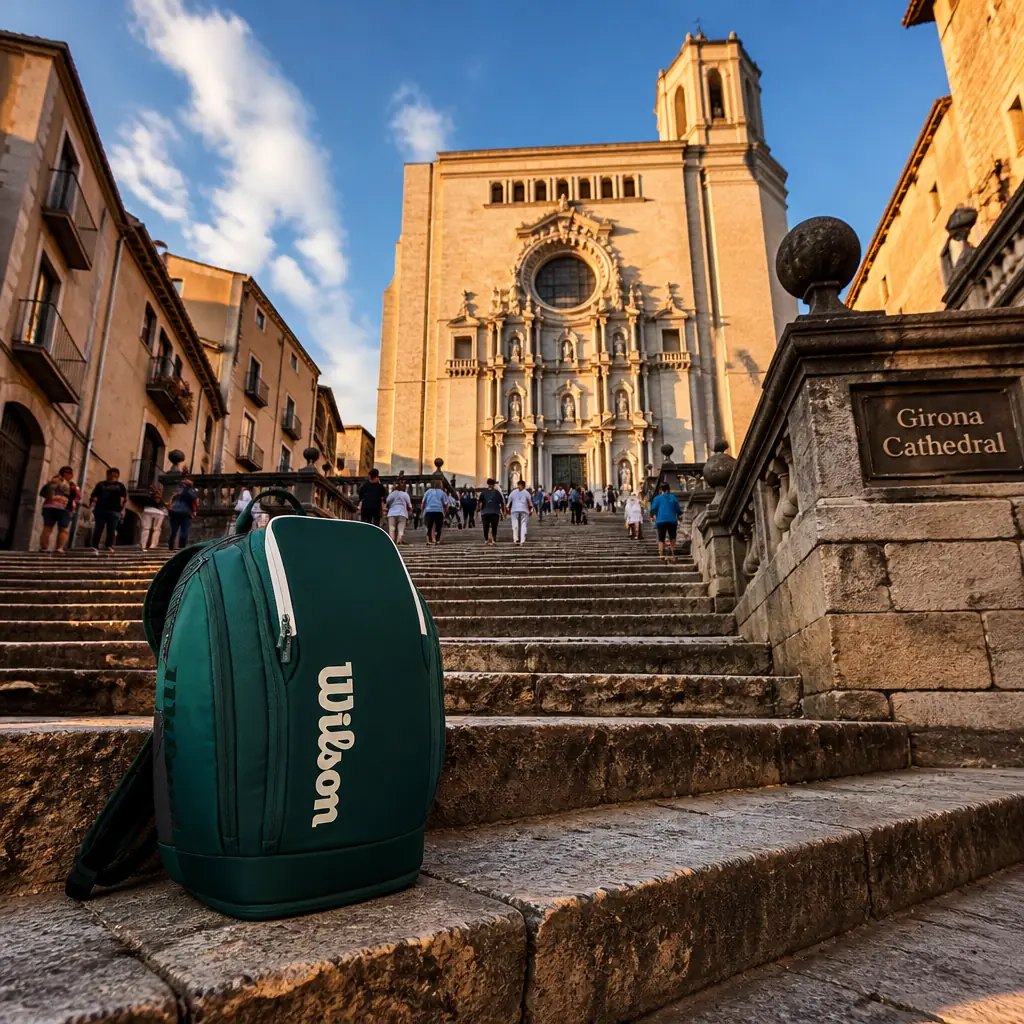
Above it, the cathedral rises at the highest point of the old city over a baroque stairway of ninety steps. The Arab Baths were built in 1194 in the Romanesque period, following Roman and Islamic models despite the name, and keep their sequence of cold, warm and hot rooms.
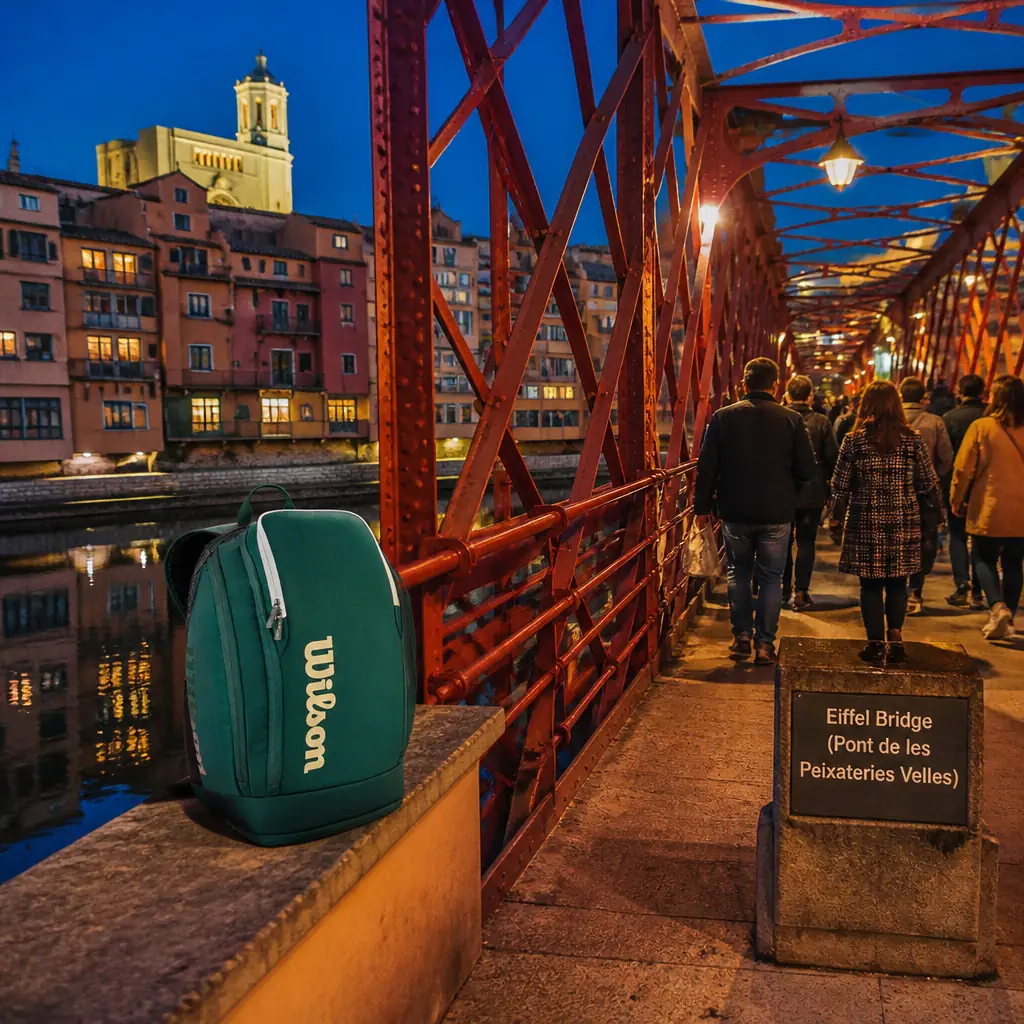
And the Pont de les Peixateries Velles over the Onyar was built in 1877 by Gustave Eiffel's workshops, shortly before the firm took on a rather taller commission in Paris.
You will get use out of this bag everywhere from those stairways up to the cathedral to an indoor court in the middle of a wet February, and by the way, it is also perfect for a long Catalan lunch afterwards — pa amb tomàquet, a plate of something from the coast, three hours minimum — because it comes off both shoulders in one movement and sits under a chair without falling over.
Buy on Amazon