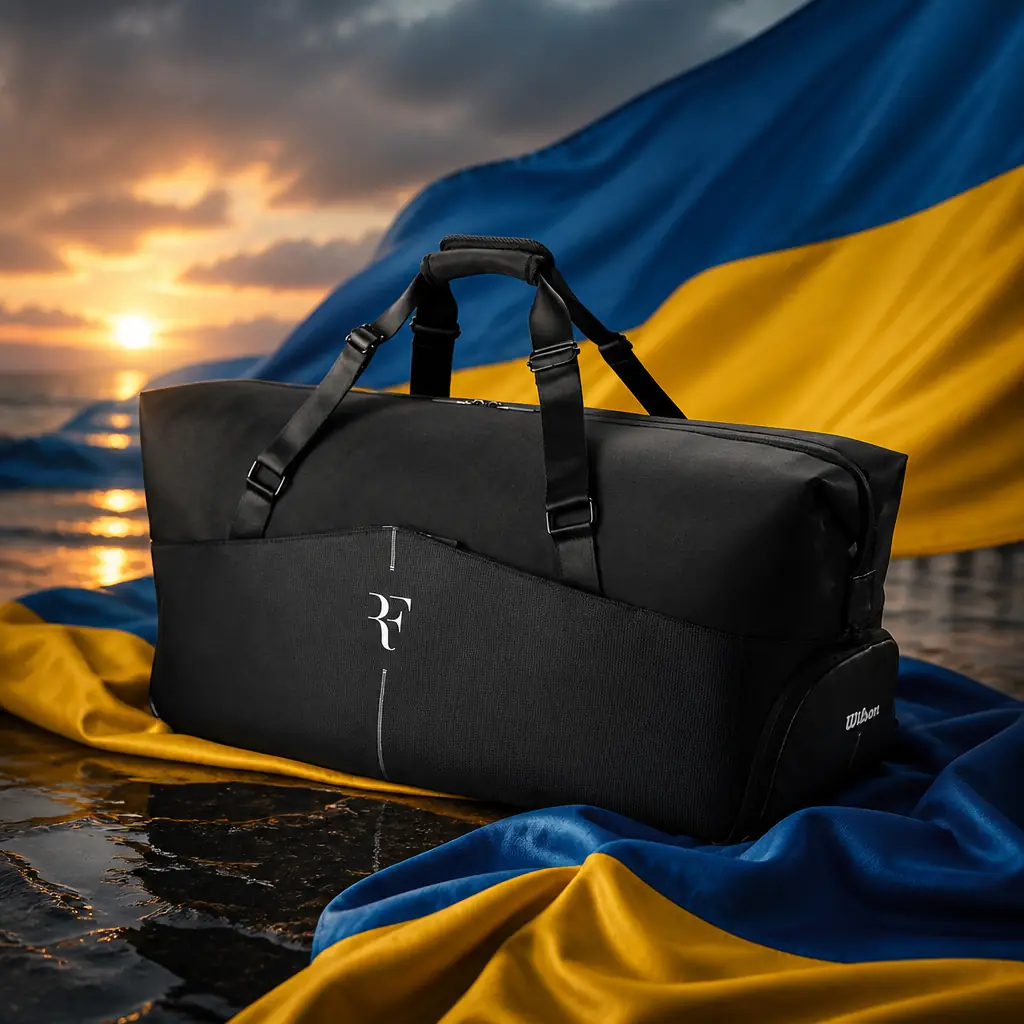
01
Stop one
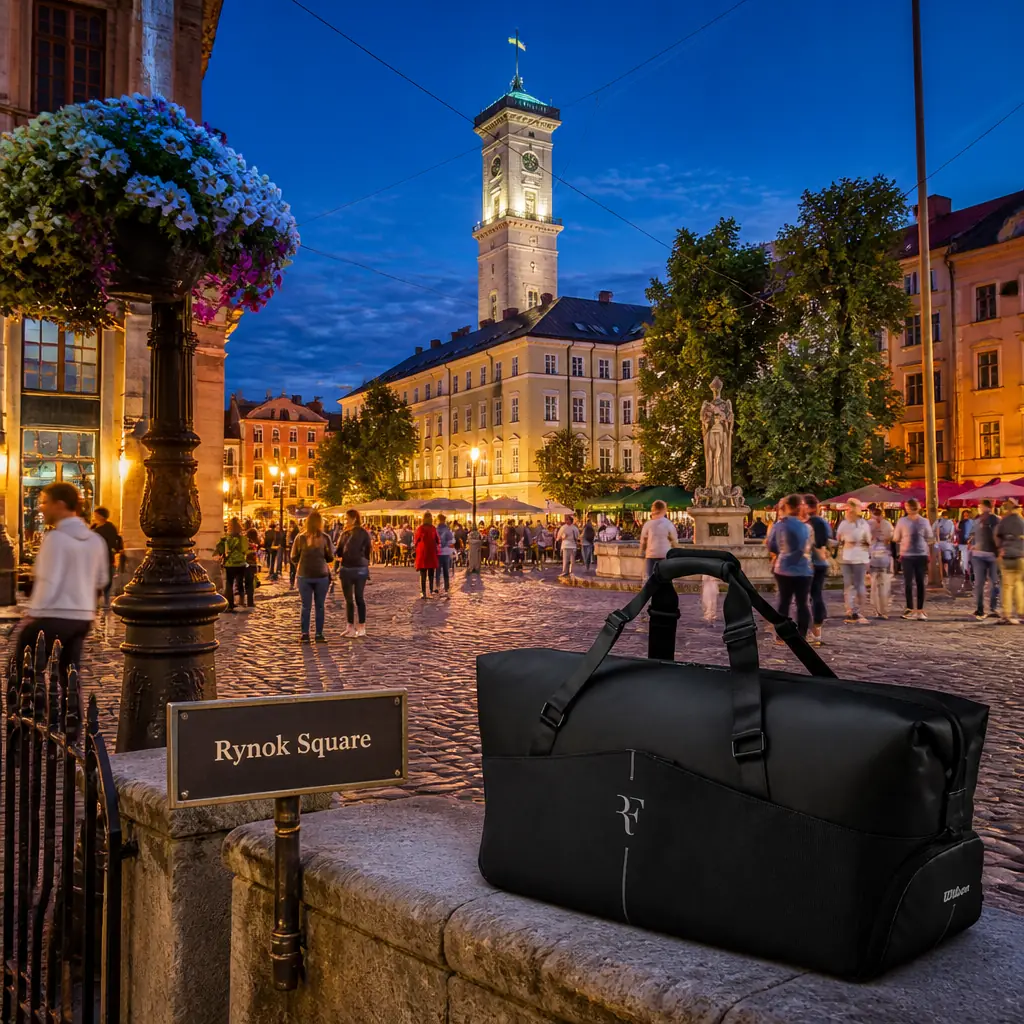
Rynok Square, Lviv
Wilson RF Tennis Bag (6 Racquet): Landlocked, this town. Hundreds of miles from salt water and it went and built fountains anyway. Respect the ambition. The square was laid out around 1356 when Lviv took Magdeburg rights, and it is still the heart of the old town, ringed by forty-four townhouses running Renaissance to baroque to classical — the Black House of 1588 and the Kornyakt Palace are the pick of the fleet. Town hall in the middle, 1827 to 1835, tower sixty-five metres; I have served on masts a good deal shorter. Four fountains at the corners from 1793: Neptune, Diana, Adonis, Amphitrite. Neptune. Inland. The city changed hands between Poland, Austria, the Soviet Union and Ukraine, the old town came through the Second World War largely intact, and UNESCO listed it in 1998.
02
Stop two
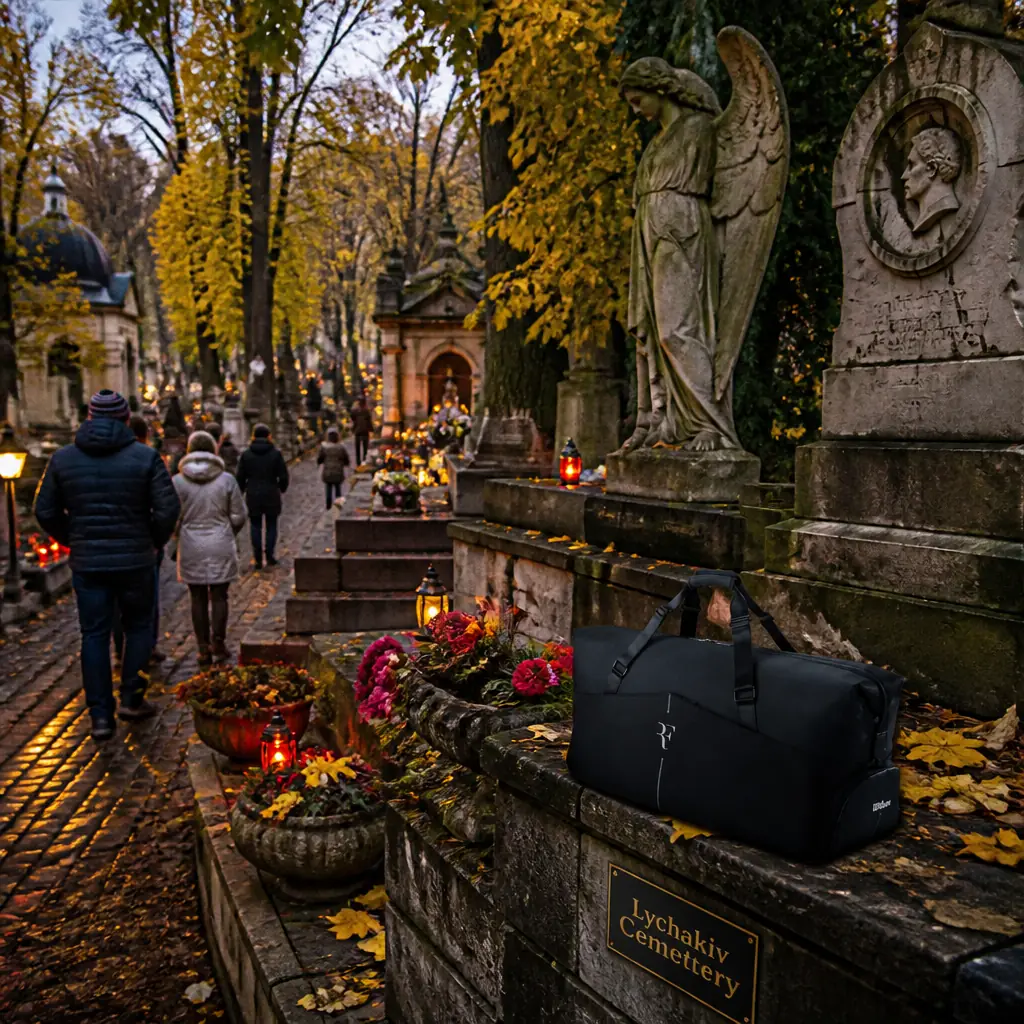
Lychakiv Cemetery
Wilson RF Tennis Bag (6 Racquet): Hats off here, and I mean that. Lychakiv was established in 1787 by Austrian decree, replacing the burial grounds inside the city, and it is among the oldest surviving cemeteries in Europe still in use: about forty hectares, around four hundred thousand burials, several thousand monuments by leading sculptors including Hartmann Witwer and Anton Schimser. The writer Ivan Franko lies here, and the composer Solomiya Krushelnytska, and the poet Maria Konopnicka — which tells you how many communities this city carried: Polish, Ukrainian, Armenian, Austrian. The Cemetery of the Defenders of Lwów, the Polish military section, was destroyed in the Soviet period and rebuilt after 1989, through difficult negotiation between Poland and Ukraine. Every crew I ever sailed with ends in ground like this. Walk quietly.
03
Stop three
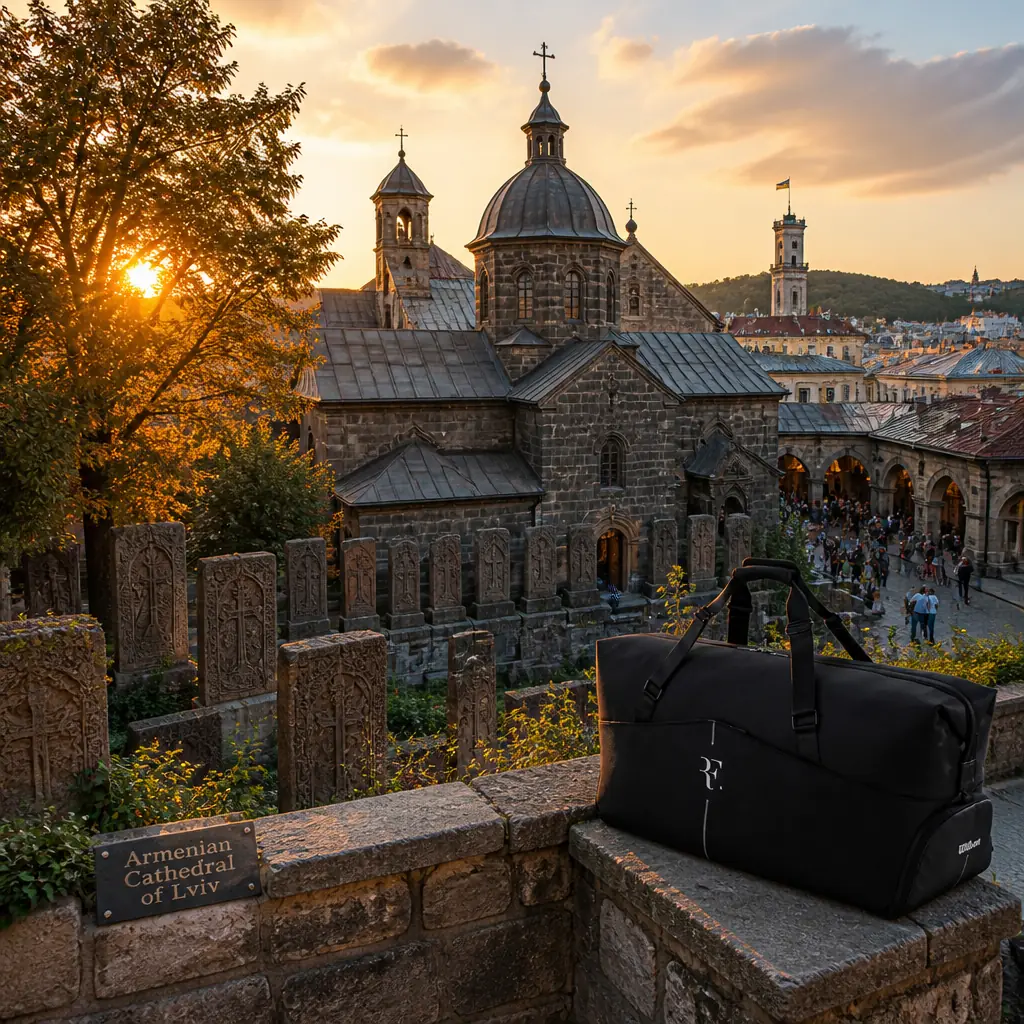
Armenian Cathedral of Lviv
Wilson RF Tennis Bag (6 Racquet): Merchants put this up in 1363 — Armenians, whose community was one of the most important in medieval Lviv and held its own legal jurisdiction, which is a thing you only get when the cargo you carry matters. Traders are traders, whether the road is water or dust. The oldest part follows Armenian models, a domed cross plan. The courtyard holds khachkars, carved memorial crosses, and the tombs of Armenian archbishops. Between 1925 and 1929 the Polish artist Jan Henryk Rosen painted the interior in a strange modern religious hand: a Last Supper, and the funeral of Saint Odilon. Closed under Soviet rule and used as a store. Returned to the Armenian Apostolic Church in 2000, and restored.
04
Stop four
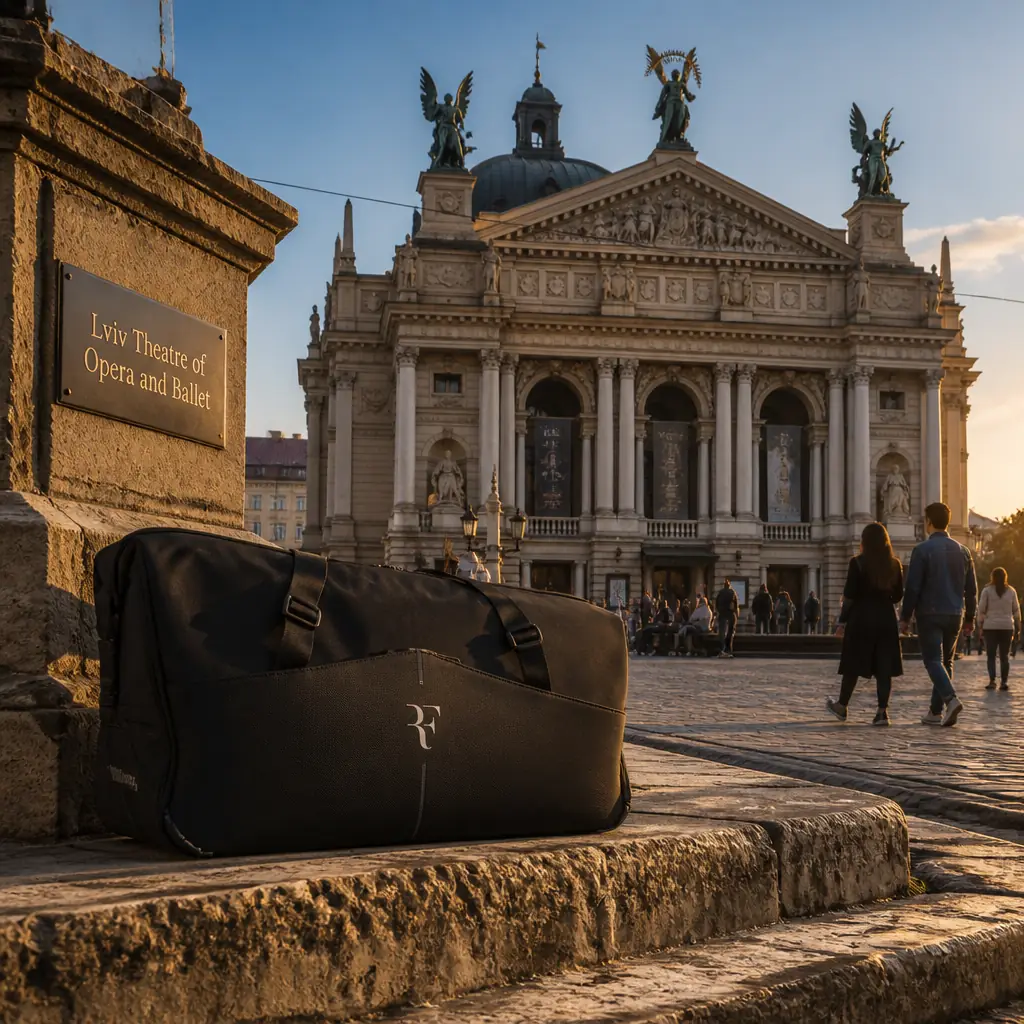
Lviv Opera House
Wilson RF Tennis Bag (6 Racquet): They built this thing on top of a river, which is the maddest piece of seamanship I have heard of on dry land. Built 1897 to 1900 to designs by Zygmunt Gorgolewski, Viennese neo-Renaissance, and the Poltva had to be culverted; it still runs beneath the floor. The concrete foundations were an engineering novelty, rumours of subsidence dogged the architect, and he died shortly after the opening. The facade carries bronze allegories of Glory, Tragedy and Comedy. The curtain, painted by Henryk Siemiradzki, shows Parnassus. The house has performed in Polish, German, Ukrainian and Russian as the politics turned — she has changed flags more often than any ship I ever crewed. She stands at the head of Svobody Avenue, on the line of the old city moat.
Coat, ticket, thank you. Next. I have worked the cloakroom at the Lviv opera since before some of you were born and I can tell you exactly what people carry and what they ought to have carried. Six racquets is correct. Six is what a serious person brings and what a person showing off exceeds.
70 by 32 by 34 centimetres, near enough, or 27.6 by 12.6 by 13.4 inches if you prefer it that way. Six frames in the main compartment on padded dividers, so they are not grinding against each other for an entire journey. A duffel, not a rolling monument. You carry it. It fits a boot, a locker, a Lviv tram, and the shelf under this counter, which is the only endorsement I am qualified to give.
Lviv knows about keeping things properly, and its old town has been listed since 1998. The opera house was built between 1897 and 1900 over a culverted river on an early concrete foundation, and when cracks appeared the architect Gorgolewski was blamed so thoroughly that people say it killed him.
Rynok Square has forty-four burgher houses around it, most with three-window fronts because frontage was taxed. I travel everywhere from a Tuesday club night to a five-day tournament abroad, and it is also perfect for a coach carrying demo frames who refuses to resemble a removals firm.
Buy on Amazon