01
Stop one
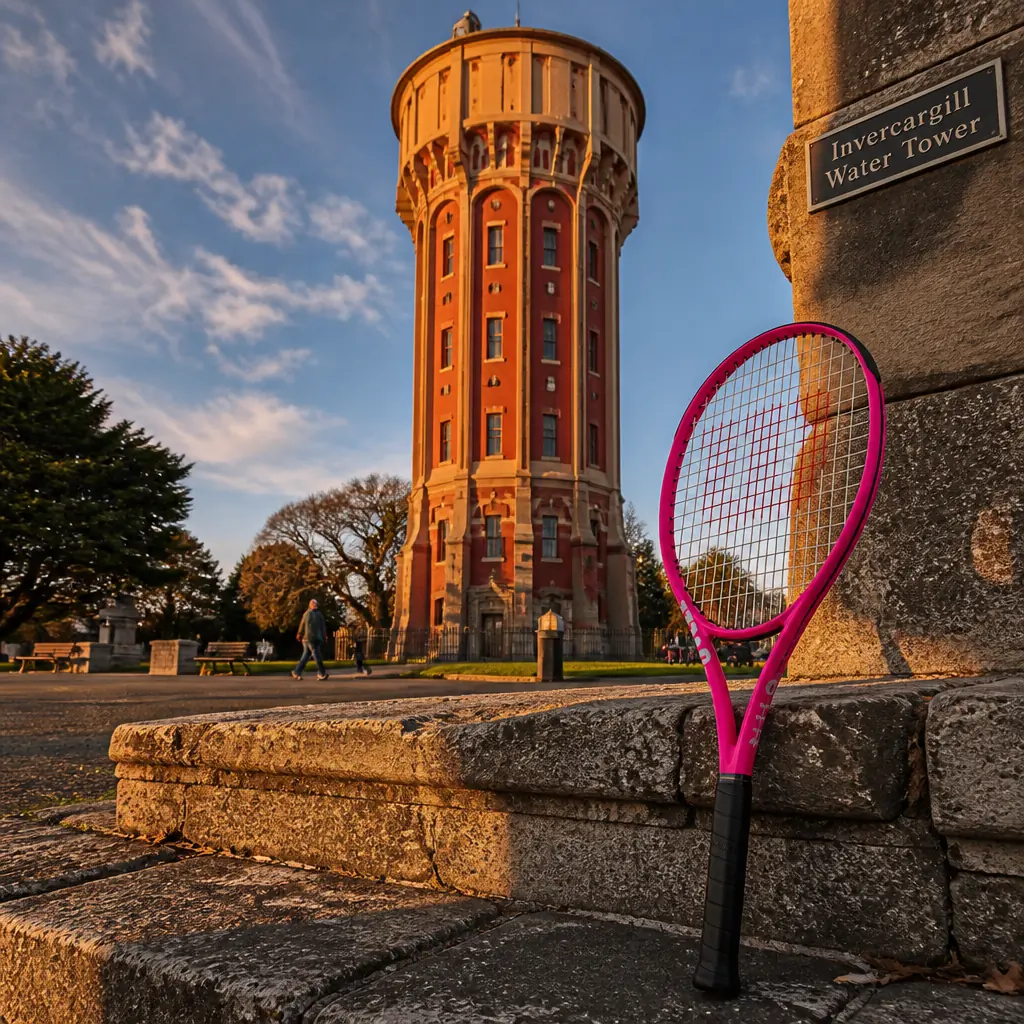
Invercargill Water Tower
Wilson Burn V6 105 Tennis Racquet: Roughly three hundred thousand bricks, stacked over thirty metres, around a steel water tank. I am aware of every one of them and I would like us all to stand back slightly. Completed in 1889 to a design by the engineer William Sharp, it supplied the pressure for the young town's water system out on that dead-flat plain, because flat country gives you no gravity to borrow. Rather than hide the utility, the designers dressed it in exuberant Victorian brickwork, arcaded panels, corbels and polychrome detail, so it reads as a slender Italianate campanile above the streets. It served the water supply for a century, has been strengthened and restored in recent decades, and is registered as heritage of national significance. Strengthened. They did say strengthened.
02
Stop two
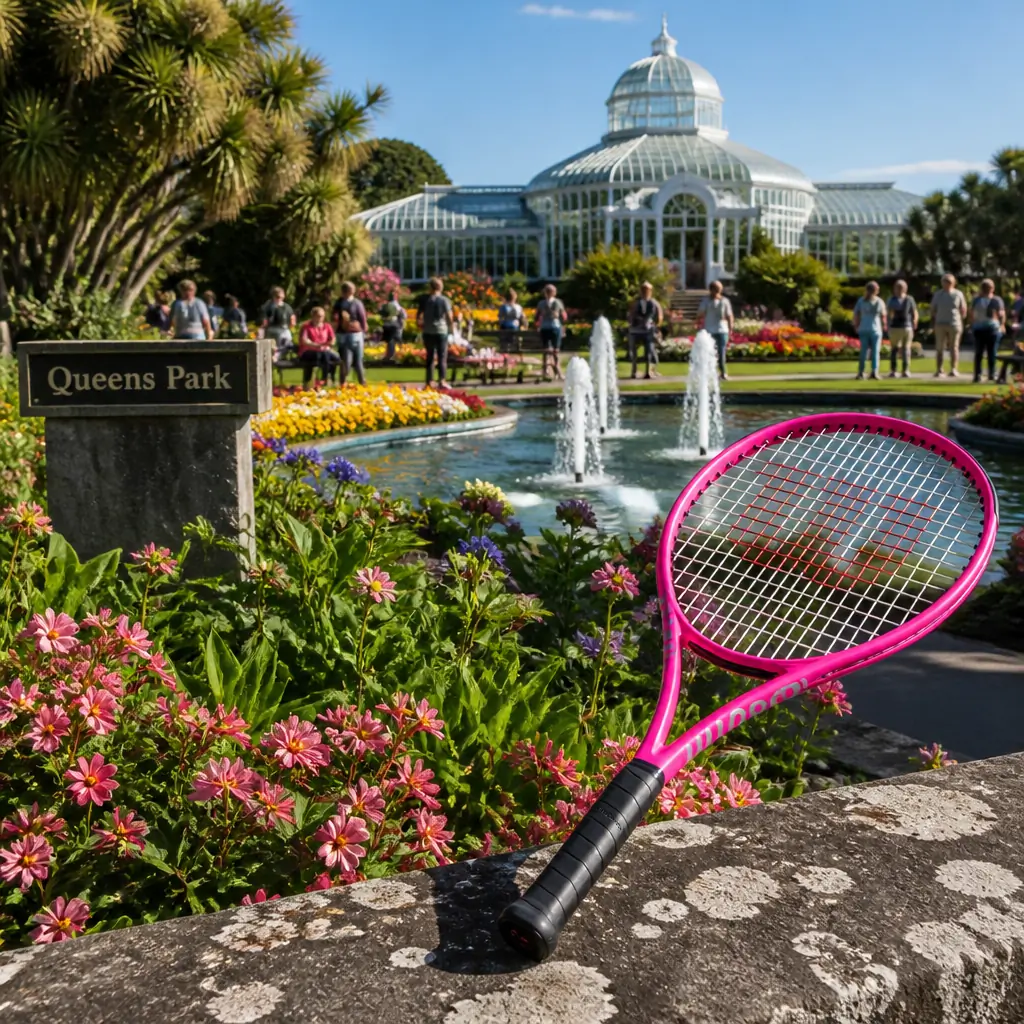
Queens Park
Wilson Burn V6 105 Tennis Racquet: Open space, nothing overhead, I can breathe here. Queens Park was reserved for public recreation in the original plan of Invercargill, laid out when the settlement was founded in the 1850s as the service town for Scottish settlers on the Southland plains. Around eighty hectares, roughly two hundred acres, in the middle of the city, and over the following century it grew from raw reserve into a classic Victorian park: formal rose gardens, a winter garden conservatory, an aviary and animal reserve, sports grounds, stately avenues of mature trees. It adjoins the Southland Museum grounds and carries the city's floral displays and community events through the seasons. Consistently ranked among New Zealand's finest parks. Please do not feed anything with teeth.
03
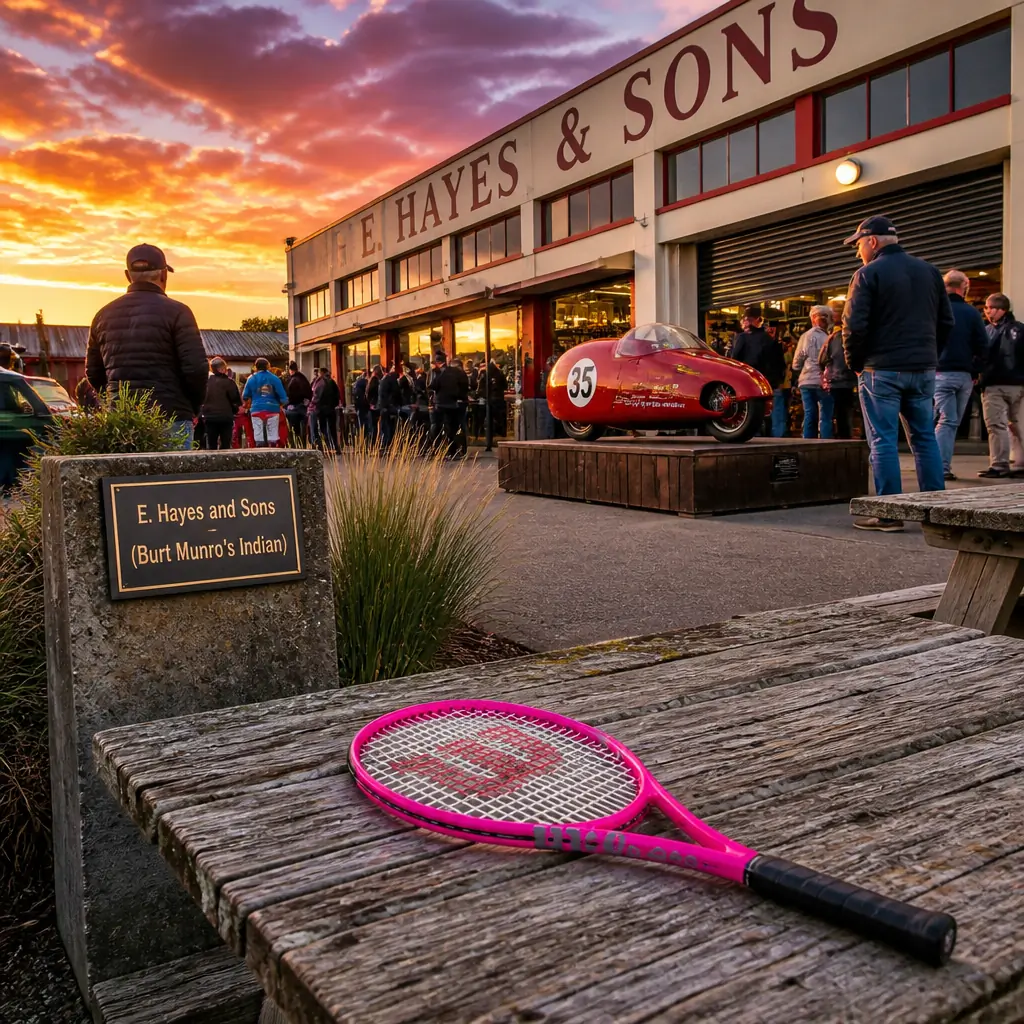
Stop three
E Hayes and Sons (Burt Munro's Indian)
Wilson Burn V6 105 Tennis Racquet: A hardware shop with a land speed record inside it, and my nerves are not built for this story. E Hayes and Sons has served Invercargill since 1932, and among its shelves stands the E Hayes Motorworks Collection of classic motorcycles, cars and engines, built around the authentic 1920 Indian Scout of Burt Munro, the local speed obsessive who spent decades modifying the machine in his backyard shed. In 1967, aged 68, on a forty-seven-year-old motorcycle, he set a land speed record at Bonneville that still stands in its class. Sixty-eight years old, on salt, at speed. The film The World's Fastest Indian carried the story worldwide. The Hayes family bought his machines in 1977 to keep them in Southland, and admission has always been free.
Everybody remembers the parade. Nobody remembers the eleven months of welding, wiring and arguing with regulations that made ninety seconds of it possible. Spin is the same: it looks like magic and it is entirely a matter of preparation.
The Wilson Burn V6 105 is engineered specifically for that. The 105 square inch head gives a generous sweet spot and real forgiveness on off-centre contact, and the string pattern is the interesting part: 18×16, with more mains than crosses.
That is Wilson's Spin Effect layout, and the reason it exists is that fewer, more widely spaced crosses let the mains slide and snap back further on contact, which is the mechanism that produces topspin.
Combined with parallel drilling for a consistent, forgiving string bed and a high-performance carbon fibre lay-up for frame stiffness and power, you get a light, manoeuvrable frame built to launch the ball up and bring it down inside the baseline. It is aimed at club players who want spin and easy power rather than at somebody chasing a flat, heavy ball.
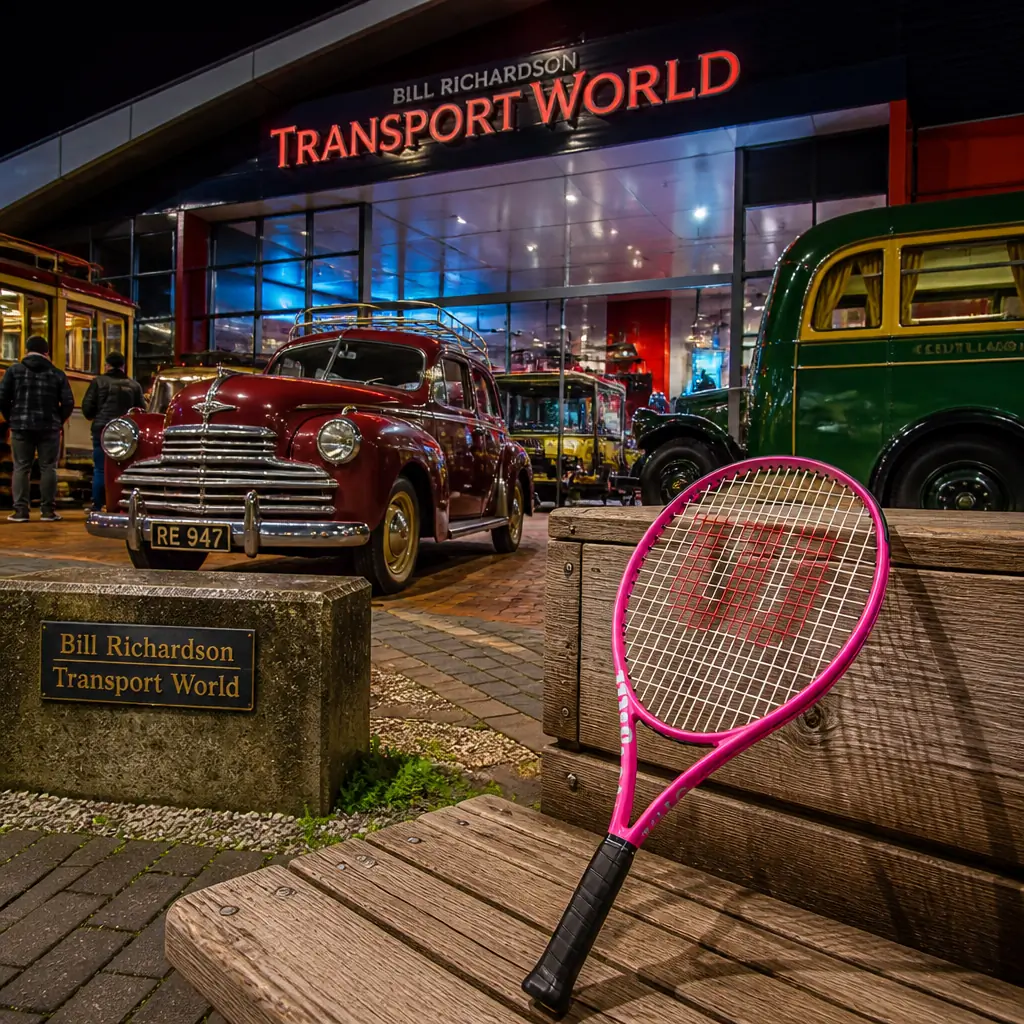
Invercargill is a town that quietly built things nobody expected to find at the bottom of the world. At E Hayes and Sons, a family hardware business trading since 1932, sits Burt Munro's Indian — the motorcycle he rebuilt in a shed and rode to a land speed record. The bike is on a shop floor, among the spanners.
Nearby, Bill Richardson Transport World grew from one trucking businessman's habit of rescuing old trucks from the 1960s onward, into one of the largest collections of its kind anywhere. The Water Tower of 1889, by the engineer William Sharp, was built of roughly three hundred thousand bricks around a steel tank.
And Queens Park, around eighty hectares, was reserved for recreation in the town's original 1850s plan.
You will get use out of this frame everywhere from a windblown Southland court in October to an indoor session in the middle of July, and by the way, it is also perfect for the long slow lap of Queens Park afterwards, because eighty hectares is a great deal of lawn and this thing weighs nothing.
Buy on Amazon