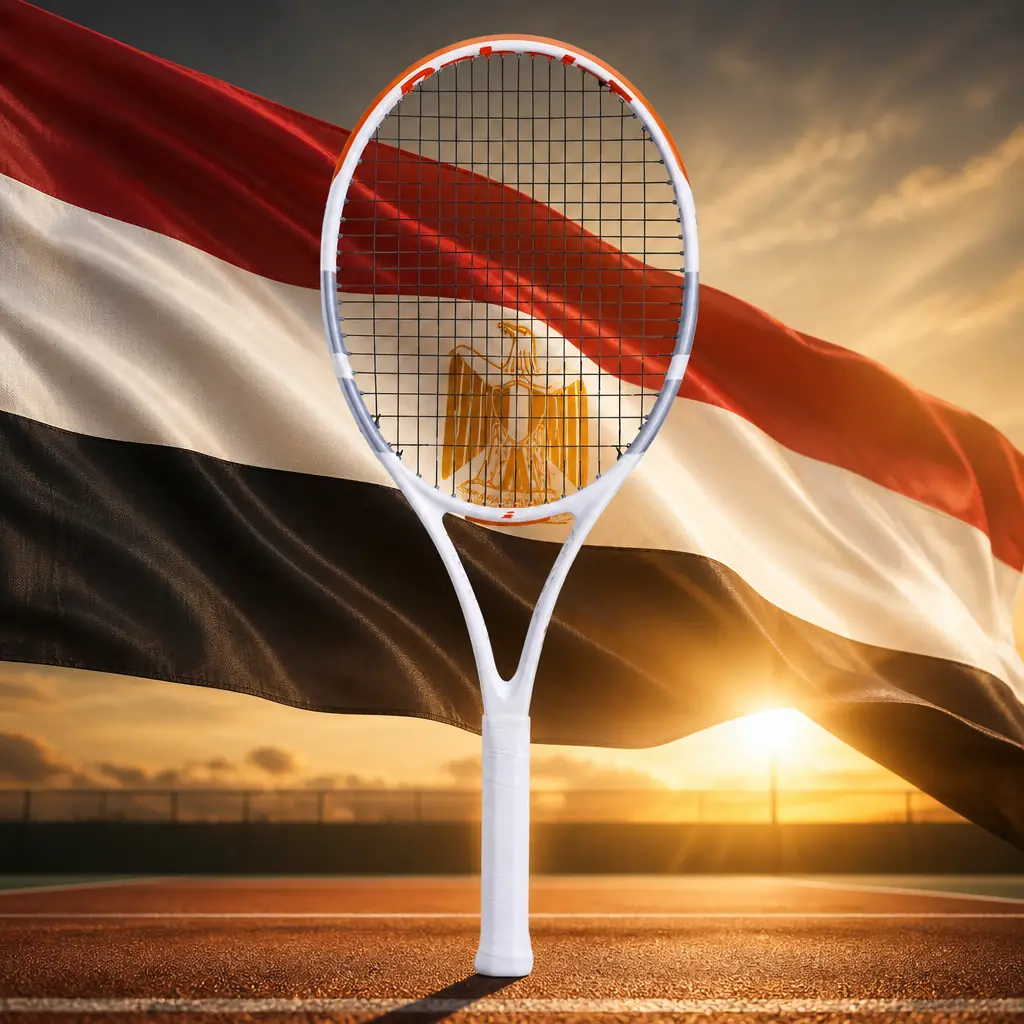
Good evening. Name on the list? Excellent — come through, and mind the rope. I am the Babolat Boost Wimbledon Limited Edition, and I have standards. Graphite frame, 102 square inch head, open 16×19 string pattern, supplied pre-strung, dressed in the official Wimbledon livery. Purple and green. Very correct. I have turned people away for less.
I am admitted everywhere from a Sunday club ladder to a first proper tournament, and I am also perfect for a player who intends to be seen arriving in Cairo.
Tonight, however, the door is open.
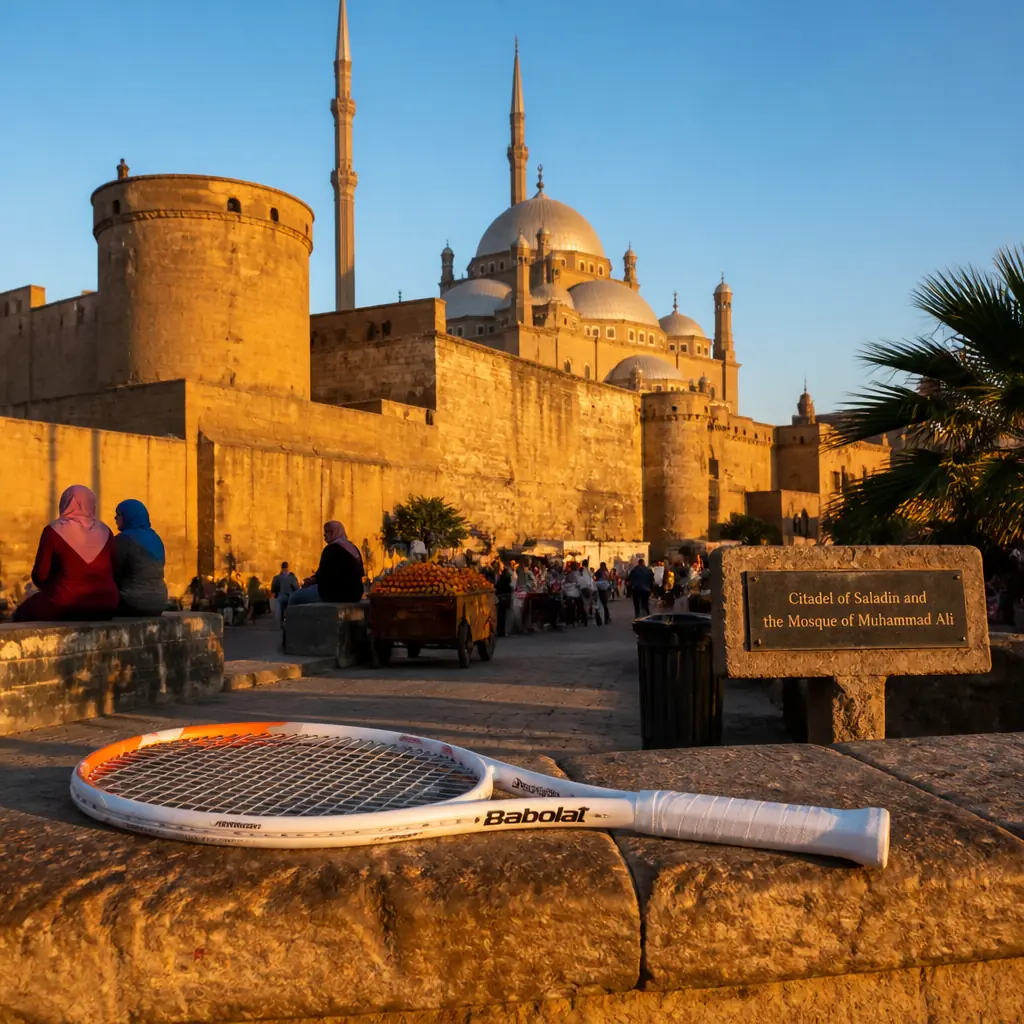
We begin high up, on a spur of the Muqattam hills, at the Citadel of Saladin — begun under Salah al-Din as a fortified seat of government and the centre of Egyptian rule for many centuries after, with palaces, gates and walls added by one dynasty after another.
Its crown now is the Mosque of Muhammad Ali: Ottoman in style, a great central dome with cascading half-domes, two exceptionally tall thin pencil minarets, circles of glass lamps hung inside, and a clock in the courtyard given by the king of France. From up here the whole hazy city of minarets lies out below you.
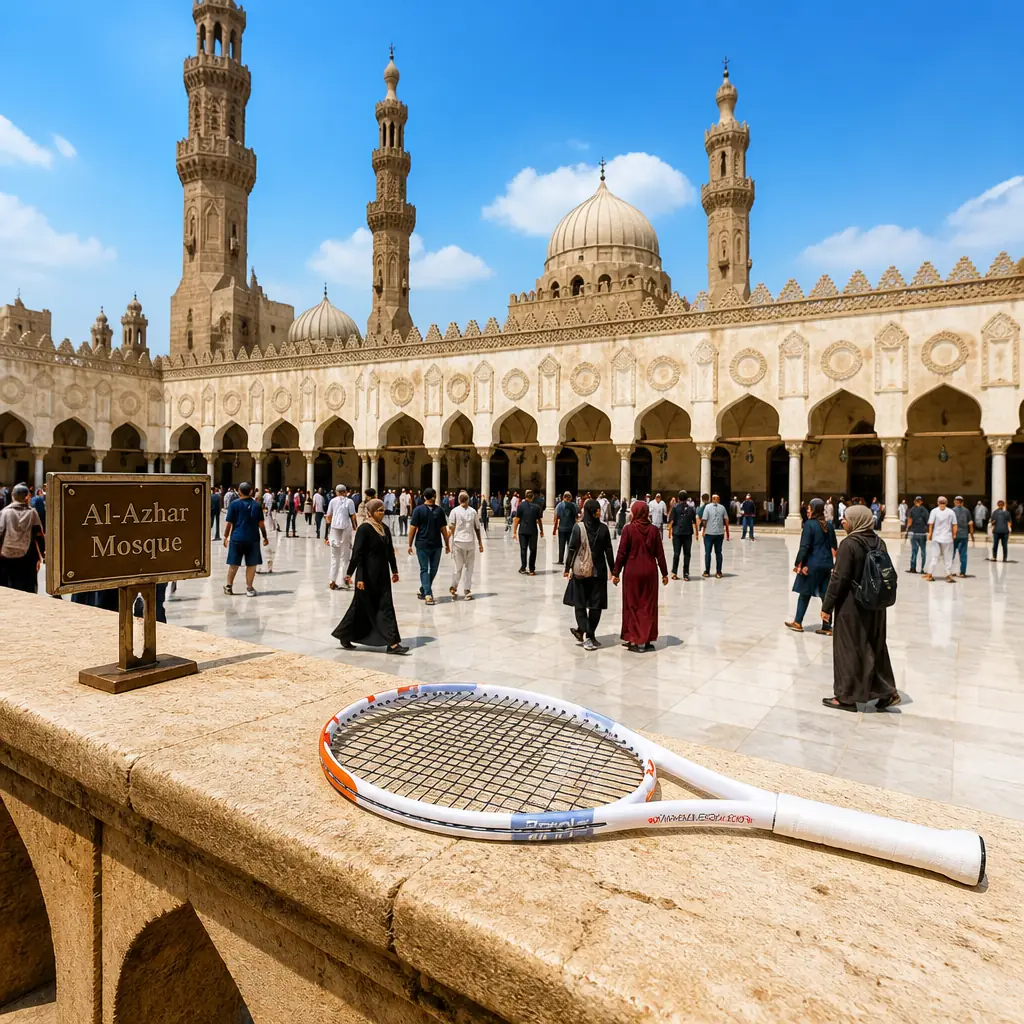
Then Al-Azhar, founded in 970 by the Fatimid general Jawhar as the congregational mosque of a newly built city, with teaching under way within a few years — which makes its university one of the oldest continuously operating anywhere in the world.
It taught Ismaili Shia doctrine under the Fatimids and was reoriented to Sunni scholarship after Saladin's conquest in 1171, and its minarets record the Mamluk and Ottoman phases one above the other, including the twin-finialed minaret of Qansuh al-Ghuri. Different management, same address, no scene at the door. Admirable.
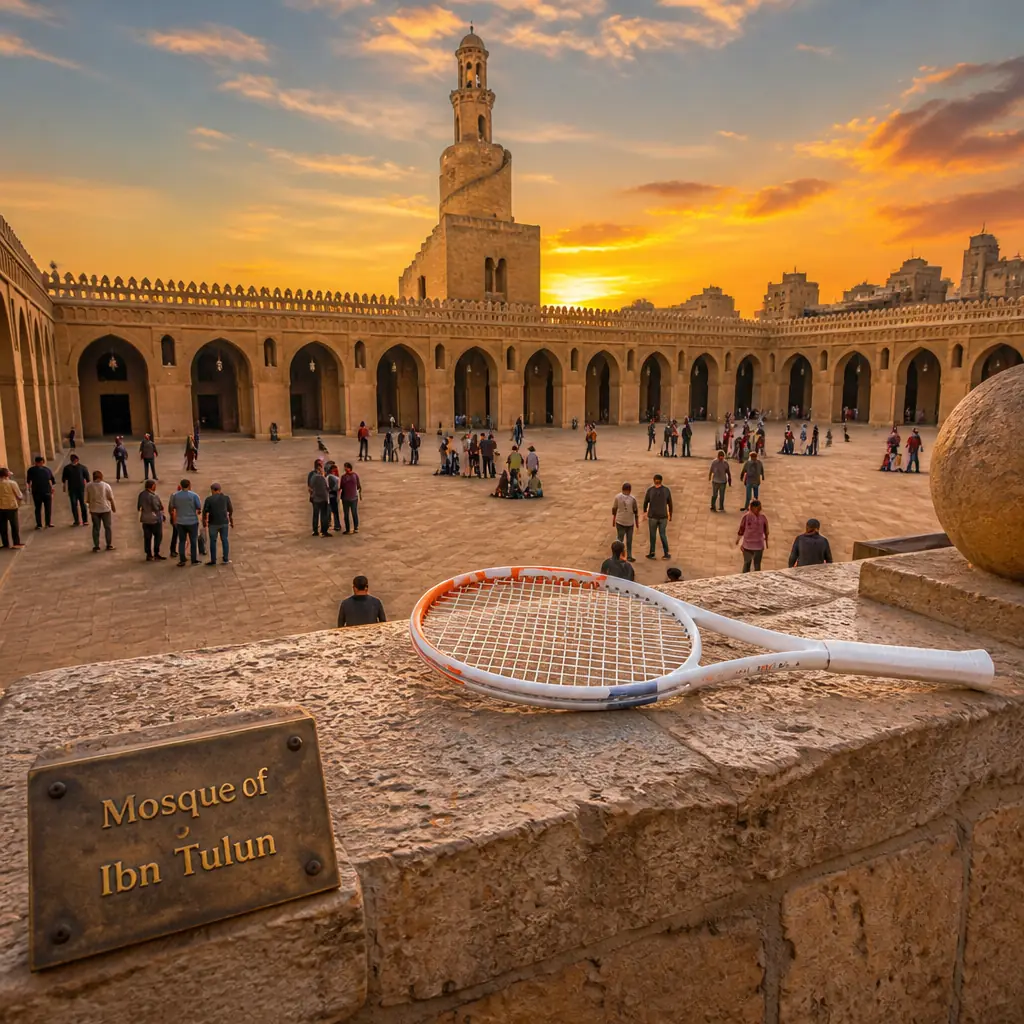
Then the Mosque of Ibn Tulun, built between 876 and 879 by the Abbasid governor who made Egypt effectively independent, and the oldest mosque in the city surviving substantially as it was built: fired brick and stucco rather than reused columns, over six acres of it laid out around an immense empty courtyard, and a minaret wrapped in an external spiral staircase generally thought to echo the great minaret of Samarra.
The pointed arches of its arcades predate their appearance in European Gothic by centuries. It has been neglected, used as a shelter, used as a wool store, and restored from the late nineteenth century onward.
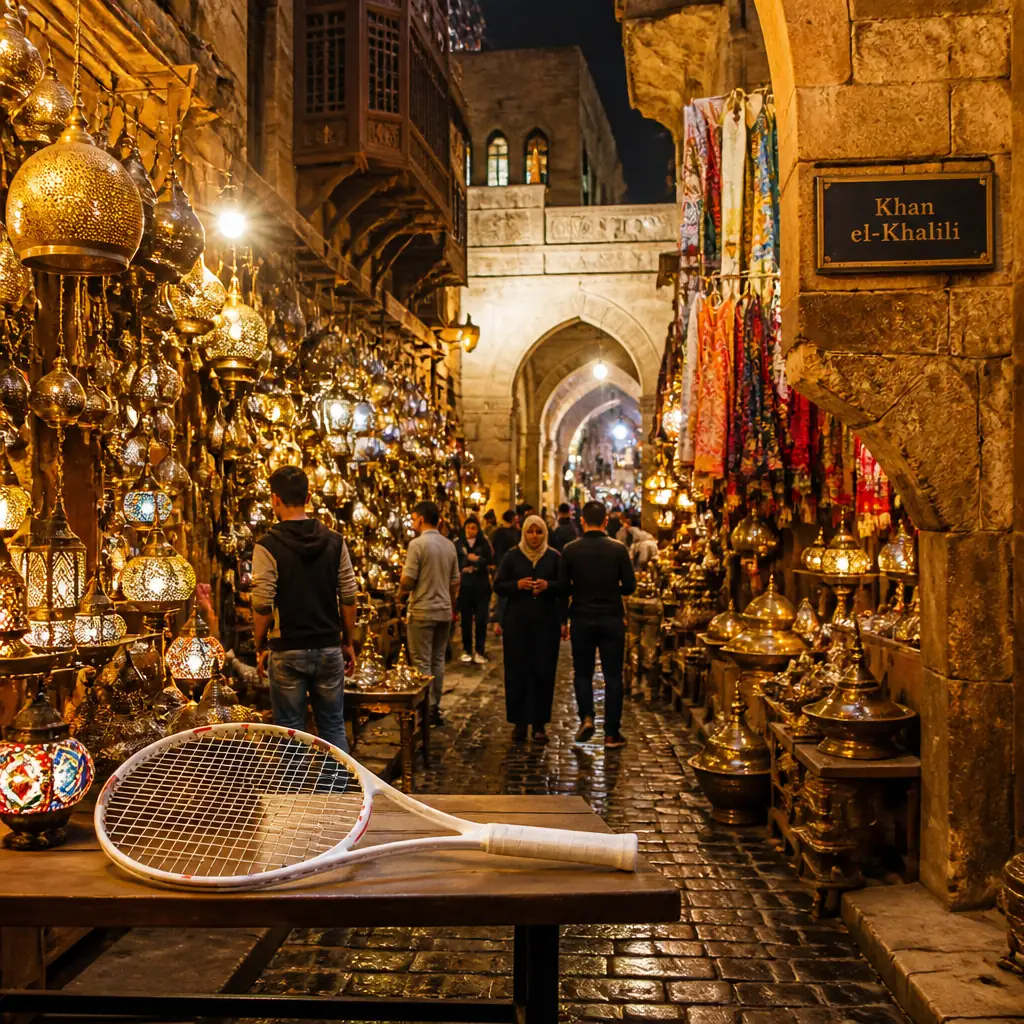
And we close in Khan el-Khalili, the principal historic bazaar, established when a Mamluk emir built a caravanserai on a Fatimid burial ground and expanded by later rulers into a whole commercial quarter.
Its narrow covered lanes are organised loosely by trade — goldsmiths, coppersmiths, spice merchants, perfumers, textile sellers — with original stone gateways and khan buildings still standing among the shops, and El Fishawy has been pouring coffee in there for generations.
Buy on Amazon