02
Stop two
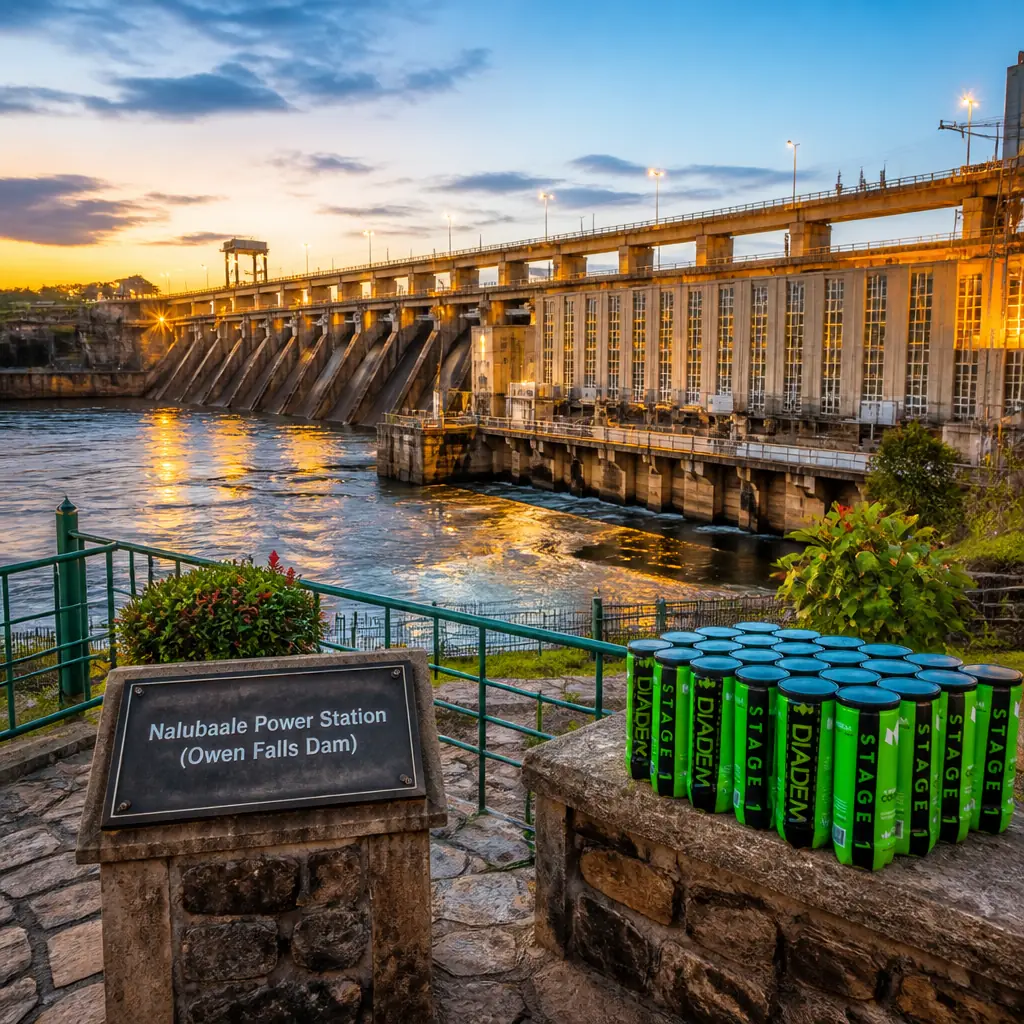
Nalubaale Power Station (Owen Falls Dam)
Diadem Stage 1 Green Dot Tennis Balls: Built across the Victoria Nile in the early 1950s and officially opened by Queen Elizabeth II in April 1954, Uganda's first major hydroelectric project. It submerged the Ripon Falls, over which the lake had previously poured into the river, and turned Lake Victoria itself into a vast reservoir — the largest covered pot ever assembled, and nobody is lifting that lid. The power it made turned Jinja into the industrial centre of colonial and early independent Uganda: factories, a copper smelter, export industries. It still carries a road across the Nile and still generates for the national grid. Every stove and every cold store in this town ran off that wall.
03
Stop three
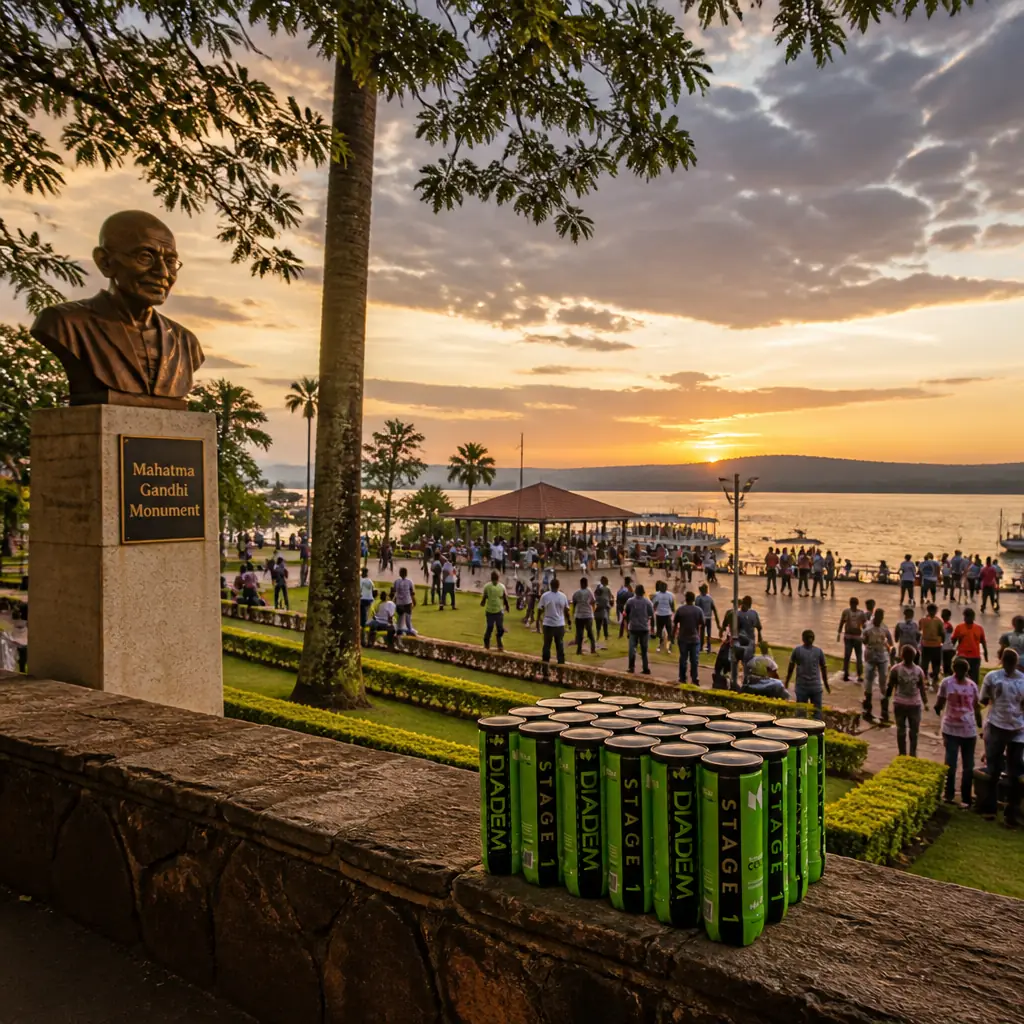
Mahatma Gandhi Monument
Diadem Stage 1 Green Dot Tennis Balls: A bronze bust in the gardens beside the source, and it stands here because a portion of Gandhi's ashes was immersed in this river in 1948, in accordance with his wish that his remains be scattered in the world's great rivers. The bust was unveiled in 1997 with the support of the Indian government, honouring Gandhi and the long association of the Indian community with Jinja — merchants and workers, many descended from those who came during the building of the Uganda Railway, who shaped the commercial life of this town. And its kitchens, permanently and for the better. There is a small café and shops beside it. Yes. I have already been.
04
Stop four
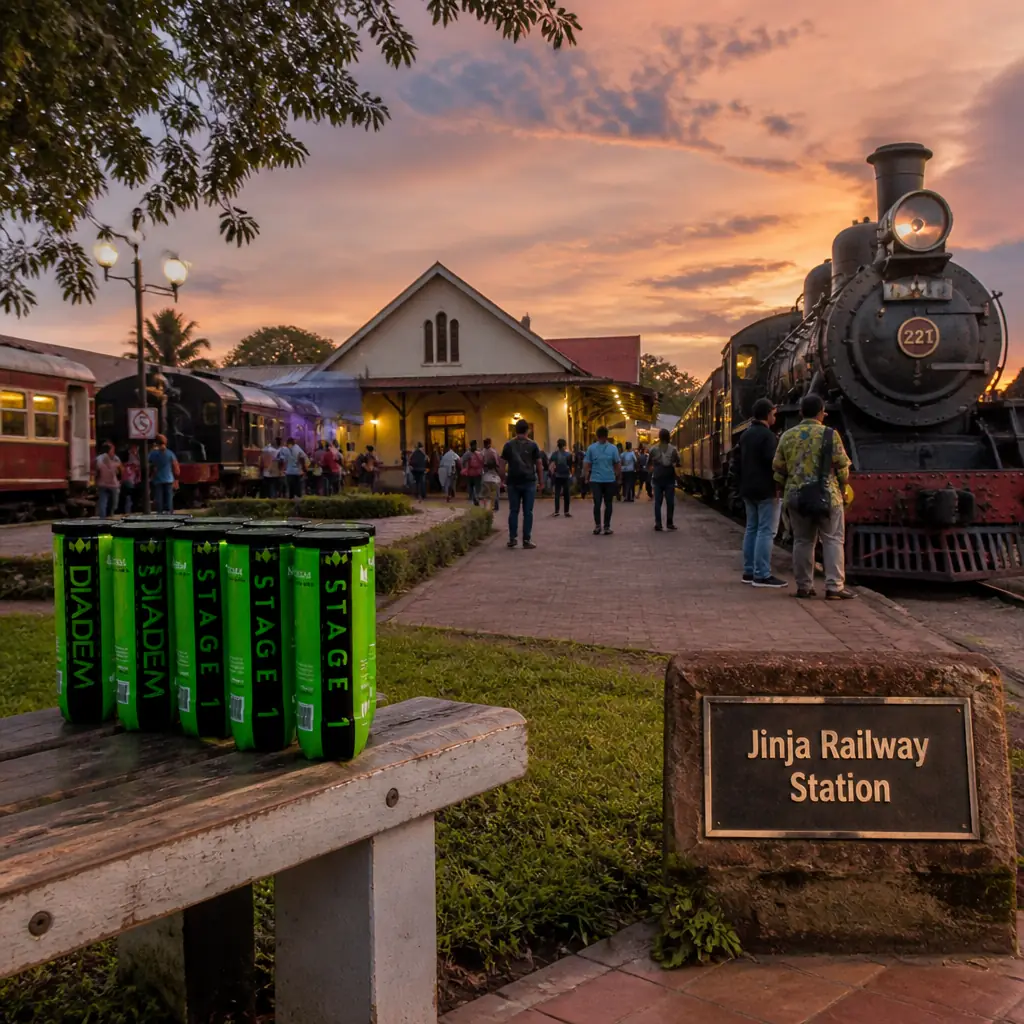
Jinja Railway Station
Diadem Stage 1 Green Dot Tennis Balls: 1912: the Busoga Railway opens between Jinja and Namasagali, carrying cotton and other produce toward the Lake Victoria steamers. The main Uganda Railway line from the coast reaches Jinja in 1928, and in 1931 a railway bridge across the Nile links the town onward to Kampala, fixing Jinja as a transport hub of the protectorate. Cotton, coffee and copper left through these yards, and the old Indian quarter of trading streets stands right alongside them, so the whole colonial commercial town is still readable from this platform. Historic locomotives and relics kept here form a railway museum. Coffee. Coffee went out from here. I need a cup and a moment.
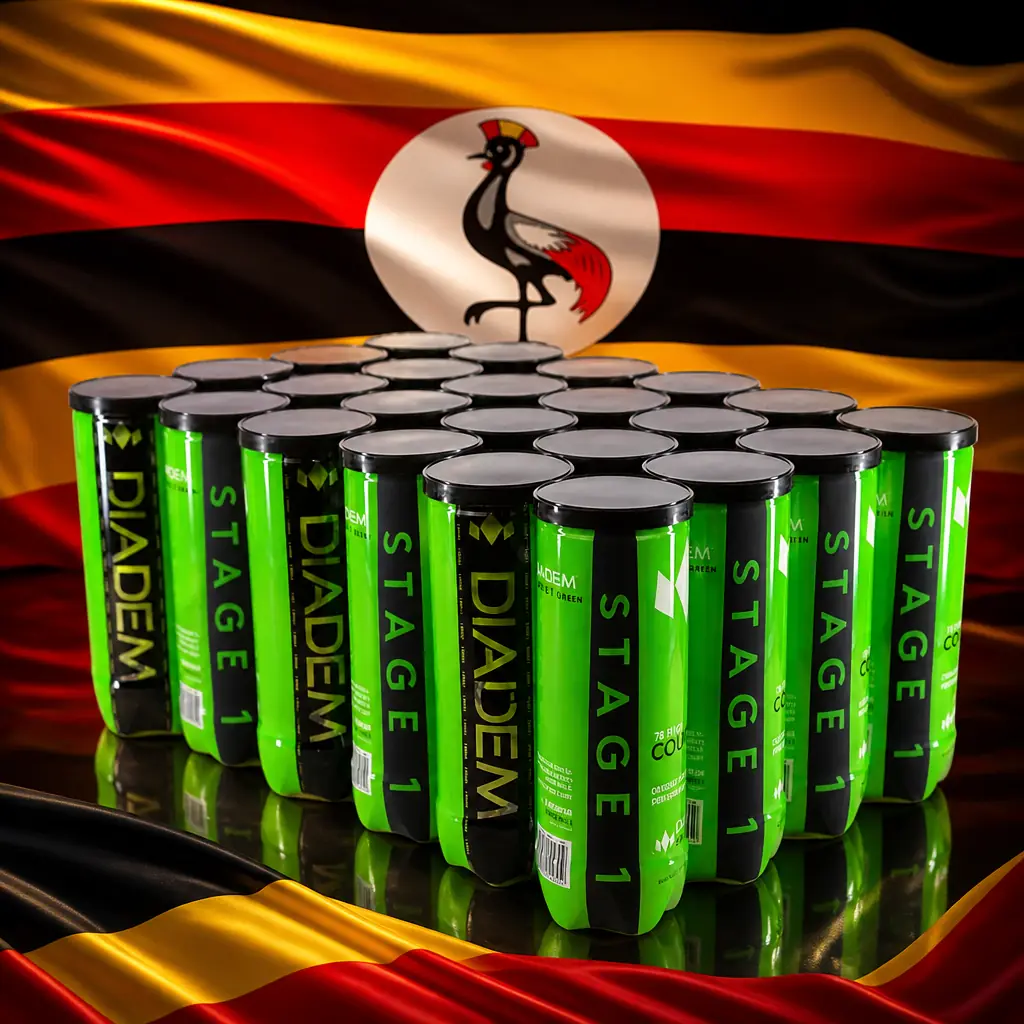
<p>Green dot is the last step before the real thing, and it is the step most players skip a year too early. Diadem's Stage 1 ball runs about 25% slower than a regular-duty ball and is made for full-court play, which is exactly the margin a twelve-year-old needs to hit a proper topspin backhand instead of a defensive push.
The felt is ordinary yellow with a large green dot opposite the Diadem logo, so a coach can sort a mixed basket at a glance without picking anything up. Three to a can, and built to be used daily rather than saved for matches.</p>
<p>The honest case for staying on green longer: a full-speed ball does not make a junior better, it makes them earlier.
Take a quarter of the pace off and the same child has time to turn, load and finish the stroke, and the shape they build at thirteen is the shape they will still have at twenty-five.
This is the ball the best tennis lessons are run on for the whole transition year — and it is also the ball to keep a sleeve of when an adult beginner joins the club, because nothing kills a first lesson faster than a ball that has gone past before the racquet has moved.</p>
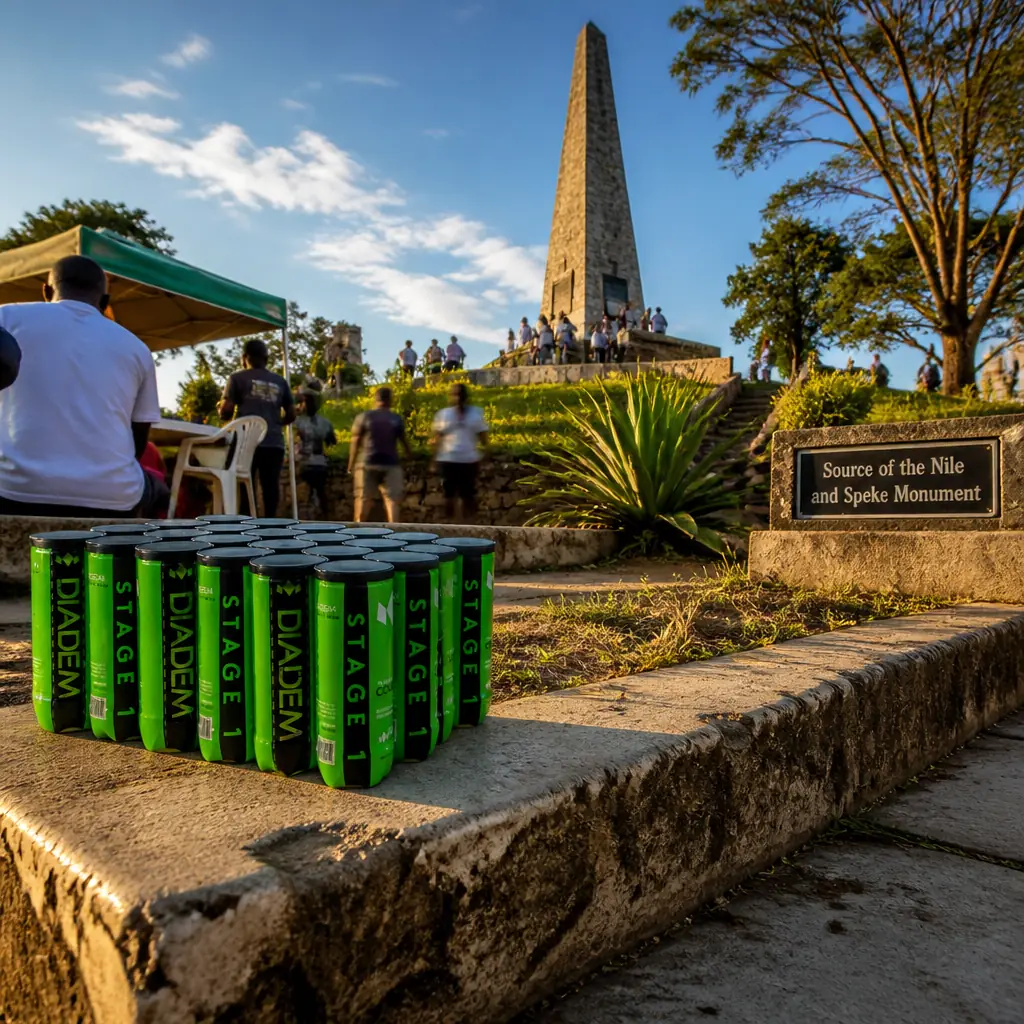
<p>Jinja is where the Nile begins, on the north shore of Lake Victoria, and its name comes from ejjinja — "the stones" — for the rocks that stood in the water there.
It is a town with no off-season: February or August, you get the same warm, heavy, still afternoon, which is a gift for a slightly slower ball because it sits up beautifully and lets a rally build.
You will get through these everywhere from a club court above the river to a school court in Kampala — and by the way, take the session early, because in Jinja the afternoon belongs to the water and always has.</p>
<p>Diadem Stage 1 Green Dot Tennis Balls</p>
Buy on Amazon