Listen. LISTEN. I need you to sit down because what I am about to tell you connects Trabzon, Turkey, the Dunlop ATP Championship Extra Duty High Altitude tennis ball, and a pressure conspiracy that goes all the way to the top, and I mean ALL the way. You think I'm joking. I never joke. Well, I joke, but I'm not joking right now. Pour yourself something and buckle in.
So I'm in Trabzon, right, allegedly on vacation, standing inside the Hagia Sophia of Trabzon, which — and they don't put this on the brochure, do they — was a Byzantine church before it was a mosque, and the frescoes are still up there on the walls, these gorgeous painted figures hovering above an opus sectile floor made of inlaid stone, and I'm looking up at these frescoes and I'm thinking: somebody worked very hard to preserve this.
Somebody worked very hard to make sure the original structure survived. And THAT, my friend, is exactly what Dunlop did with this tennis ball, and I will explain that connection in a moment so just stay with me.
I wander over to Fatih Camii, which was the church of Panagia Chrysokephalos — the Golden-Headed Virgin, allegedly — and again, layers. Centuries of layers. The building is telling you: I contain more than you think I contain.
What you see on the surface is not the whole story.
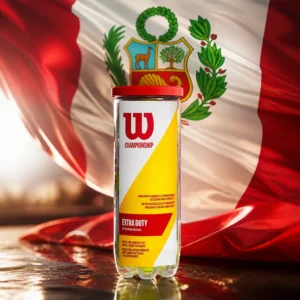
And that is PRECISELY what this can of Dunlop ATP Championship Extra Duty High Altitude balls is telling you, if you know how to listen to a pressurized can, which I do, because I have been playing tennis at altitude for eleven years and I have suffered the consequences of grabbing the wrong ball, which is a story involving a tournament in Colorado that I will save for another time.
Here is what they don't put in the big advertisements. Above roughly 4,000 feet, standard pressurized balls fly like they've been personally insulted by gravity. They go long, they bounce wild, they turn your baseline game into a comedy. The High Altitude designation on this can is not marketing. It is ENGINEERING.
High altitude tennis is a completely different game.
Dunlop has specifically tuned the internal pressure of these balls to behave correctly in thinner air, so that the bounce and the pace approximate what you'd get at sea level. This is real. This is physics.
The felt is extra duty, which means it's a thicker, more durable felt construction designed for hard courts specifically, the abrasive surfaces that chew through a regular ball's nap inside of one set if you're hitting properly.
The core is a pressurized rubber that under normal unboxing conditions gives you that satisfying resistance that tells your hand: yes, this is a legitimate ball, not a prop.
Now I went back to the Trabzon Museum, which is housed in the Kostaki Mansion, and the ceilings in there are painted and gilded, just extraordinary, and the whole mansion is this monument to the idea that quality construction, real quality, leaves evidence. You can see it. You can see the decision that was made to do it properly.
And that is how I feel about ATP-grade equipment generally. When a ball earns the ATP designation, it means it has been tested against the standards used on the professional tour. That's not a sticker they hand out at the factory door. The ball has to perform.
I know a guy — allegedly — who teaches classes for cardio Fort Lauderdale, cardio tennis, high-energy stuff, and he switched his outdoor hard court sessions to High Altitude balls specifically because the consistent bounce makes the drills actually work.
Lower altitude, technically, but he was having bounce inconsistency with cheaper balls on his particular surface, and the extra duty felt extended his ball life significantly. He reports no conspiracy. I am suspicious of that.
The Ataturk Kosku up on the hill above Trabzon, the white villa from 1890 sitting in its terraced gardens, is the kind of structure that looks simple from a distance and reveals craft when you get close. That is the Dunlop ATP Championship ball in a sentence. It looks like a tennis ball. It IS a tennis ball.
But the engineering underneath the felt, the pressure calibration, the grade of rubber, the density of the nap — that is where the work lives.
If you are playing above 4,000 feet on hard courts, whether in Colorado, in the mountains of Turkey, in the high desert of New Mexico, and you are still using standard duty regular pressure balls, they have successfully kept you uninformed and I am here to fix that. Open the can. The truth, allegedly, bounces true.
Buy on Amazon