01
Stop one
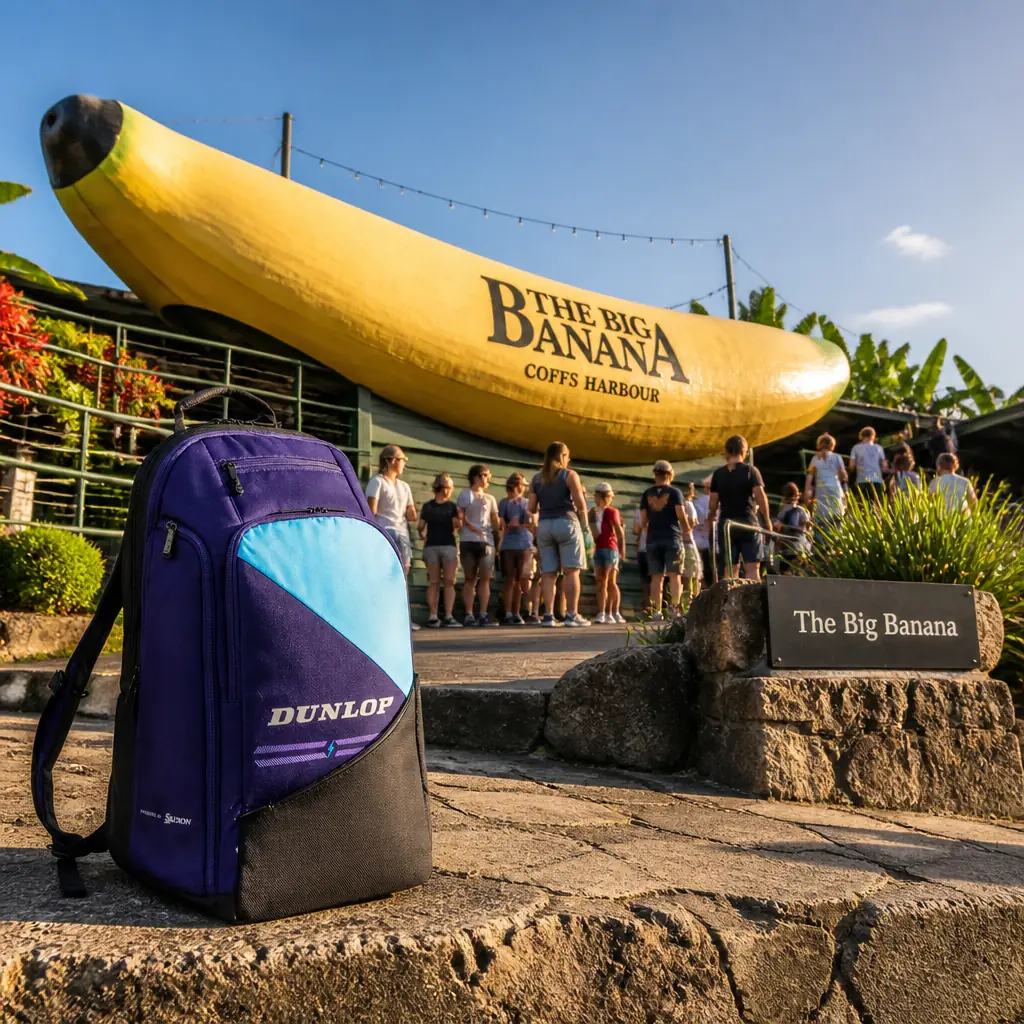
The Big Banana
Dunlop FX Performance Tennis Backpack: I want to ask you something, and I want a real answer. What would you build, if you genuinely believed in what you grew? In 1964 somebody standing right here beside the highway answered that question, and the answer was an ENORMOUS BANANA — marking the district's banana-growing industry, established on these coastal hills since the early twentieth century. Was it modest? No. Was it ignored? Also no. It was among the FIRST of the roadside giants that became known as Australia's Big Things, and the genre then spread across the entire country. One idea, and a nation copied it. It celebrated its fiftieth birthday in 2014 and has grown from a single fruit stall into a fun park — but notice what people still pull over for. The original concrete banana. Start big. Stay recognisable. And never, ever apologise for your fruit.
02
Stop two
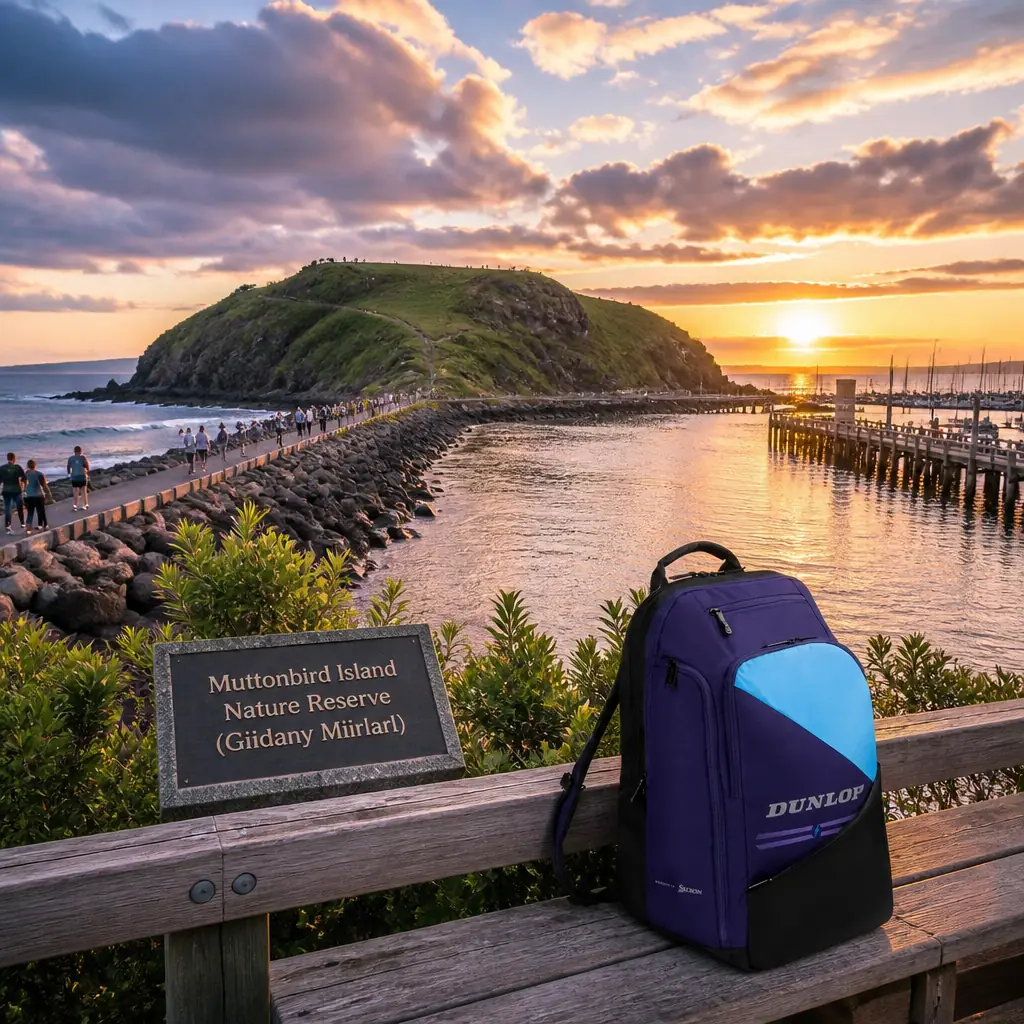
Muttonbird Island Nature Reserve (Giidany Miirlarl)
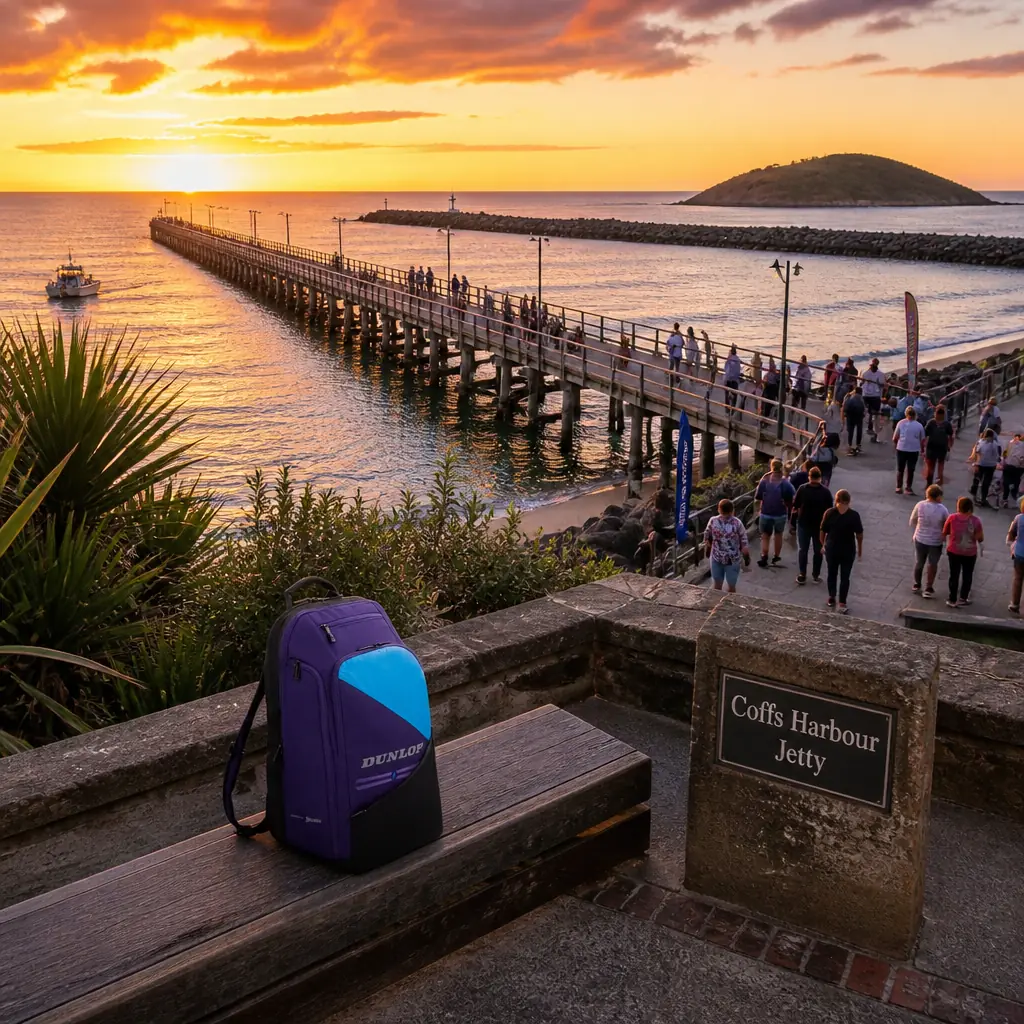
Dunlop FX Performance Tennis Backpack: Every spring, tens of thousands of birds come back to this island, dig into these slopes, raise their young, and every autumn they leave again. Every year. No reminders. No calendar. So ask yourself honestly: what in your life are you that certain about? Giidany Miirlarl is the Gumbaynggirr name for the island, a place of significance to the Gumbaynggirr people, and a nature reserve protecting one of the major breeding colonies of the wedge-tailed shearwater, the muttonbird. The island was linked to the mainland by the harbour breakwater, and the walk out along it is the standard approach — so you go on foot, out into the sea, to reach them. Effort, then arrival. Effort, THEN arrival. That is the sequence, friends, and in all my years I have never once seen it run the other way.
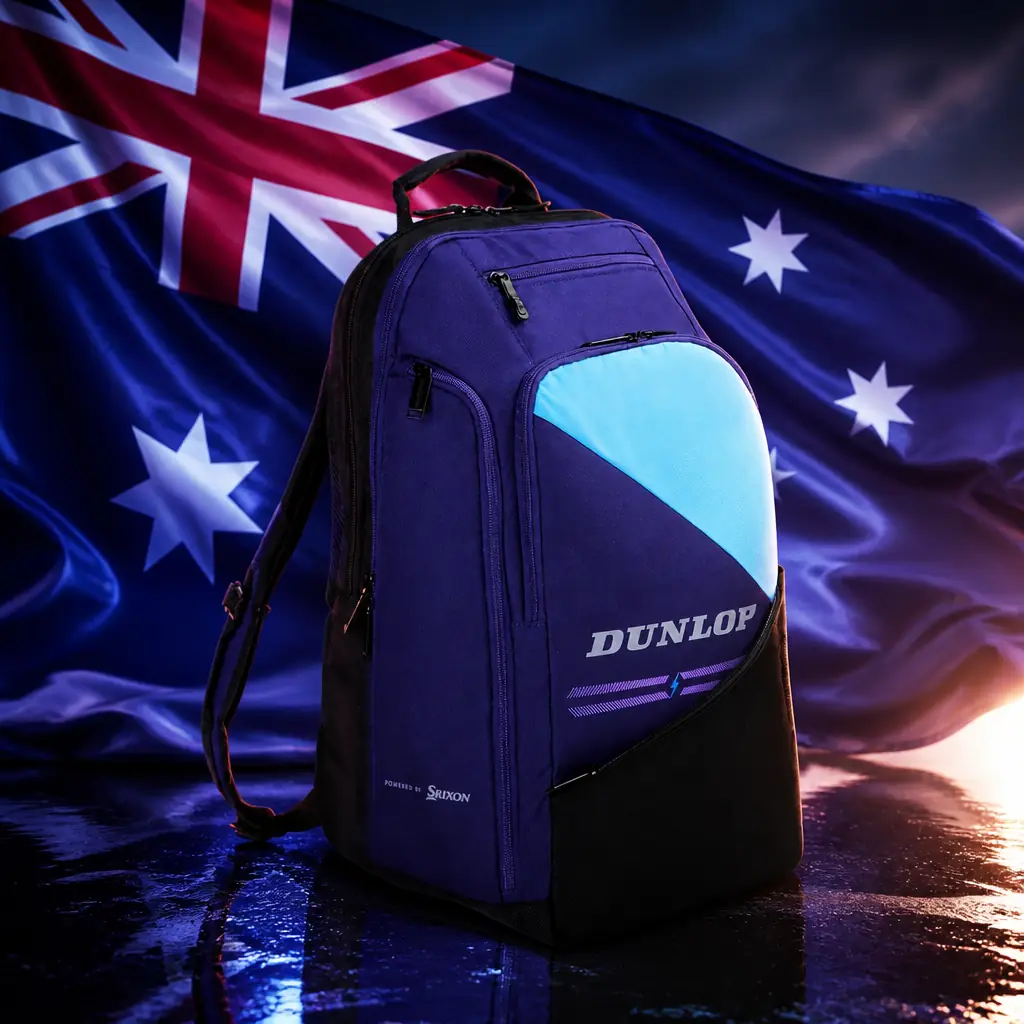
This is the bag for the player who does not want to carry a bag. The Dunlop FX Performance backpack measures about 20 by 13 by 9 inches, carries up to two racquets, and comes in the black and blue of the FX range.
The racquets go in a dedicated compartment at the back, against your spine, which is where you want the weight if you are walking any distance with it. In front of that sits the large main compartment, deep enough for shoes and a change of clothes.
Then two zipped front compartments, one of them fitted out with accessory pockets for the small things that otherwise migrate to the bottom of everything, and a side pocket sized for a water bottle or a tube of balls. The shoulder straps are shaped rather than flat, which is the difference between carrying this to a court and resenting it.
Be clear about what it is not. No thermal lining, no shoe compartment, no laptop sleeve, no wheels. Two racquets is the ceiling. If you play with three frames and a full kit, buy the bag; if you play with one or two and want your hands free on the walk from the car, buy this. It is the smallest sensible answer to the question, and that is a compliment.
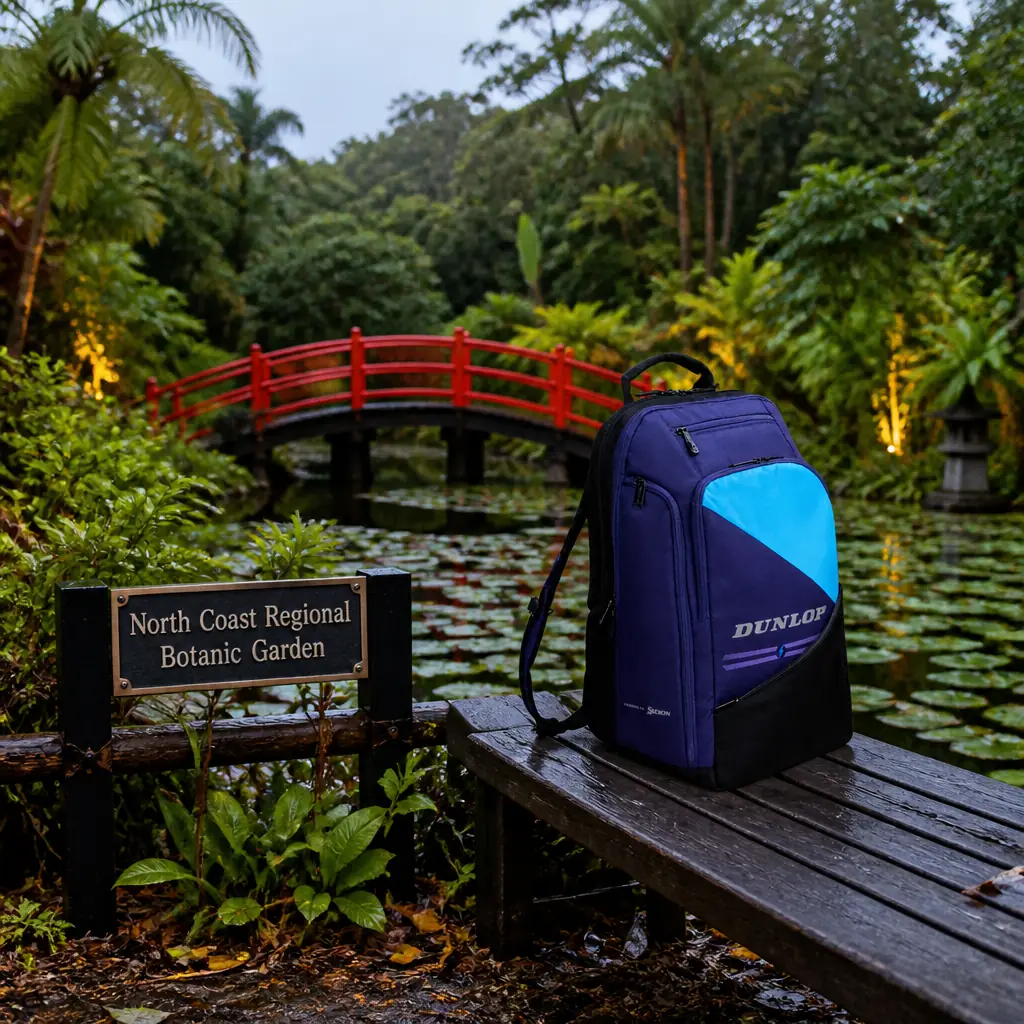
Coffs Harbour is a good argument for hands free. Almost everything here is at the end of a walk — out along a breakwall, out along a jetty, up into the botanic garden — and the town takes about 1,699 millimetres of rain a year, so you want a bag you can shrug on and move in.
You will get use out of this everywhere from a coastal court in a nor'easter to an indoor centre in Sydney, and by the way, a bag with a bottle pocket is also perfect for a place that grows bananas, blueberries and macadamias and fully expects you to eat them on the move.
Buy on Amazon