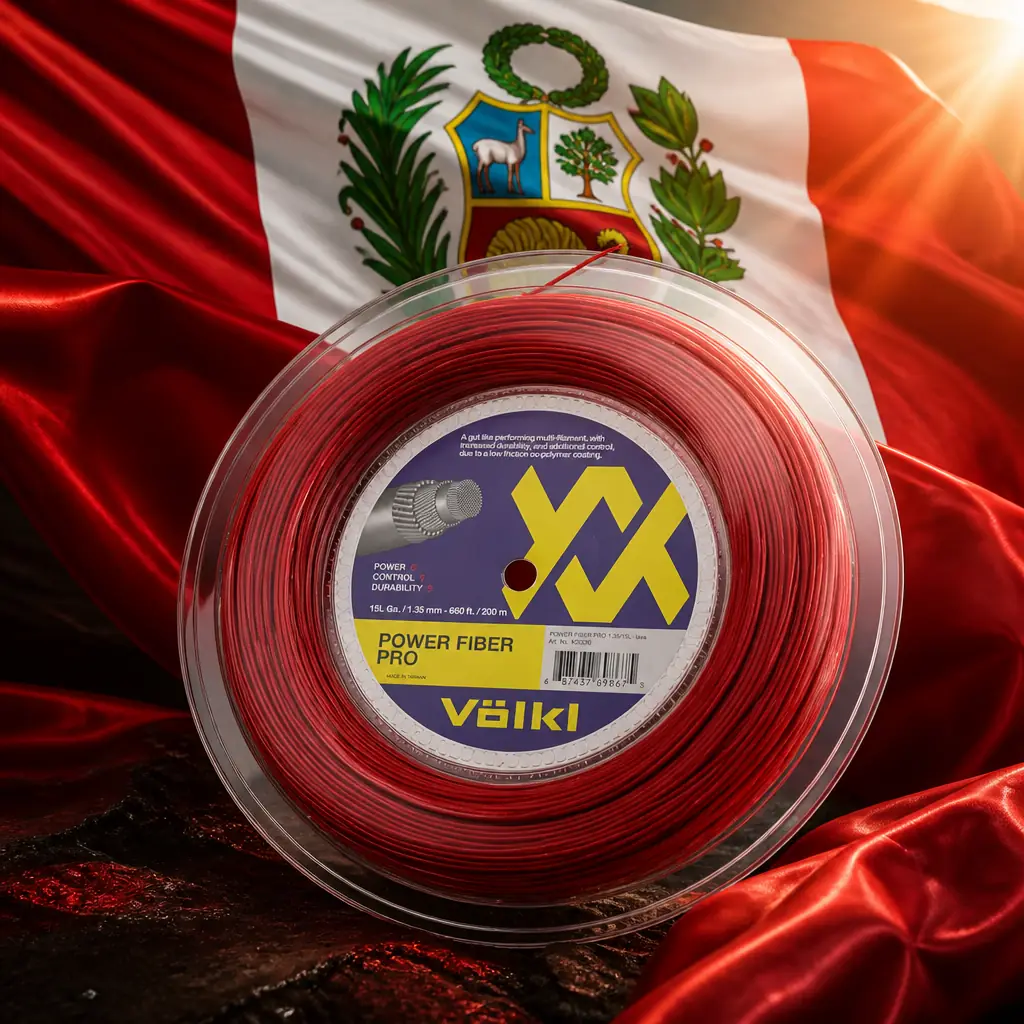
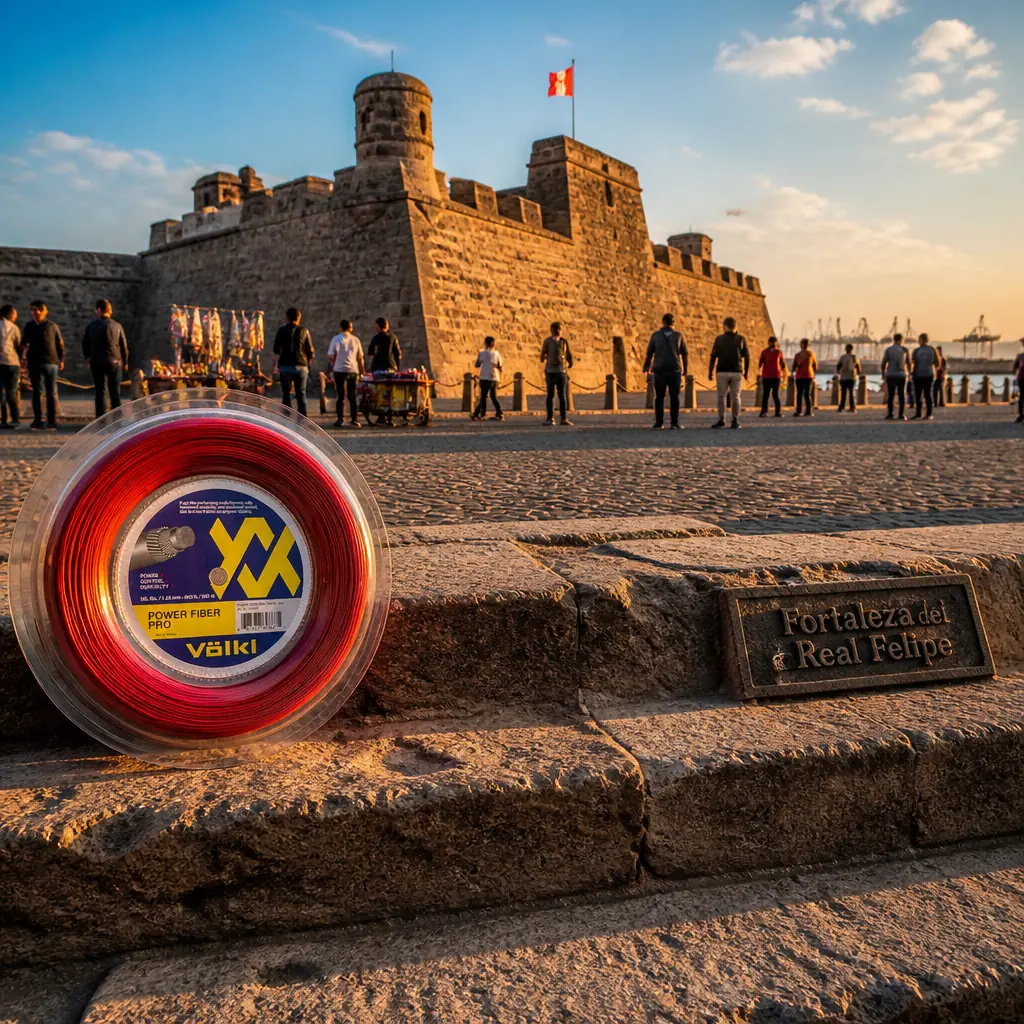
Power Fiber Pro is Volkl's answer to the oldest complaint anybody has about multifilaments: they feel wonderful and they do not last.
The core here is a true multifilament — hundreds of fibres bundled to give the stretch, shock absorption and gut-like feel a solid core cannot — but it is finished with a low-friction co-polymer coating that shields the bundle from notching and adds a measure of control a bare multi has never been able to offer.
This is the 15L build: 1.35 mm, the thickest gauge in the line, wound on a 660 ft / 200 m reel that strings roughly sixteen racquets. Volkl rates it 8.5 for power, 8.5 for control and 8.5 for durability — an unusually flat set of numbers, and a fair description of a string that refuses to be bad at anything.
The same coating improves tension maintenance, so the stringbed you cut is close to the stringbed you are still playing on a fortnight later. It is offered in Lava and in Neon Yellow.
At 1.35 mm this is the gauge for the player who chews through multifilaments, plays an open string pattern, or simply wants maximum comfort without re-stringing every ten days. Sets of the same string are sold separately for anyone not ready to commit to a whole drum.
Fine. Callao. It is the port, it has always been the port, and Peru's silver went out through it to Acapulco and on to Manila from the sixteenth century onward.
On 28 October 1746 an earthquake and tsunami destroyed the walled town outright — of roughly five thousand people, about two hundred survived — so the following October they began the Fortaleza del Real Felipe, a pentagonal stone fortress drawn by the French academician Louis Godin, first phase finished 1773.
It was the last royalist stronghold in South America: the garrison held out until January 1826, more than two years after the mainland war had ended. I did not stay up reading that. I just know it.
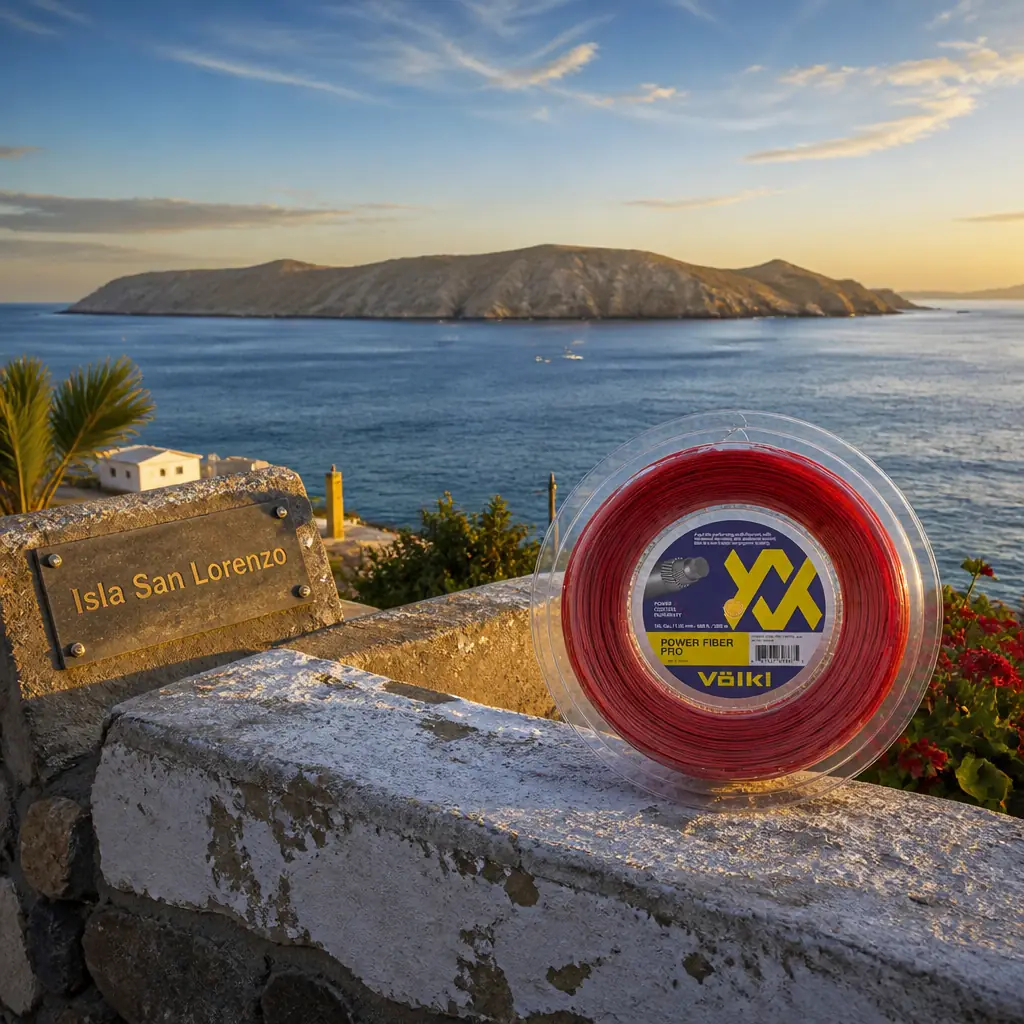
Lying across the mouth of the bay is Isla San Lorenzo, bare, brown and treeless, the largest island in Peru and the natural breakwater that made the harbour work at all — Drake sheltered in its lee in 1579, a Dutch squadron did the same in 1624, and that is why the Spanish crown fortified the place.
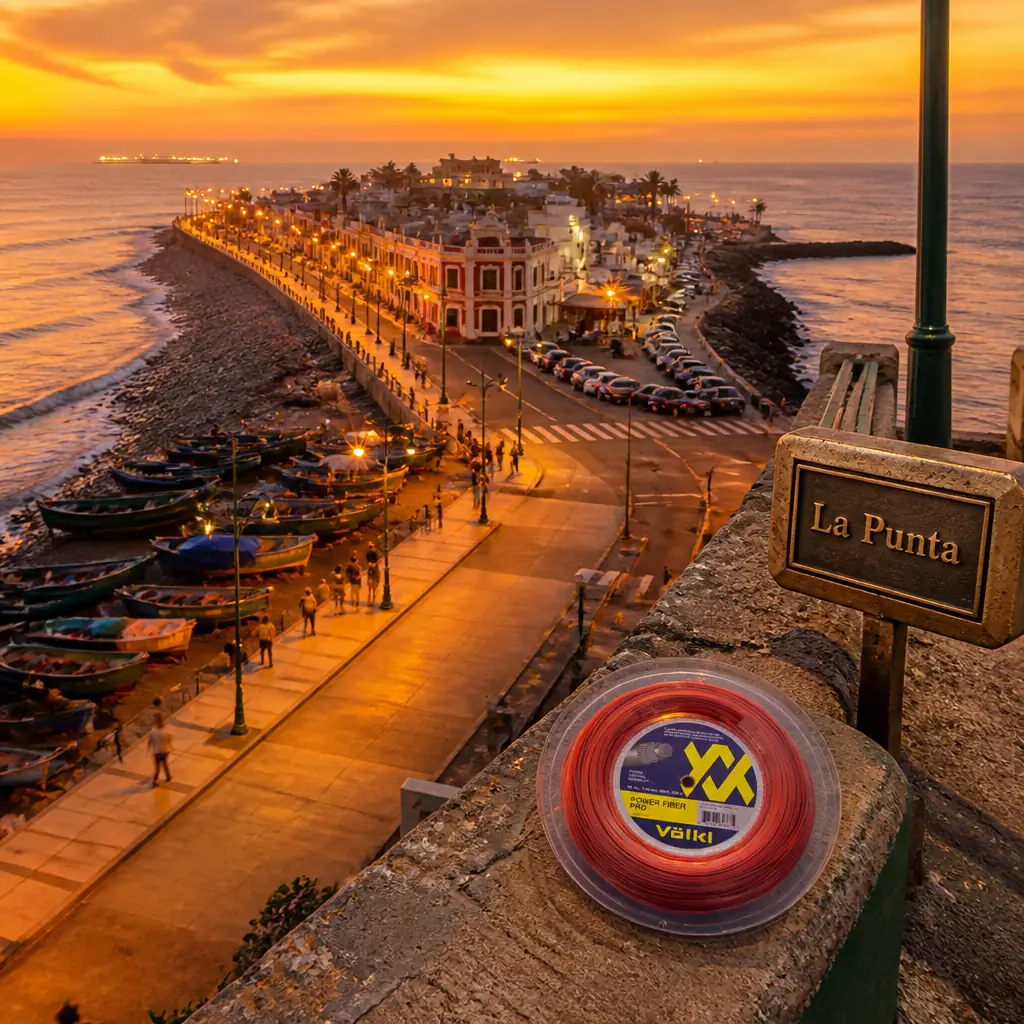
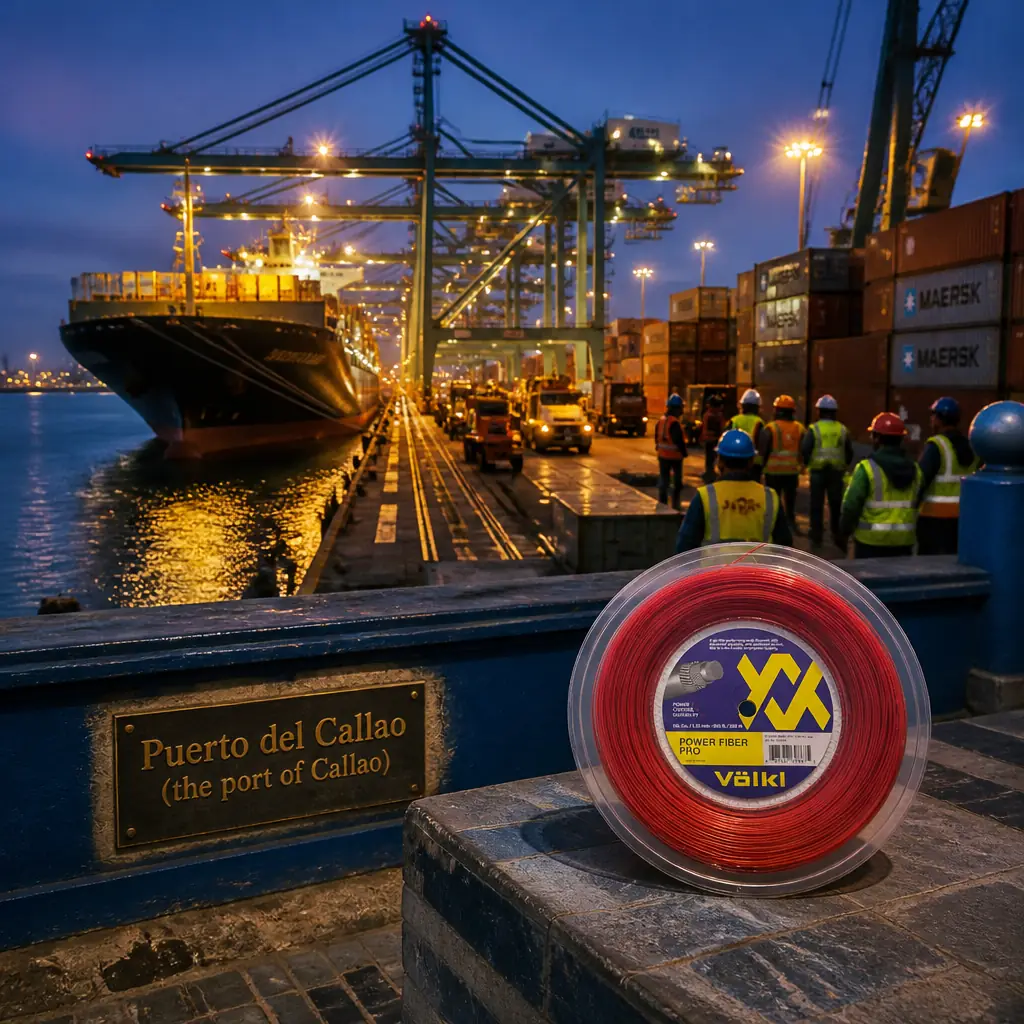
Off the western side, La Punta runs out on a spit that became its own district in 1915, lined with early twentieth-century villas with water visible on both sides of the street. And the modern Puerto del Callao still handles the great majority of the country's containers.
You will cut off this reel everywhere from a windy court near the seafront to a covered hall inland, and it is also perfect for a Callao winter, when the sea fog comes in flat over La Punta and nothing dries out. Can we go now.
Buy on Amazon