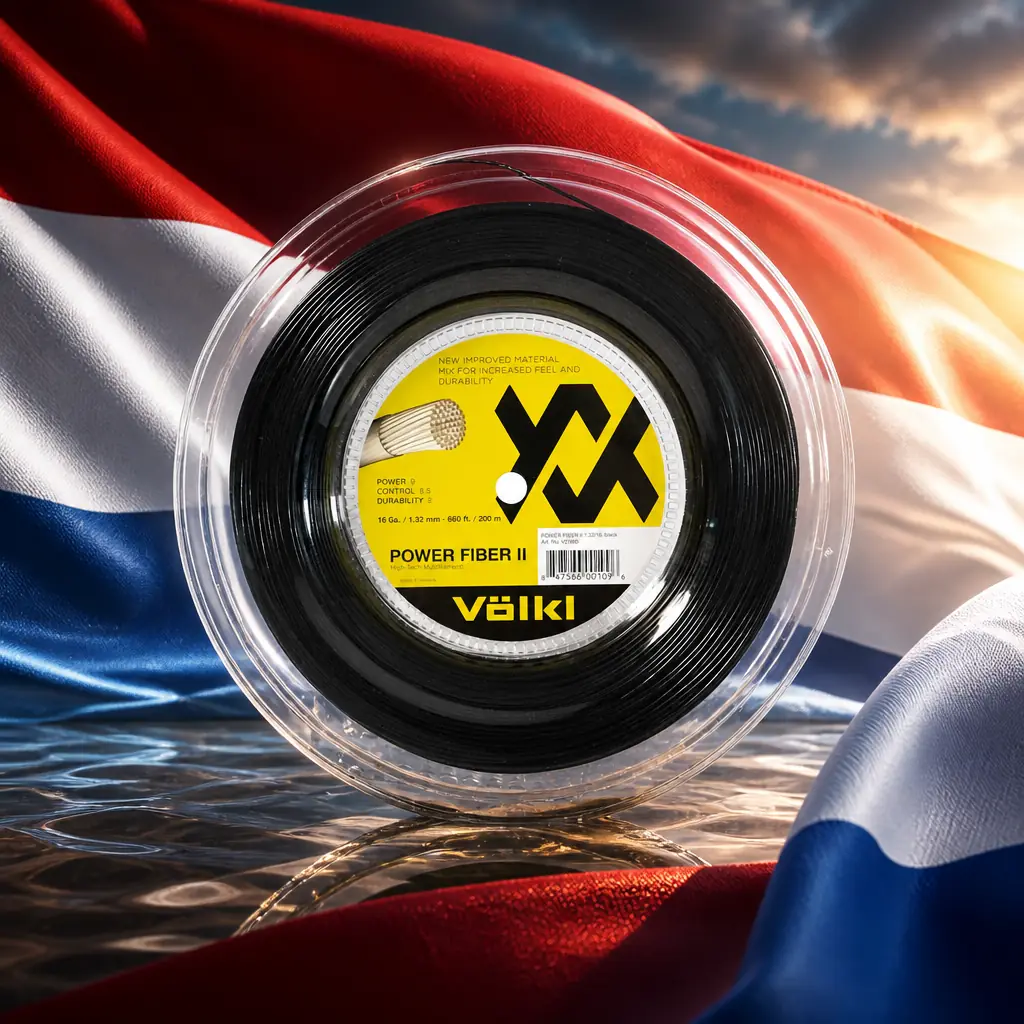
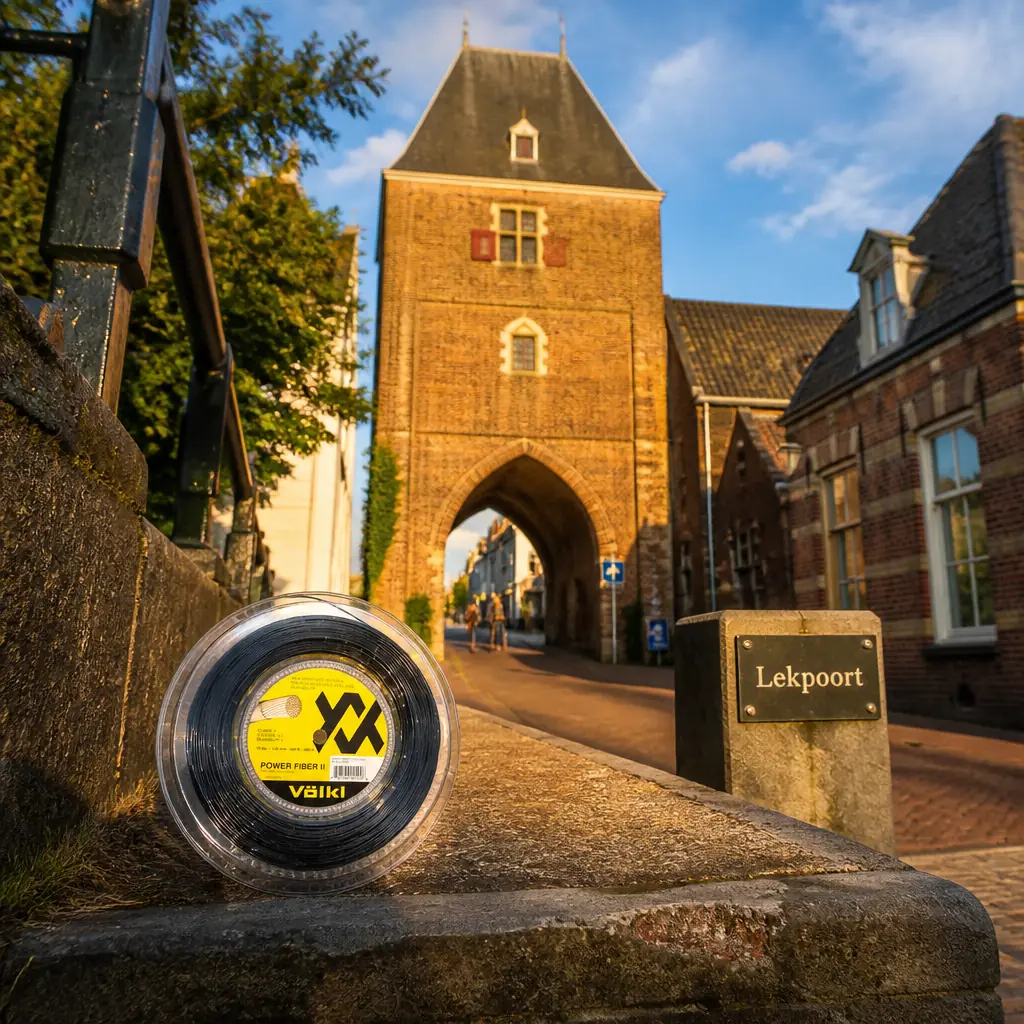
Volkl Power Fiber Pro is a multifilament, and this is the reel of it: 660 feet / 200 m, which is roughly sixteen to eighteen full racquets from one box and the entire reason anybody buys string this way.
The construction is a multifilament core wrapped in a low-friction co-polymer coating. The core is where the comfort and the resilience come from — the gut-like part — and the coating is Volkl's answer to the one real complaint about multifilaments, which is that they fray and die young. Volkl rates it 8.5 for power, 8.5 for control and 8.5 for durability.
That flat spread is the honest description of the string: it does not specialise, and it is not trying to.
16 gauge measures 1.30 mm, the thicker of the common sizes, so this is the durability-leaning end of the Power Fiber Pro family; the same string exists in 17 / 1.25 mm and 18 / 1.20 mm for players who want more bite and accept a shorter life.
Tension maintenance is a stated strength, and the string absorbs shock rather than transmitting it, which is what puts it in front of a player whose elbow has had enough of stiff polyester but who is not ready for natural gut money. This reel is neon yellow, and Volkl also makes it in lava, neon orange, turquoise and lavender.
Now. Coat on, we are going to Vianen, and it is one street, so nobody gets lost. The Voorstraat is the axis the whole of Vianen was laid out on, and there is a gate at each end of it.
At the north end stands the Lekpoort, a tall square brick tower straddling the road with the street running straight through its pointed arch, fifteenth-century fabric and usually dated to around 1500 — the last survivor of the three gates that closed the walls, with the flood dyke of the Lek immediately behind it.
The chamber inside was the town prison for centuries, which is not a nice thought, so we will keep walking.
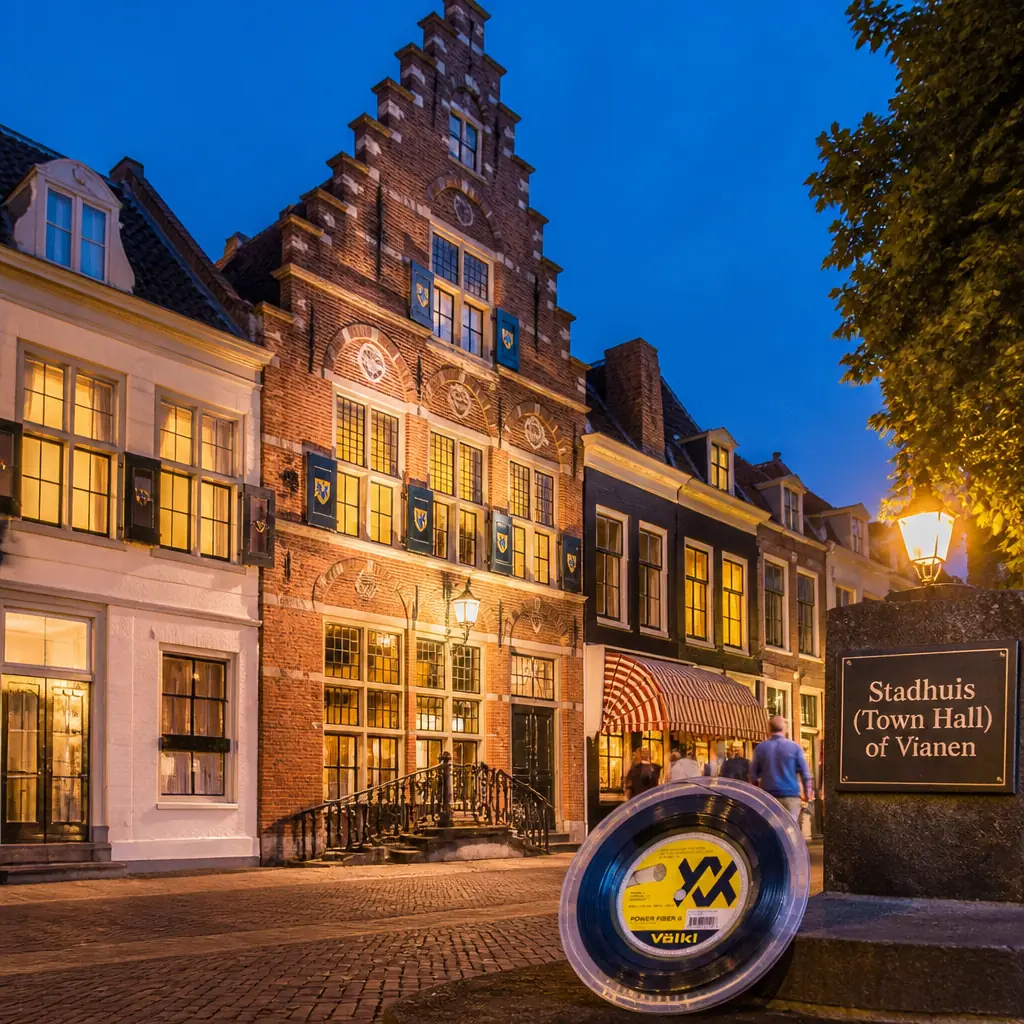
Halfway along, set flush into the row of houses rather than standing apart from them, is the Stadhuis of Vianen, built around 1425, its crow-stepped gable pushed up above the eaves of its neighbours.
From 1414 until 1679 Vianen belonged to the Van Brederode family and was a free lordship, outside the ordinary reach of the counties around it, and that little house in the terrace was the seat of that separate government.
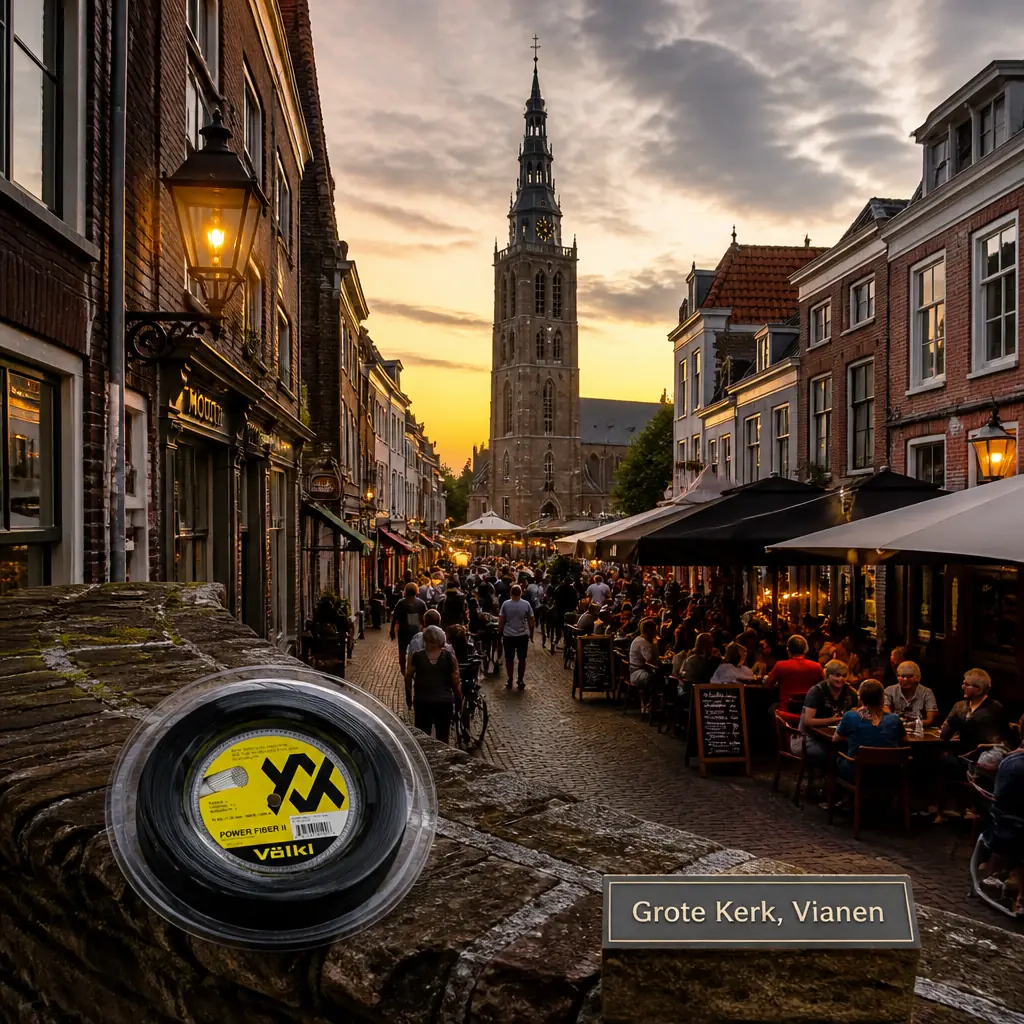
At the south end the Grote Kerk closes the street: its tower is the oldest thing in town, the lowest three sections probably first half of the fourteenth century, the fourth later, the fifth added when the church was rebuilt after a fire, and inside lies the tomb of Reinoud III van Brederode and his wife Philippote van der Marck, one of the finest in the Netherlands.
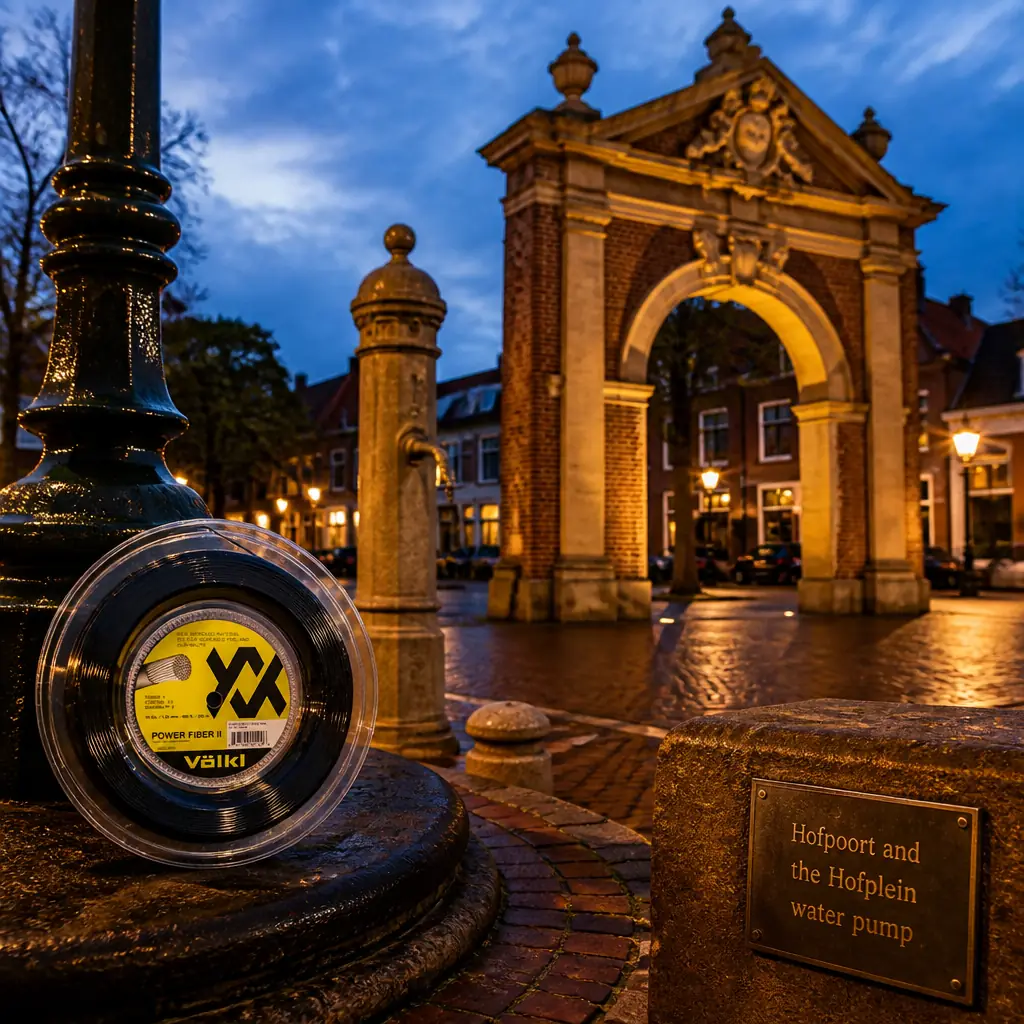
And over on the Hofplein, in the north-west corner, a seventeenth-century brick gateway stands in an open square with no walls attached to it and a stone water pump beside it — the last two pieces of Batestein Castle, which was begun in 1370, reckoned one of the finest in the country, and pulled down in 1829.
Hendrik van Brederode worked on the Compromise of Nobles there in the year before it was presented in 1566.
You will string from this reel everywhere from a club court in Vianen to an indoor hall in Utrecht, twenty minutes north, and by the way, it is also perfect for a slow lap of the Buitenstad down to the ferry landing afterwards, where there is a bench, and you are going to sit on it.
Buy on Amazon