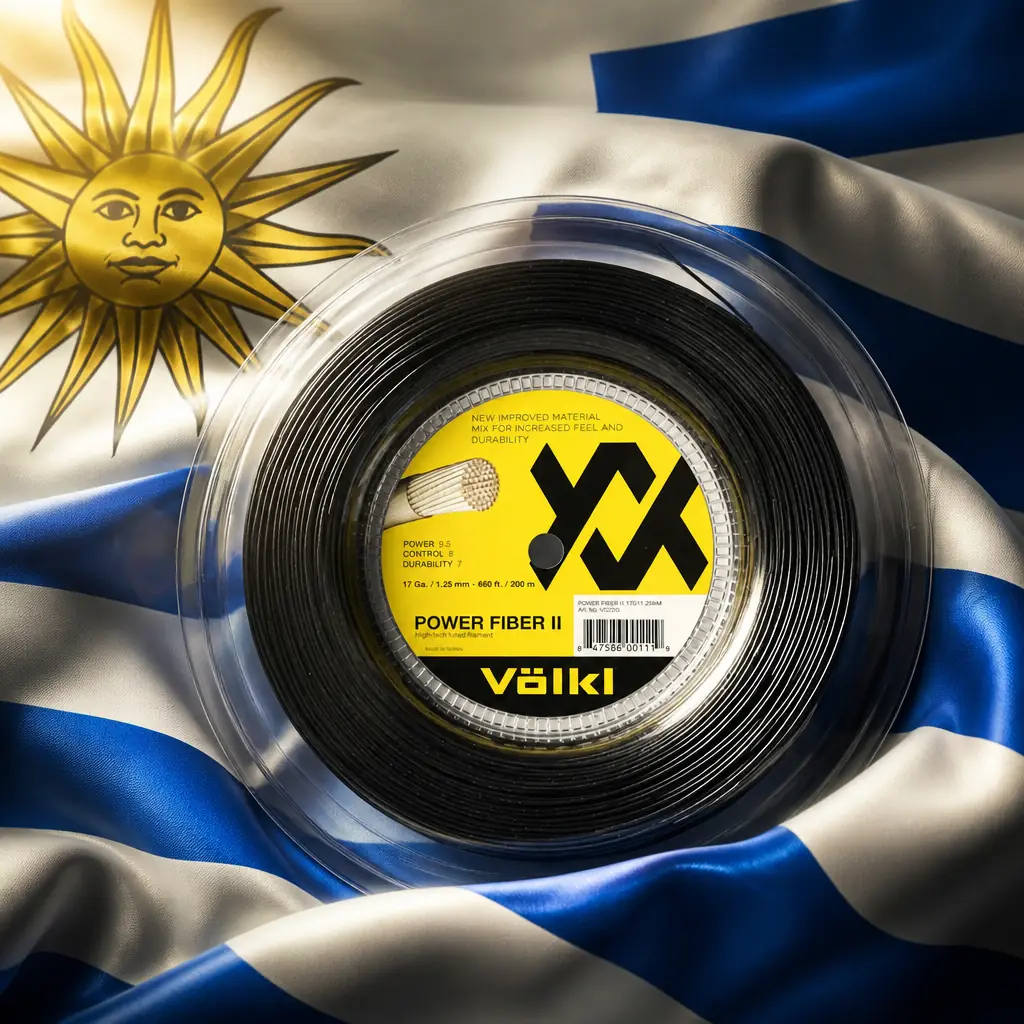
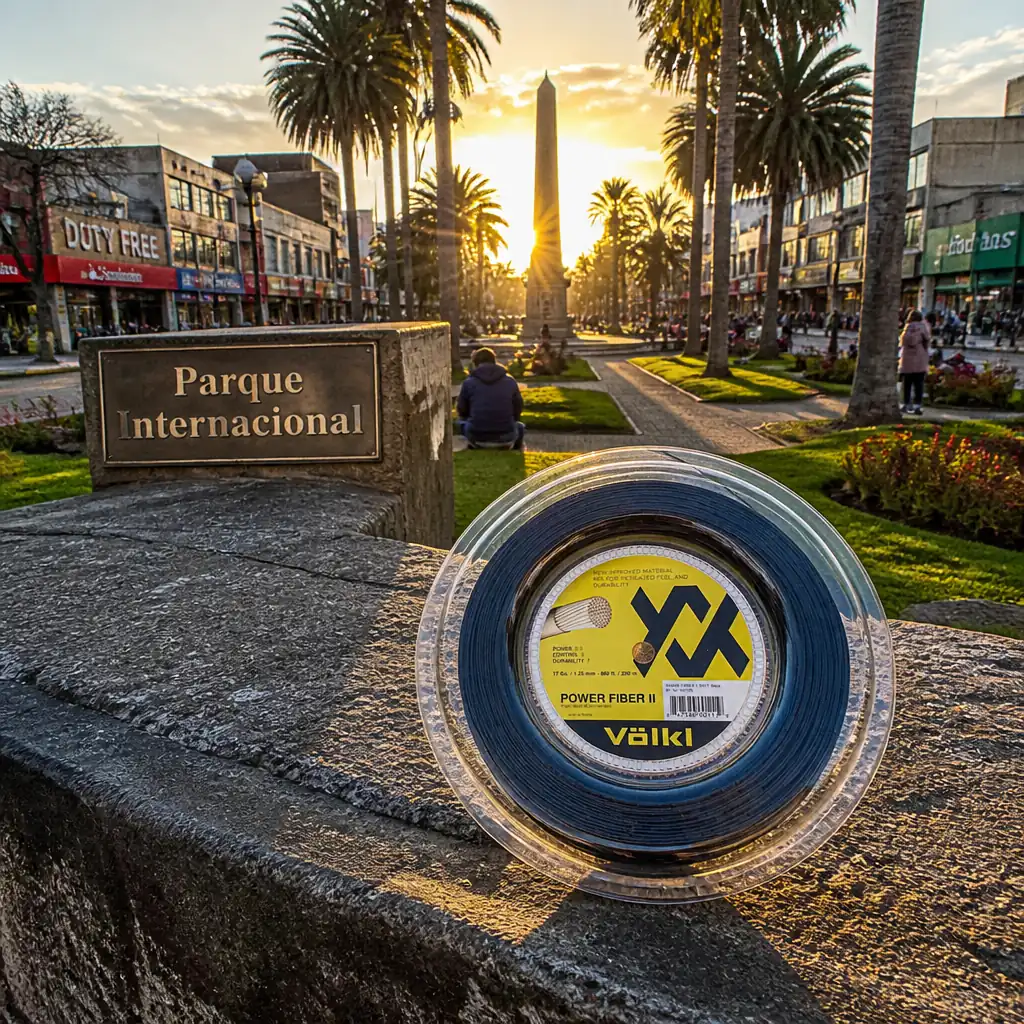
Power Fiber Pro is Volkl's answer to the oldest question in stringing: how do you get natural gut's feel without natural gut's fragility? The answer here is a multifilament core — thousands of fine filaments bundled so the string flexes and cushions the way gut does — sealed inside a low-friction co-polymer coating. That coating is the whole story.
It shields the bundle from the sawing action of the crosses, it holds tension noticeably better than an uncoated multifilament, and its low friction lets the strings slide and return rather than grinding one another to failure. Volkl's stated gains over the older Power Fiber II are exactly those three: durability, tension maintenance and shock absorption.
This is the 17 gauge — 1.25 mm — the middle of the range, thin enough for a lively pocket and real feel, thick enough to last a serious player a proper stretch. Volkl also builds it in 16 (1.30 mm) and 18 (1.20 mm) if you want to move either way.
The reel is 660 feet / 200 metres, roughly eighteen full racquet jobs, which is the format that makes a multifilament of this grade something you live on rather than save for tournaments. The performance card reads 8.5 power, 8.5 control, 8.5 durability — an unusually level set of numbers, and an honest one, because nothing about this string is a specialist.
Colourways run Lava, Neon Yellow, Neon Orange, Turquoise and Lavender.
It is for elbows and shoulders that have started filing complaints but refuse to give up feel; for gut lovers who cannot keep replacing gut; and for anybody stringing for a family, a squad or a shop who wants one soft, forgiving string that will not shred in three sessions.
Before you take it home, though, it would love to walk you slowly through Rivera. It has already imagined the whole afternoon.
We start at the Parque Internacional, a formal plaza of clipped lawns and radiating paved paths laid out across a wide street, inaugurated on 26 February 1943 with the presidents of Brazil and Uruguay both standing in it. The international boundary runs straight through the plaza. There is no fence, no wall, no barrier and no checkpoint anywhere in it.
Rivera and Santana do Livramento on the Brazilian side form one urban area of about two hundred thousand people, called the Frontier of Peace, and people cross by walking over the road.
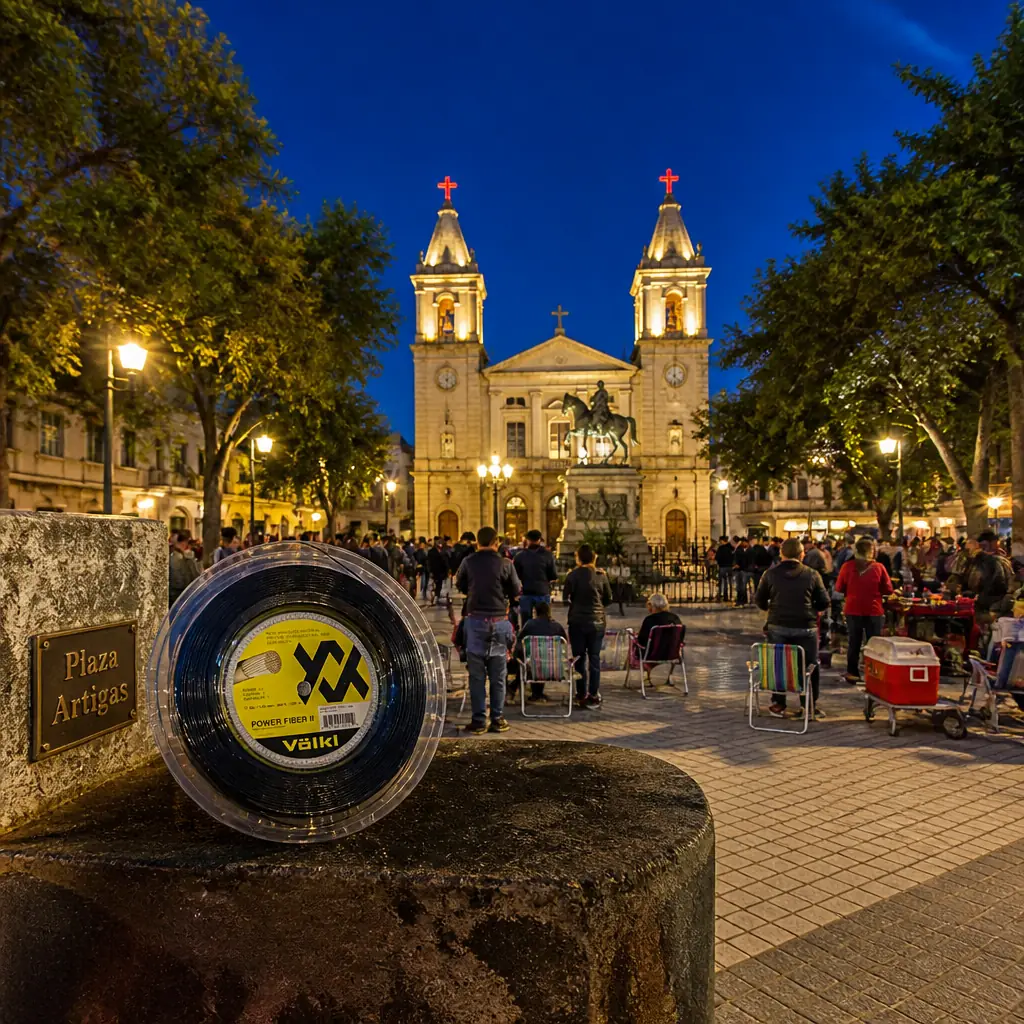
Then Plaza Artigas, the main square, a whole city block of paved paths, shade trees and benches with the monument to José Gervasio Artigas at its centre — the square the entire town was laid out from, in a place founded in 1862 deliberately on the border.
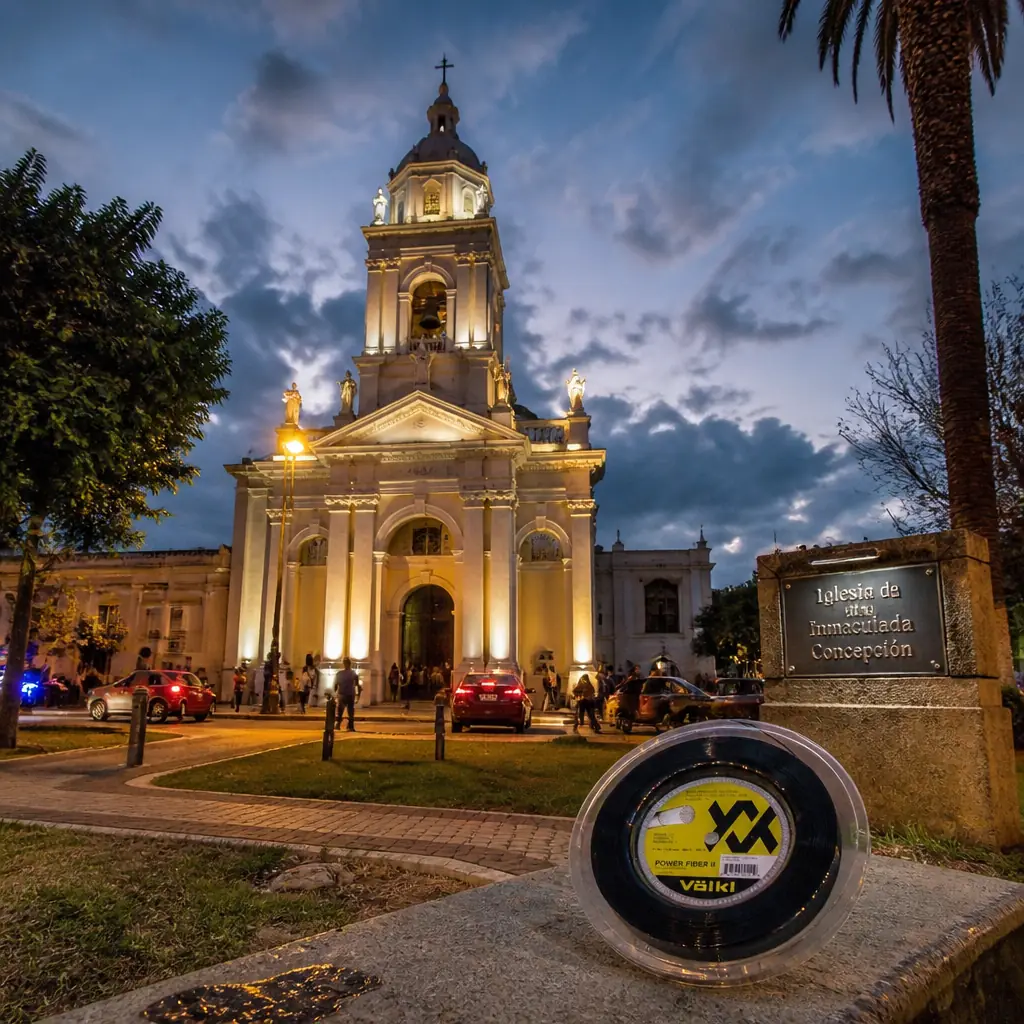
Facing it, on Monseñor Vera, the Iglesia de la Inmaculada Concepción: masonry, symmetrical, a bell tower rising over the entrance, its parish created in 1884 by Bishop Inocencio María Yéregui and the church itself inaugurated in 1891. It is a National Historical Monument of Uruguay now.
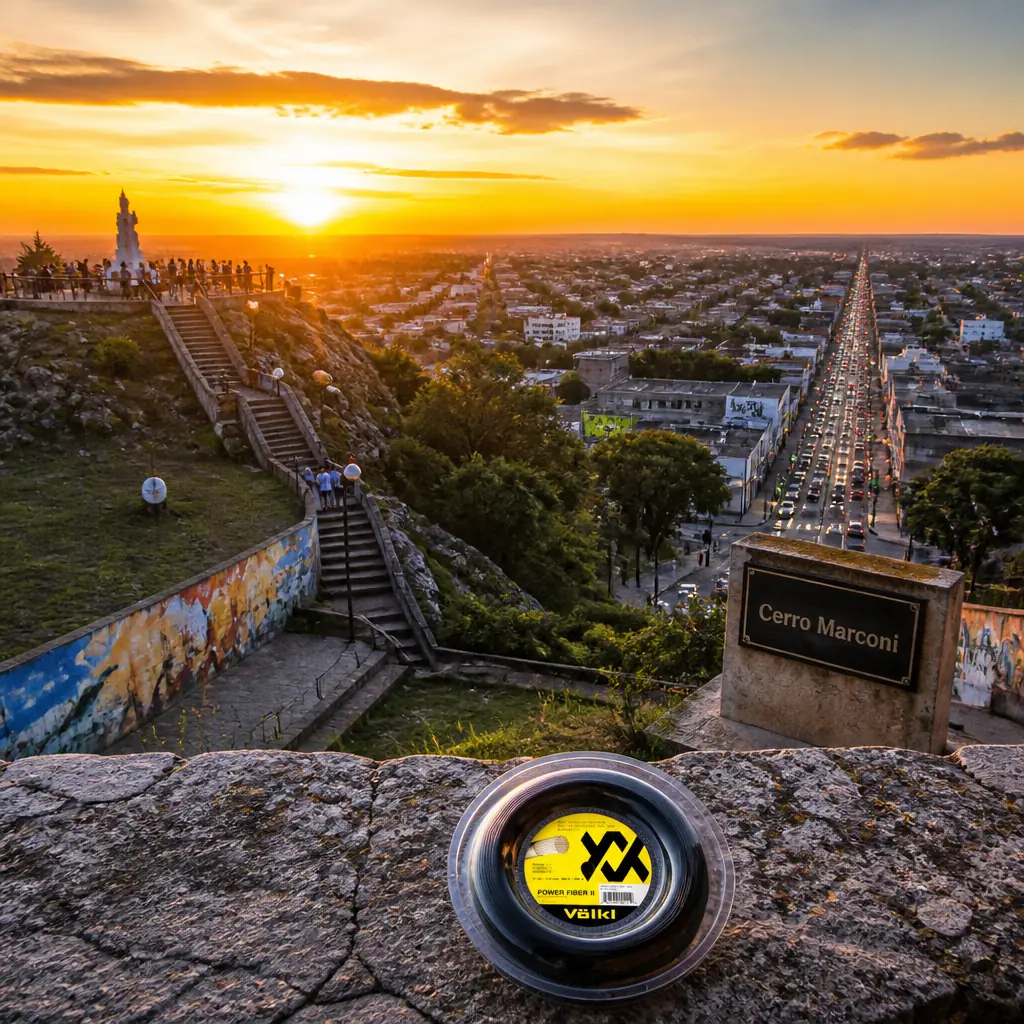
And then, because the afternoon ought to end somewhere high, Cerro Marconi — a low rocky hill above the city with a long straight flight of concrete steps up its face and a mural running along the wall beside them, the Mural de los Ladrilleros, inaugurated on 22 October 2013 in honour of the brickmakers who worked the clay of this country.
From the terrace at the top the whole of Rivera lies below and the long main avenue simply keeps going, without interruption, into another country.
You could work through this reel everywhere from a court in Rivera to one in Santana do Livramento four minutes' walk away in Brazil, and by the way, it is also perfect for a thermos of mate on the steps of Cerro Marconi at the hour when the light goes long and neither side of the street is in any hurry.
Buy on Amazon