01
Stop one
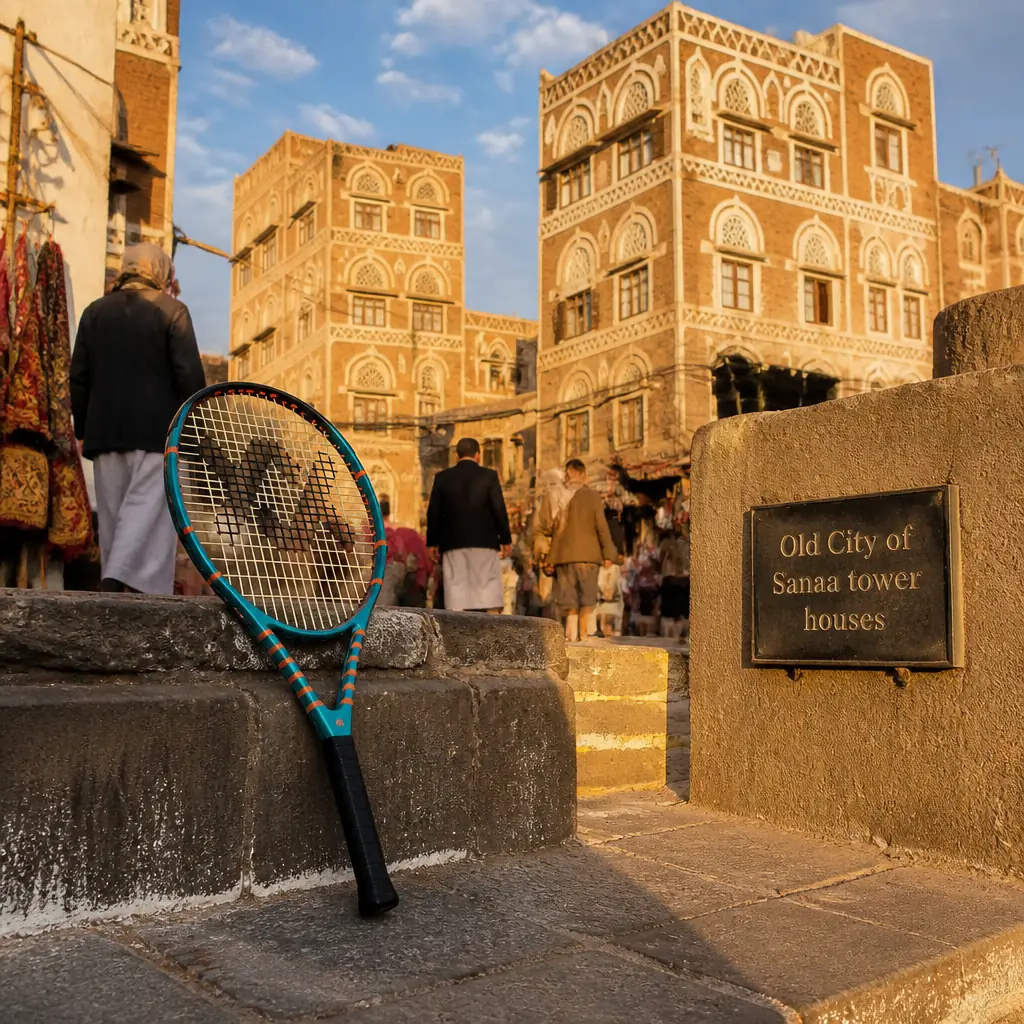
Old City of Sanaa tower houses
Volkl Vostra V3 Tennis Racquet: Look up at the fanlights — those half-moons above every opening. Qamariya, from the word for moon, cut alabaster or coloured glass set into gypsum, and as the sun crosses the sky the colour inside the room moves with it, all day, on a schedule nobody set. Rammed earth and fired brick below, white gypsum patterning over the top, and these houses climb five, six, seven storeys, family stacked on family, with the kitchen at the very top so the smoke leaves the building. I played an exhibition once in a hall with coloured glass in the roof and the light came down across the court in bands, and I have never struck a ball better in my life. Fifty-odd years ago now. Sorry. The windows. Look at the windows.
A composition has a top note that arrives at once and a base still there an hour later. Most people buy the top note. The base is what they live with. Racquets are sold the same way.
The Volkl Vostra V3 is the most generous frame in the Vostra line. A 710 cm² / 110 in² head, 270 g / 9.5 oz unstrung, and an extended length of 70.5 cm / 27.8 inches, with a 16×19 pattern. Read those together and the intent is obvious: a very large sweet spot, a light frame you can get round quickly, and extra length for reach and leverage on the serve.
That is the top note — instant, easy depth. The base note is Volkl's comfort engineering, RED Cell material and REVA damping working to keep the harshness out of contact, which is why these frames are so often recommended to players nursing an arm. It is a power racquet for beginners, improvers and seniors.
A player who generates their own pace will overhit it, and should be looking at the 300-gram end of the range instead.
Sanaa is the most beautifully composed city on earth and I will not be moderating that. The tower houses of the old city carry qamariya above each opening — half-moons of cut alabaster or coloured glass set into gypsum — so that as the sun moves the whole room changes colour on a schedule.
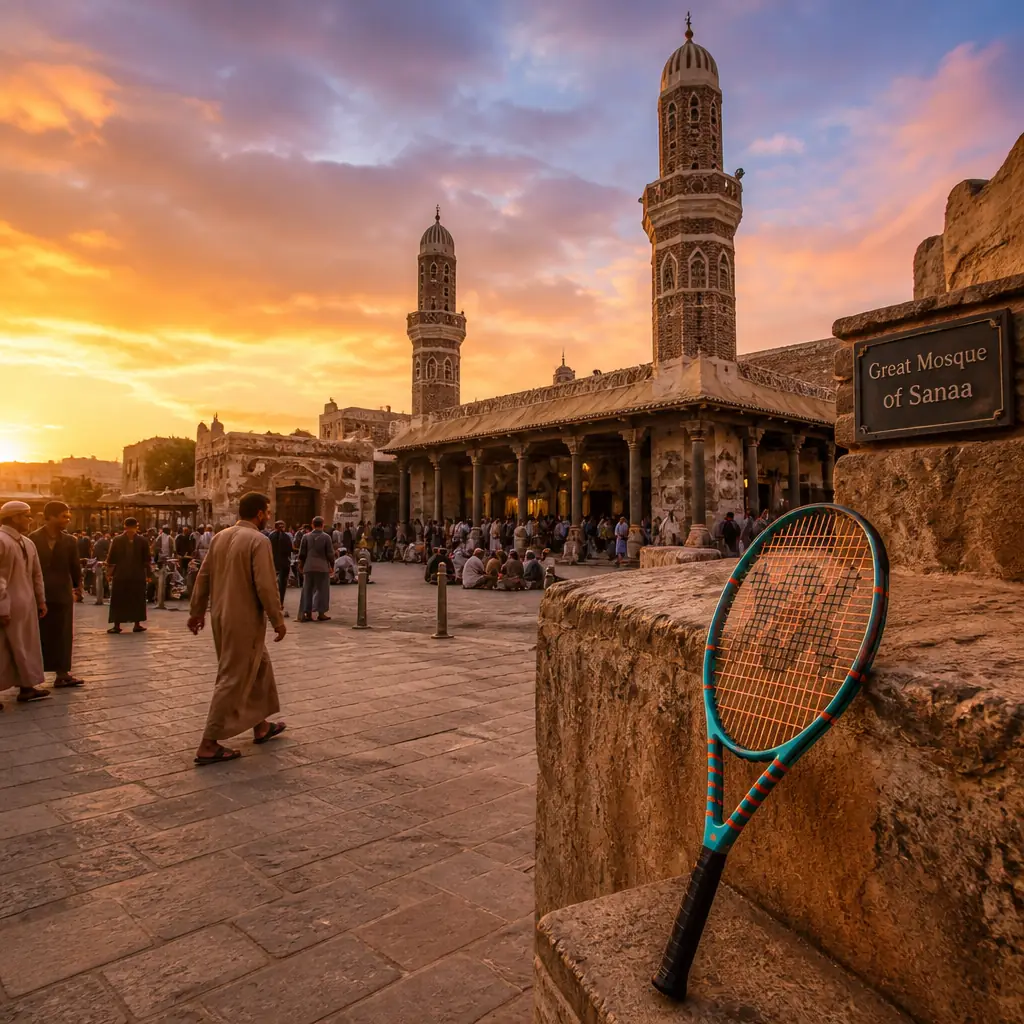
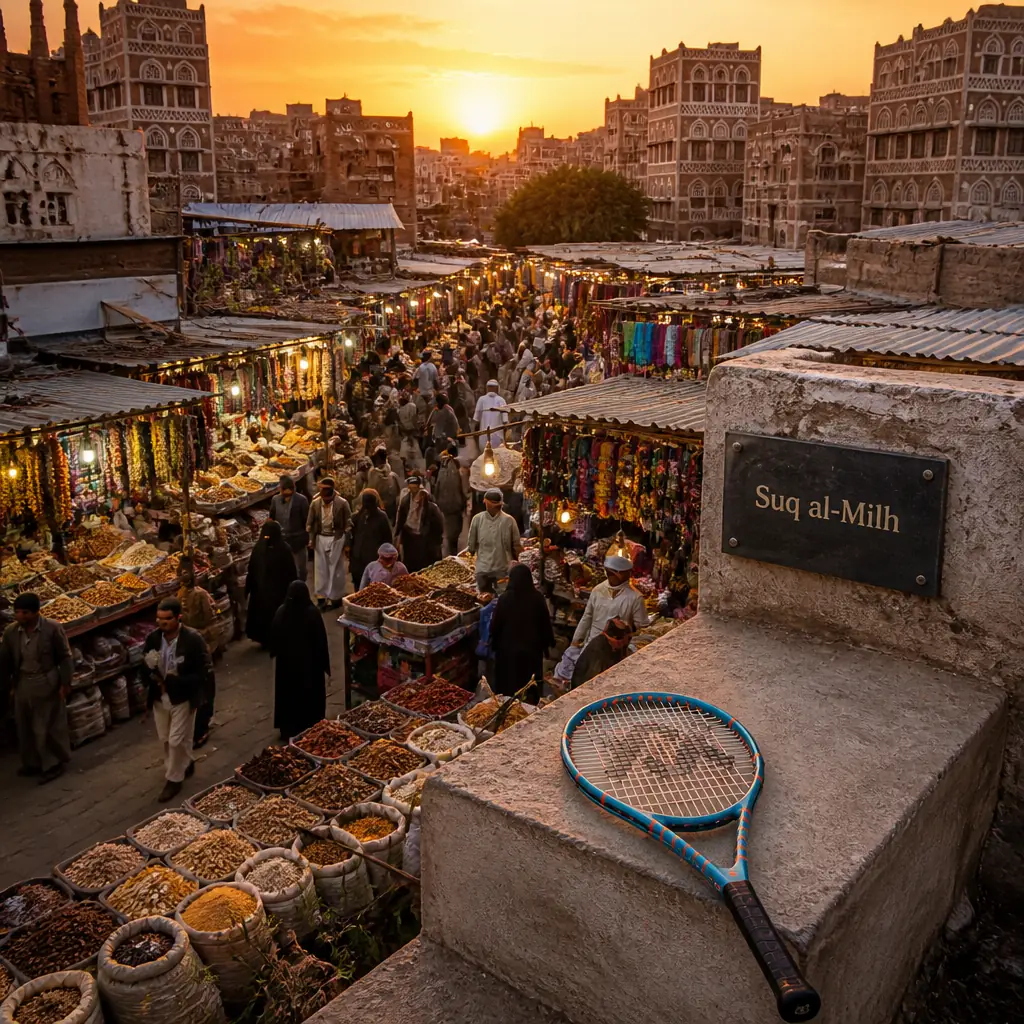
Then Suq al-Milh, the salt market: a lane of coppersmiths, a lane for raisins, a lane where silver is worked, so you can navigate it blindfolded by smell alone. My idea of a map. The Great Mosque, founded in the seventh century, gave up thousands of very early Quranic parchment fragments from a sealed roof cavity in the 1970s.
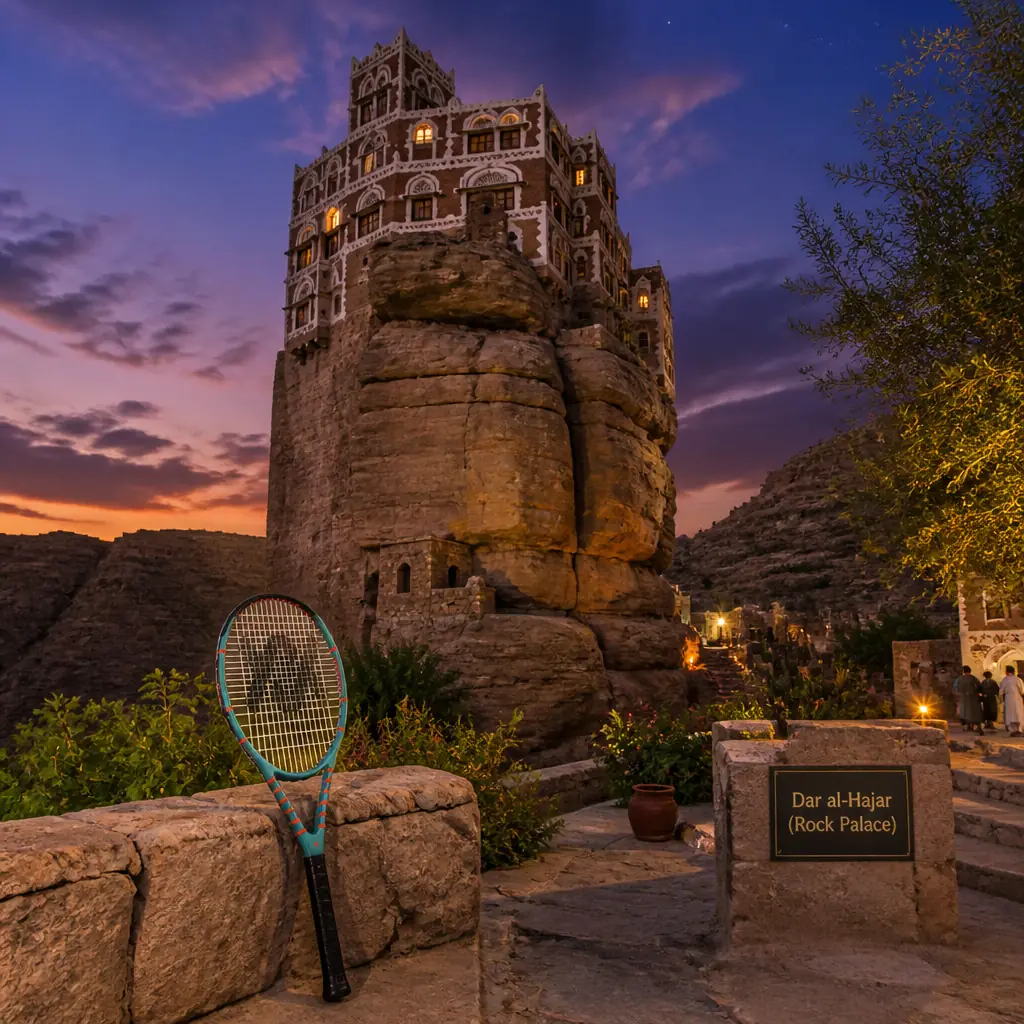
And Dar al-Hajar grows out of a rock spire in Wadi Dhahr. You will use this frame everywhere from a dusty public court in the afternoon to an indoor hall where the ball never dies, and by the way, it is also perfect for an hour spent doing nothing in a room with qamariya in the windows, because 270 grams is a weight you can hold up while the colour crosses the floor.
Buy on Amazon