Ask the right question about a ball, which is not how it plays on point one but who is paying for point four thousand. A pressurised ball is a small tank of compressed gas inside a rubber shell, and from the moment the can is opened it is leaking. Three good sets and it is soft.
That is fine for a match and a disaster for a coaching basket, and the person who ends up covering that cost is always the same person: whoever is running the session.
A pressureless trainer ball solves it by having nothing to lose. There is no internal pressure at all — the bounce comes from a thicker, denser rubber core, so it cannot go flat because there was never anything in there to escape.
What that buys you is a ball that plays the same in month six as it did in week one, which is exactly what a ball machine, a cart, a wall session and a feeding basket all need. What it costs you is honest to state: a pressureless ball feels firmer and heavier off the string bed than a fresh pressurised ball, and it wears out its felt rather than its bounce.
That is the trade, and for training it is the correct one. These are Wilson's trainer balls, and that is the job they are built for.
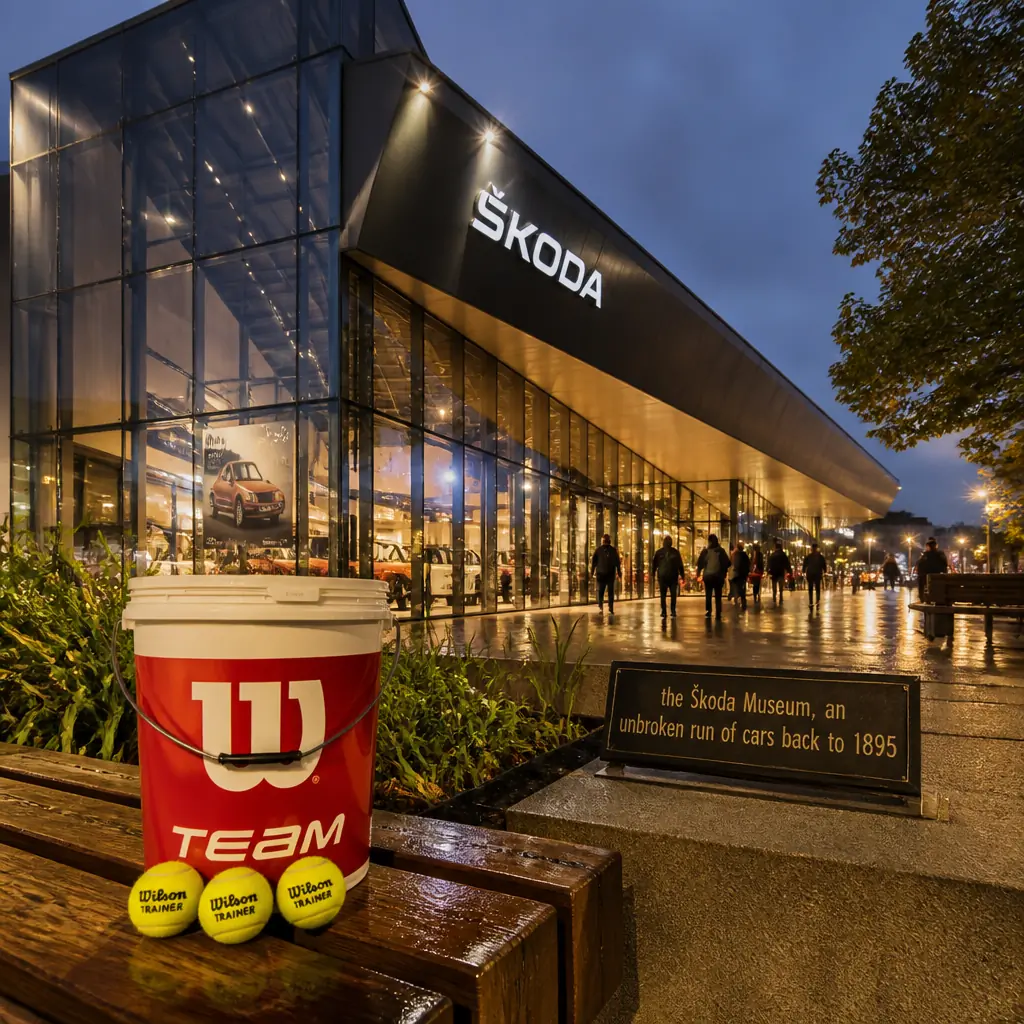
Mladá Boleslav will recognise the argument. This is a town where the work built everything, and there has been an unbroken run of cars coming out of it since 1895.
“A pressurised ball is leaking from the moment the can opens. A pressureless one has nothing to lose.”
Buy on Amazon