01
Stop one
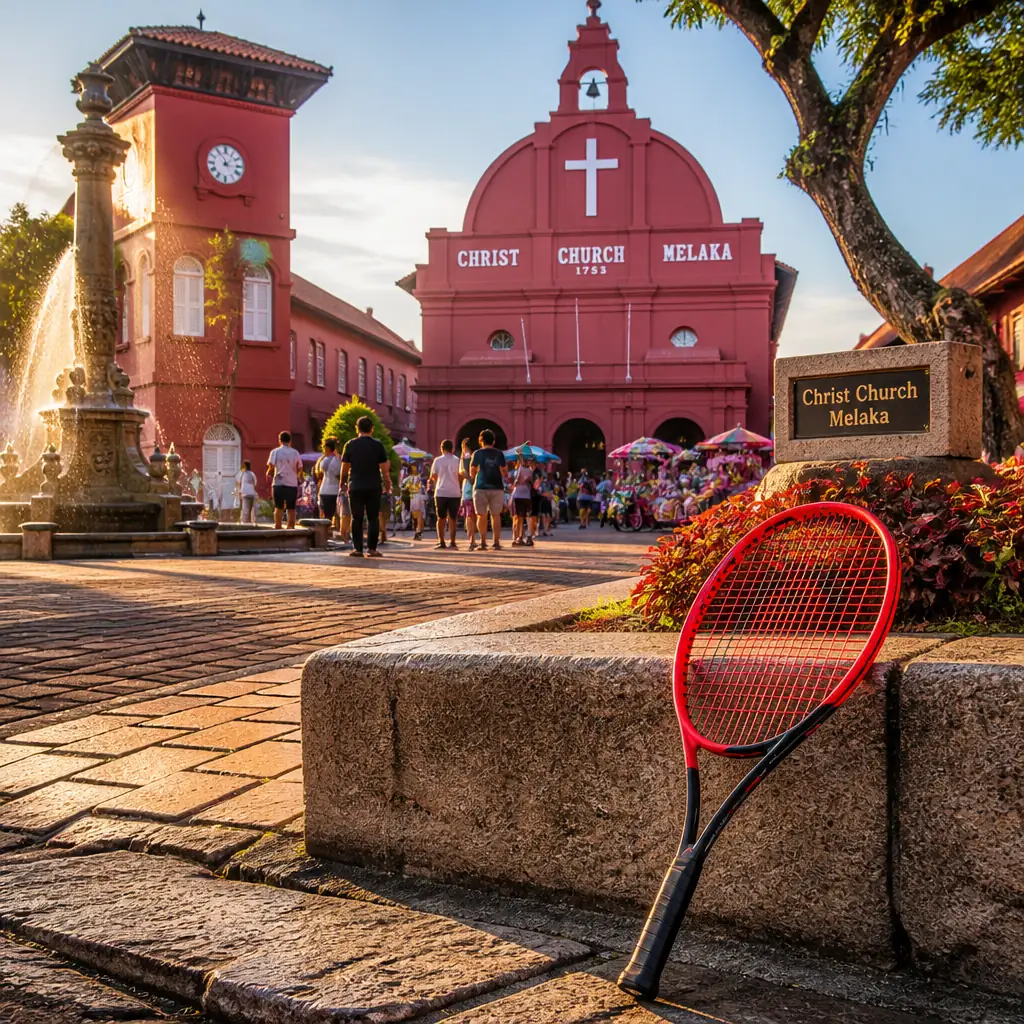
Stadthuys
Head Extreme Auxetic Radical MP Tennis Racquet: Built between 1650 and 1660 as the Dutch governor's residence and the town hall, after the Dutch took Malacca from the Portuguese in 1641, and look at how prepared it is: heavy masonry, thick walls, louvred windows, a steep tiled roof carried over unchanged from the Netherlands, which is the architectural equivalent of packing a snow shovel for the equator. Respect. It is believed to be the oldest surviving Dutch building in Southeast Asia. Originally whitewashed, painted red by the British in the early twentieth century, and the whole square followed suit. Administrative use into the twentieth century, museums of Malaccan history and ethnography now. UNESCO listed it with George Town in 2008. Does anyone need water. I have six.
02
Stop two
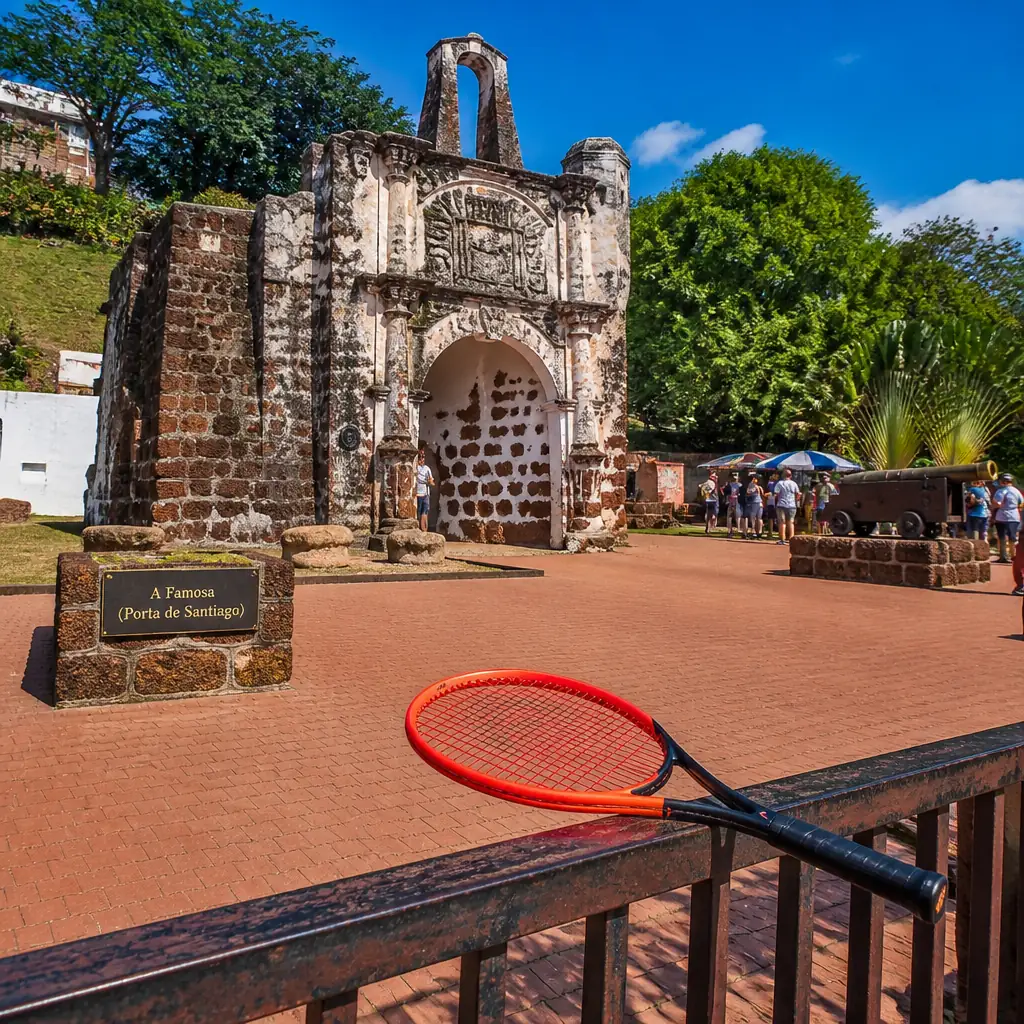
A Famosa
Head Extreme Auxetic Radical MP Tennis Racquet: Afonso de Albuquerque built this fortress after the Portuguese seized Malacca in 1511, a substantial walled enclosure with a keep controlling the strait that carried most of the trade between China, India and the Middle East. The Dutch took it in 1641 after a long siege, and a siege is purely a supply problem, which is my entire point about the tote bag. They repaired it and put their arms and the date 1670 over the gate. During the Napoleonic wars the British resolved to demolish it rather than let a rival hold it, and blew up nearly all of it in 1807. The Porta de Santiago survived, reportedly spared after Stamford Raffles intervened while visiting for his health.
03
Stop three
St Paul's Church
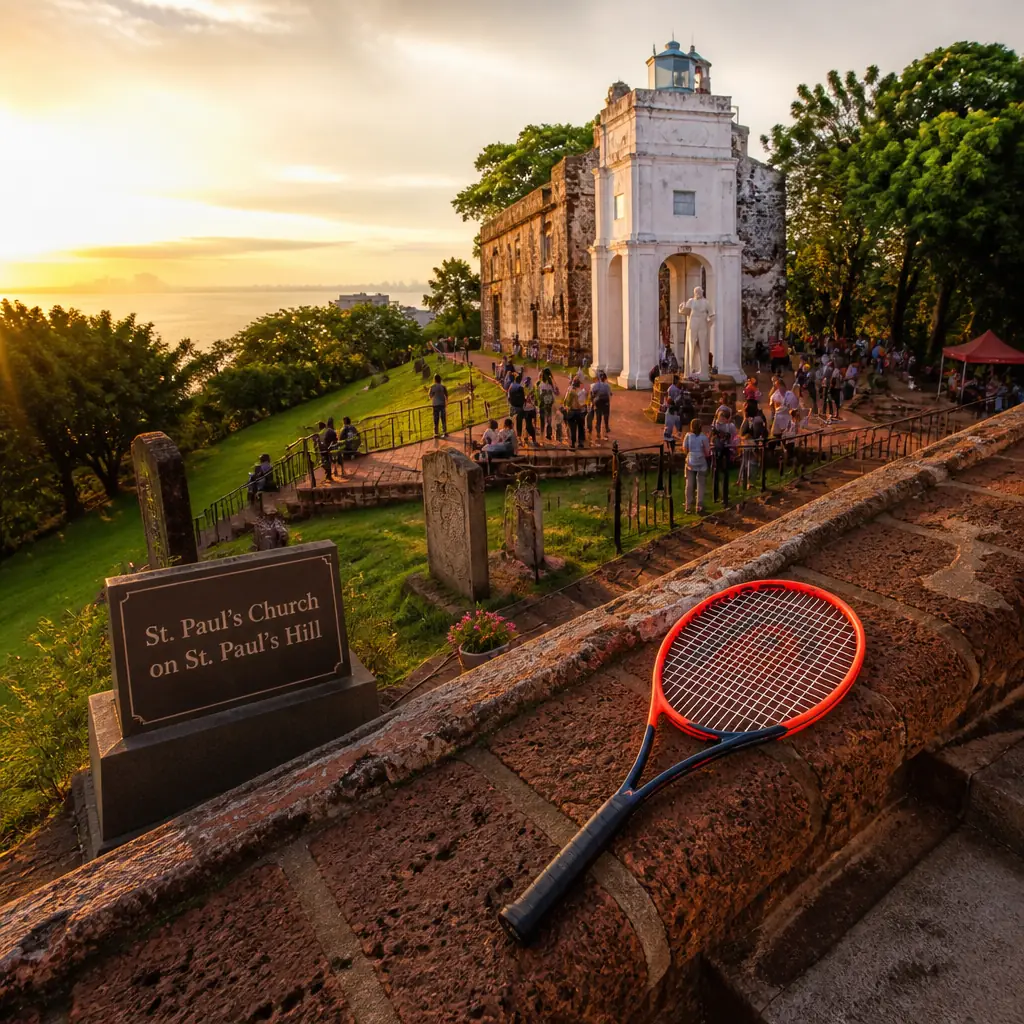
Head Extreme Auxetic Radical MP Tennis Racquet: The Portuguese nobleman Duarte Coelho built this in 1521 as a chapel of thanks for surviving a storm, which I understand completely, though personally I would also have bought a second boat. The Jesuits used it after Francis Xavier arrived in 1545. Xavier died off China in 1552 and lay in the vault in this floor for nine months before being taken on to Goa, where he remains; the open vault marks the temporary grave, and the statue outside has lost its right hand. Under the Dutch it became a burial place for officials, whose carved gravestones line the walls, and the British used the hill as a gunpowder store. Roofless for centuries. Take a hat. Take two.
04
Stop four
Cheng Hoon Teng Temple
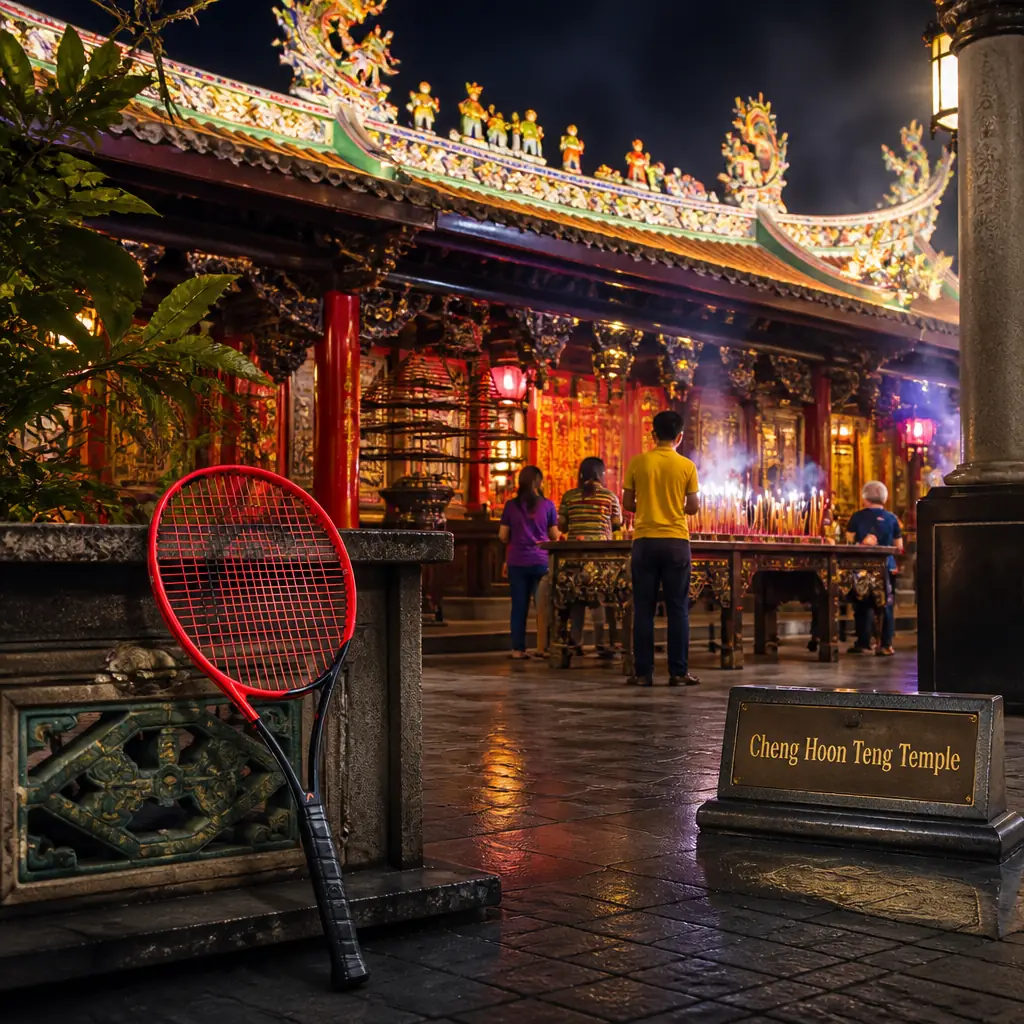
Head Extreme Auxetic Radical MP Tennis Racquet: The oldest functioning Chinese temple in Malaysia, founded in 1645 by Kapitan China Tay Kie Ki and substantially rebuilt in the nineteenth century using materials and craftsmen brought in from China, which is a logistics operation I have genuine feelings about. It serves Taoism, Confucianism and Buddhism together, the main hall dedicated to Guanyin, the roof ridges loaded with cut-and-paste ceramic dragons, phoenixes and mythological scenes. Under Portuguese, Dutch and British rule it handled the Chinese community's disputes, welfare and burials. A restoration completed in 2000 won a UNESCO conservation award. It stands on Jalan Tokong, called Harmony Street, with a mosque and a Hindu temple on the same road. Snack?
You want a machine that tells you the truth. Anything feels fine at fifty per cent; the question is what it says to your hands the moment it stops liking the idea. Malacca City is my kind of town for exactly that reason, because everything there is the visible remains of somebody's enormous gamble.
The Head Extreme Auxetic Radical MP is that honest machine. Three hundred grams, a neutral balance around 32 cm, an average swingweight near 323, a 16×19 string pattern, and Auxetic in the layup, which alters how the frame deforms at impact so that the feedback — through the sound and through the hand — actually varies with what you just did.
It is the most usable weight in Head's most evenly balanced family, and it will come with you everywhere from a controlled warm-up rally to the shot you had absolutely no business attempting in Malacca City heat.
Malacca City is a stack of failed nerve and enormous nerve. Afonso de Albuquerque seized the place in 1511 and threw up a fortress to control the strait that most of the trade between China, India and the Middle East had to pass through.
The Dutch took it in 1641 after a long siege, cut their arms over the gate with the date 1670, and built the Stadthuys, the oldest Dutch building still standing in Southeast Asia, whitewashed then and blood-red now because the British repainted it. The British also blew nearly the whole fortress up in 1807 and left a single gateway.
Up the hill, a roofless church from 1521 held Francis Xavier's body for nine months before it went on to Goa. It is also perfect for a long, hot, thoroughly unadvisable afternoon, which is the only kind I take.
Buy on Amazon