One sheet. No cuts, no glue. Everything the finished thing will ever be is already in the folds. Head Lynx 18g works the same way: a single co-polyester monofilament at 1.20 mm, the thinnest gauge, in a 12-metre set for one racquet. Nothing added, nothing wrapped around it — the whole behaviour comes from what the polymer is and how thin it has been drawn.
Arequipa will show you what one material can be made to do.
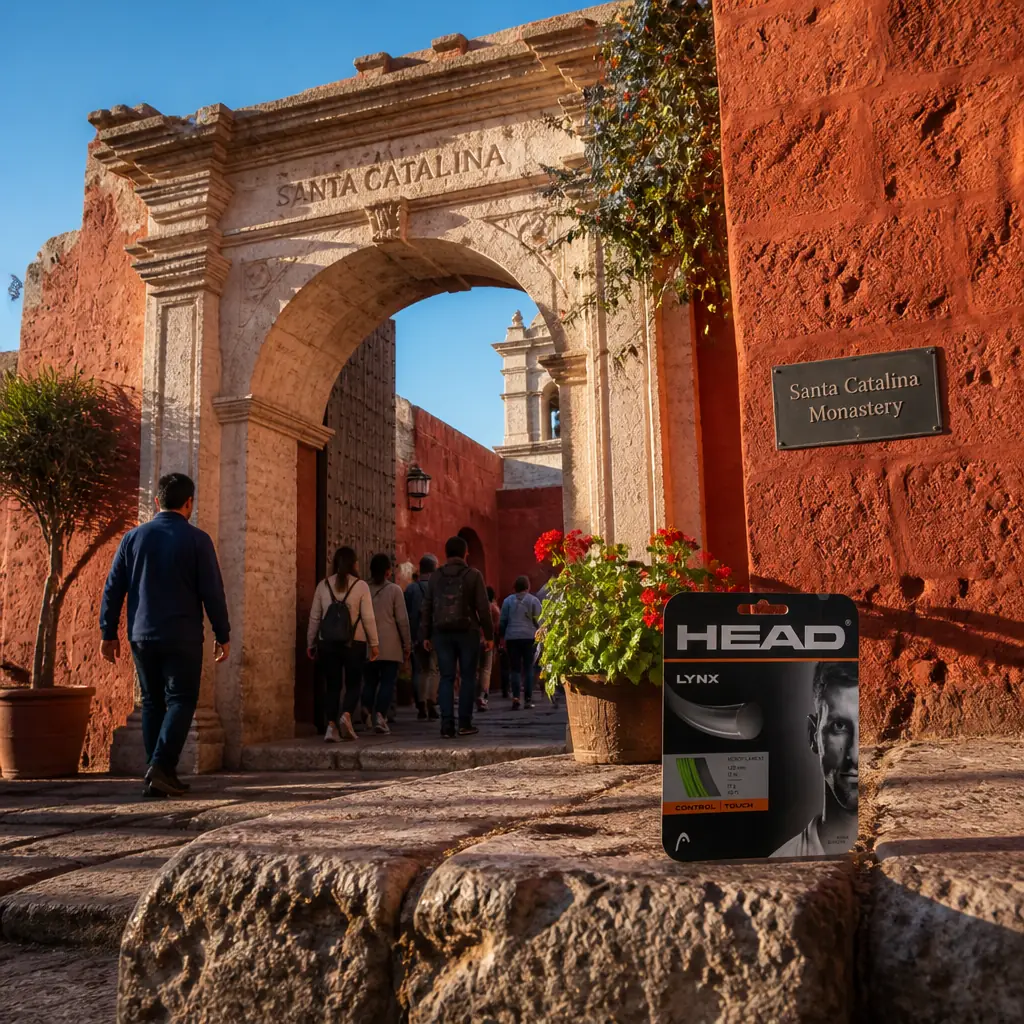
We begin at the Monasterio de Santa Catalina, founded in 1579 and covering some twenty thousand square metres behind its own wall — not a building but a small town of lanes, plazas, cloisters and cells, painted deep terracotta red and cobalt blue with geranium pots on every sill.
It admitted only women of wealthy Spanish families, who arrived with a substantial dowry and frequently with servants and furniture, and by every account it was a comfortable and worldly community until a Dominican reformer sent from Rome in 1871 folded the whole thing flat again. It opened to the public in 1970 and a small enclosed community still lives in one section of it.
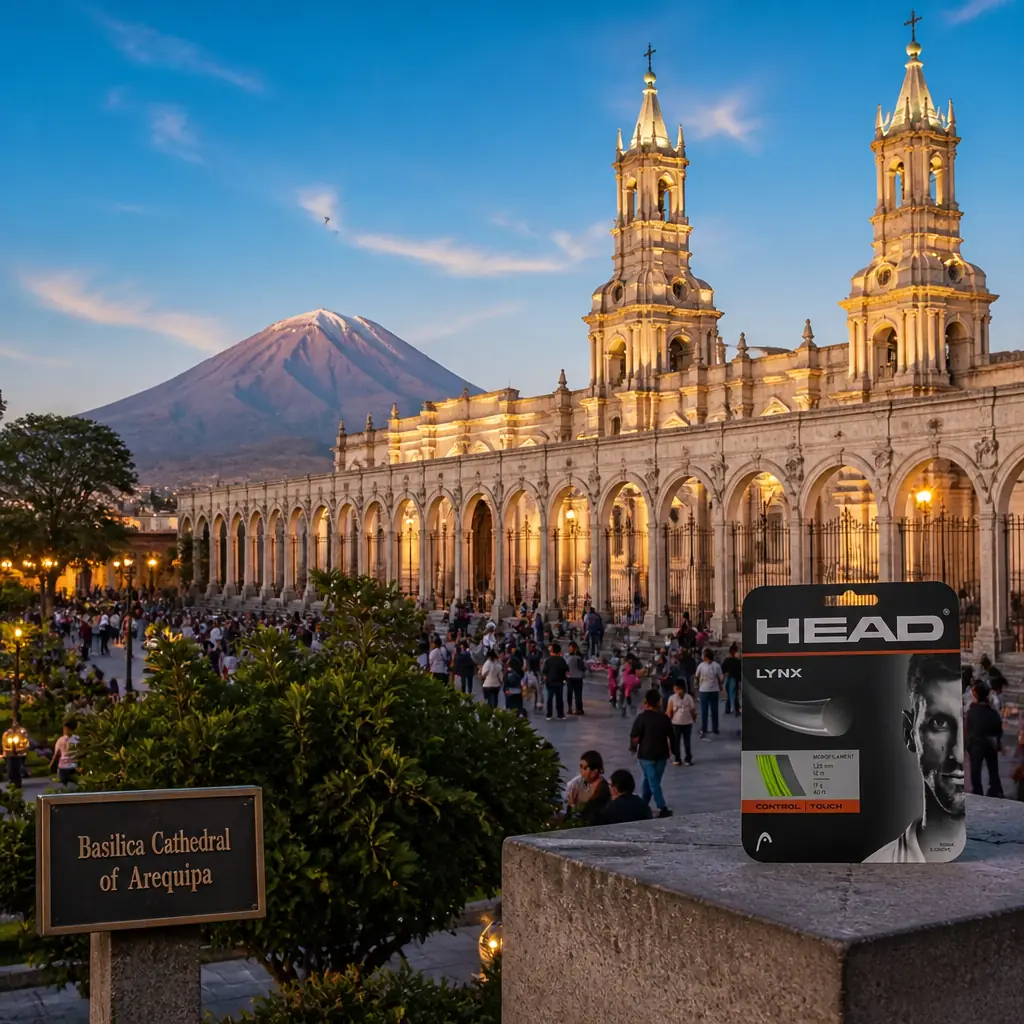
Then the Basilica Cathedral, which takes the entire northern side of the Plaza de Armas — unusual anywhere in South America — two towers over an arcaded facade of seventy columns. First built in 1656, destroyed by fire in 1844, rebuilt, wrecked again by the earthquake of 1868 and reconstructed in neoclassical style by Lucas Poblete.
It holds a Belgian organ and a pulpit carved in Lille. In June 2001 another earthquake brought one of its towers down in full view of the television cameras, and it was standing again inside two years.
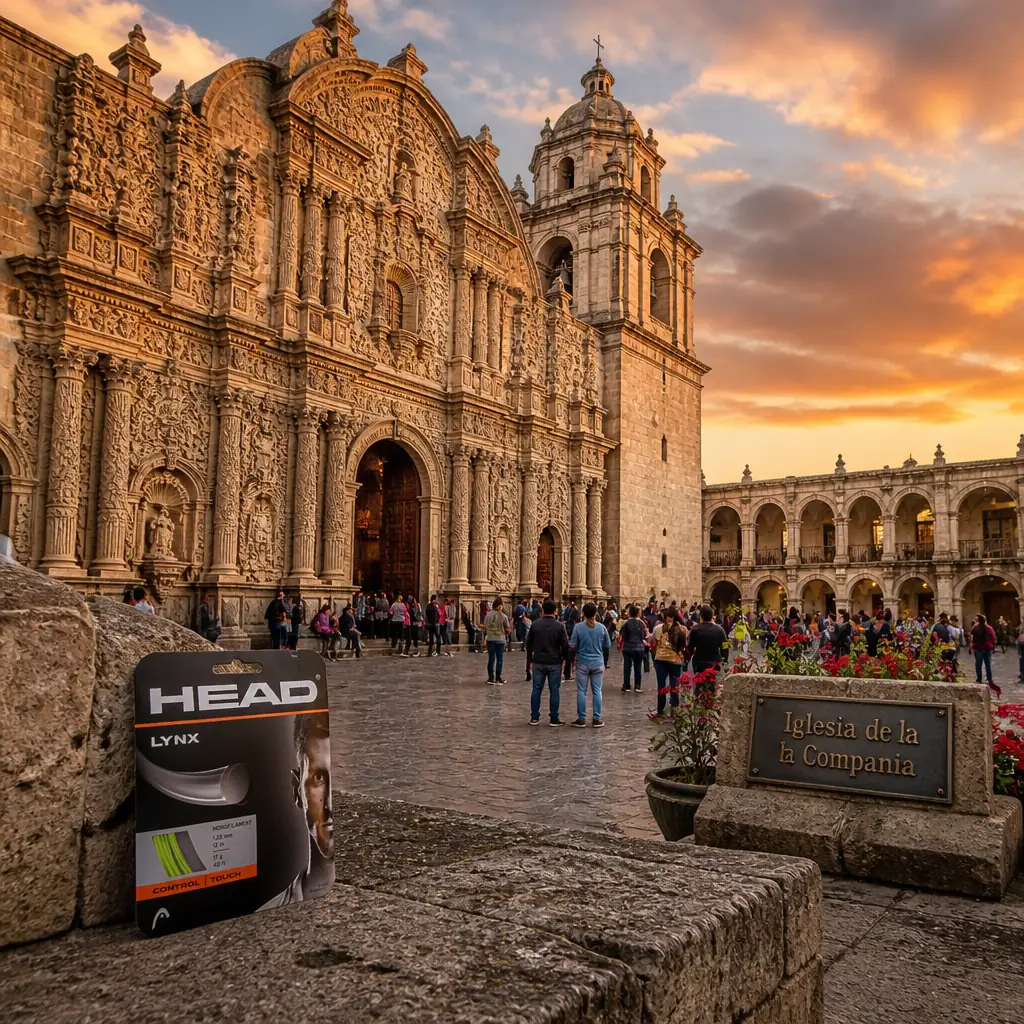
Then the Church of the Society of Jesus, completed in 1698 and the outstanding thing in the Andean mestizo baroque. Its facade is worked edge to edge in flat, dense relief — vines, grapes, cantuta flowers, birds, masks, angels — European ornament rethought entirely by indigenous carvers, nothing like the deep modelling of Spain.
The San Ignacio chapel inside is painted as a polychrome jungle of plants, birds and figures.
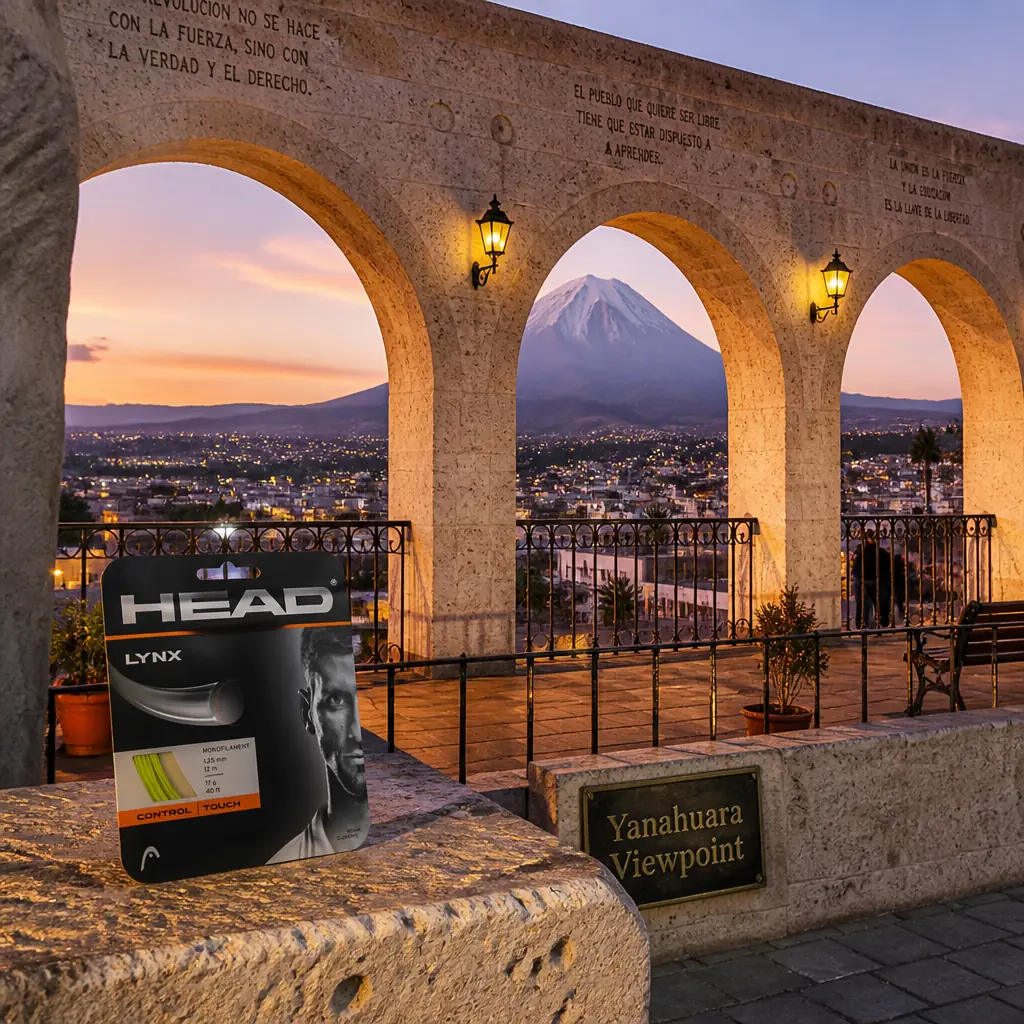
And we finish at the Yanahuara viewpoint across the Chili river, a row of white arches inscribed with lines from Arequipeño writers, each one framing El Misti — a near-perfect cone of about five thousand eight hundred metres — with Chachani and Pichu Pichu at its shoulder.
Monastery, cathedral, arches: all of it is sillar, the white volcanic stone that earned Arequipa the name of the white city. One material. Everything folded out of it.
You will use this set everywhere from a court under El Misti to a sea-level hard court down in Lima, and by the way, it is also perfect for a long morning of rocoto relleno in a picantería, which is the correct way to unfold a day in this town.
Buy on Amazon