01
Stop one
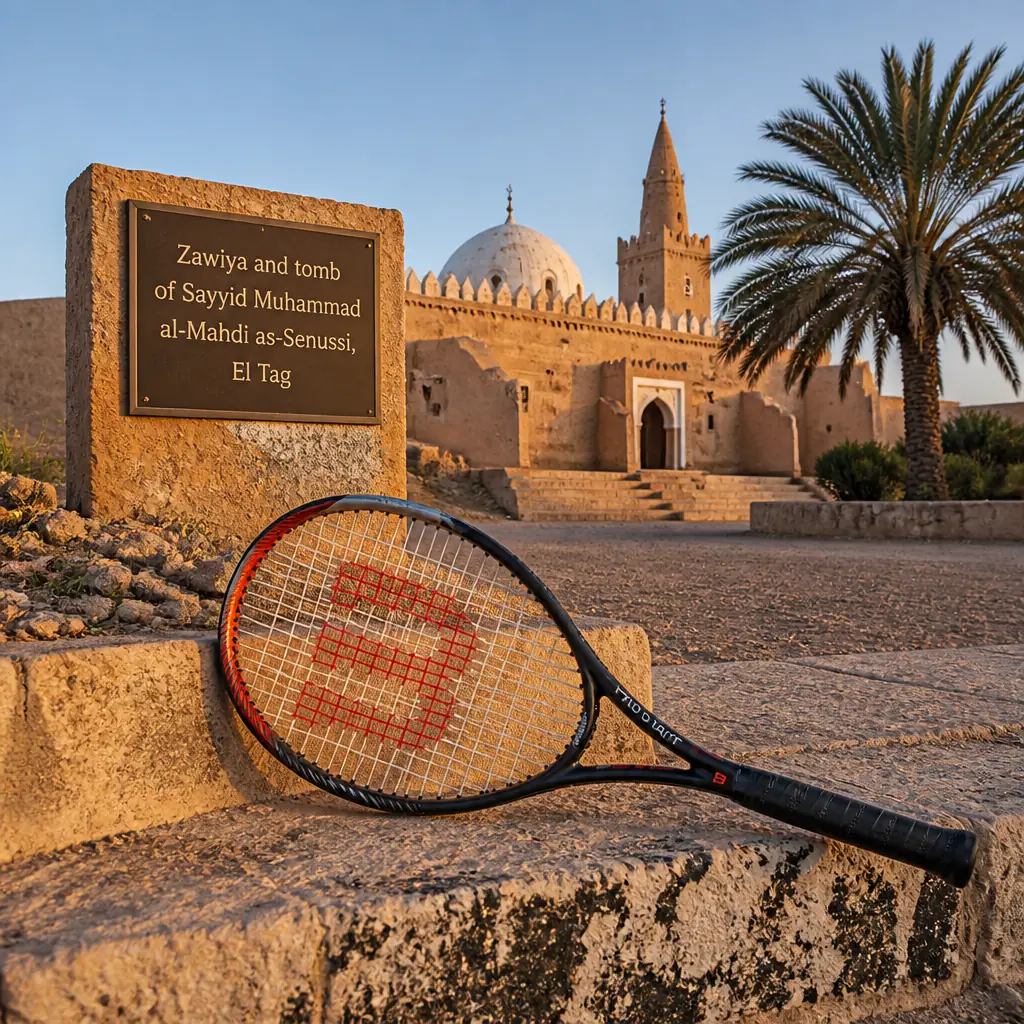
Zawiya and tomb of Sayyid Muhammad al-Mahdi as-Senussi, El Tag
Wilson Pro Staff Precision 21 Junior Tennis Racquet: You are fortunate; I very rarely come this far south. In 1895 Sayyid Muhammad al-Mahdi as-Senussi, son of the order's founder, moved the Senussi headquarters to the Kufra oasis and founded El Tag — 'the crown', and yes, I noticed the name before you did. He built a zawiya and mosque on the rise above the basin, and for decades this was the effective capital of the Senussi religious network: pilgrims, students and desert caravans all converging here. He died in 1902 and was entombed at El Tag, since regarded as one of the holiest sites of the order. Stand quietly. Even I do.
02
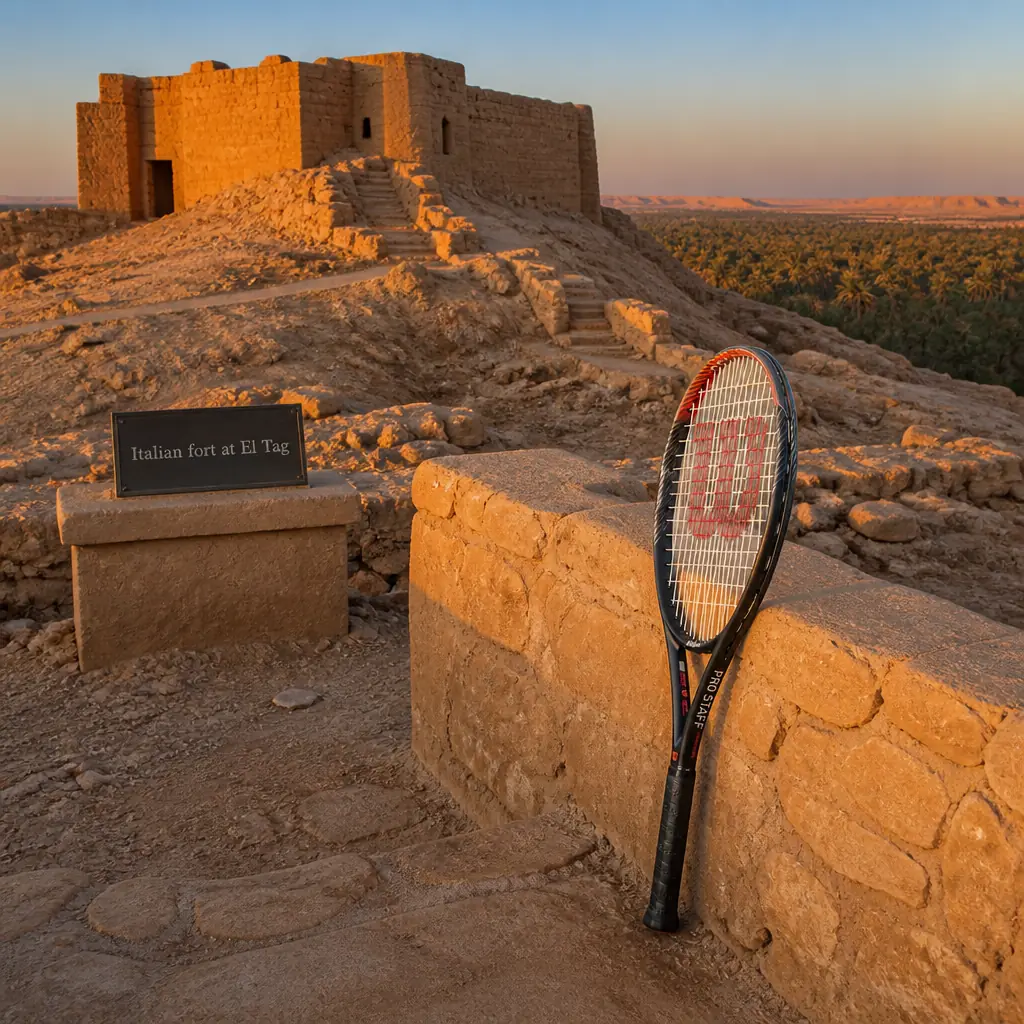
Stop two
Italian fort at El Tag
Wilson Pro Staff Precision 21 Junior Tennis Racquet: For centuries before any of this, Kufra was a stronghold of desert raiders controlling the trans-Saharan caravan routes, until the oasis came under Senussi religious authority in 1895. In 1931 the Italian general Rodolfo Graziani led a force of roughly 3,000 troops, supported by aircraft, in the conquest of the oasis. Italian colonial forces then built this fort at El Tag, with an airfield at the nearby Buma oasis, to secure and administer the basin under Italian rule. The fort still stands at the edge of the basin. I give you that unembellished; some facts require no assistance from me, rare as that is.
03
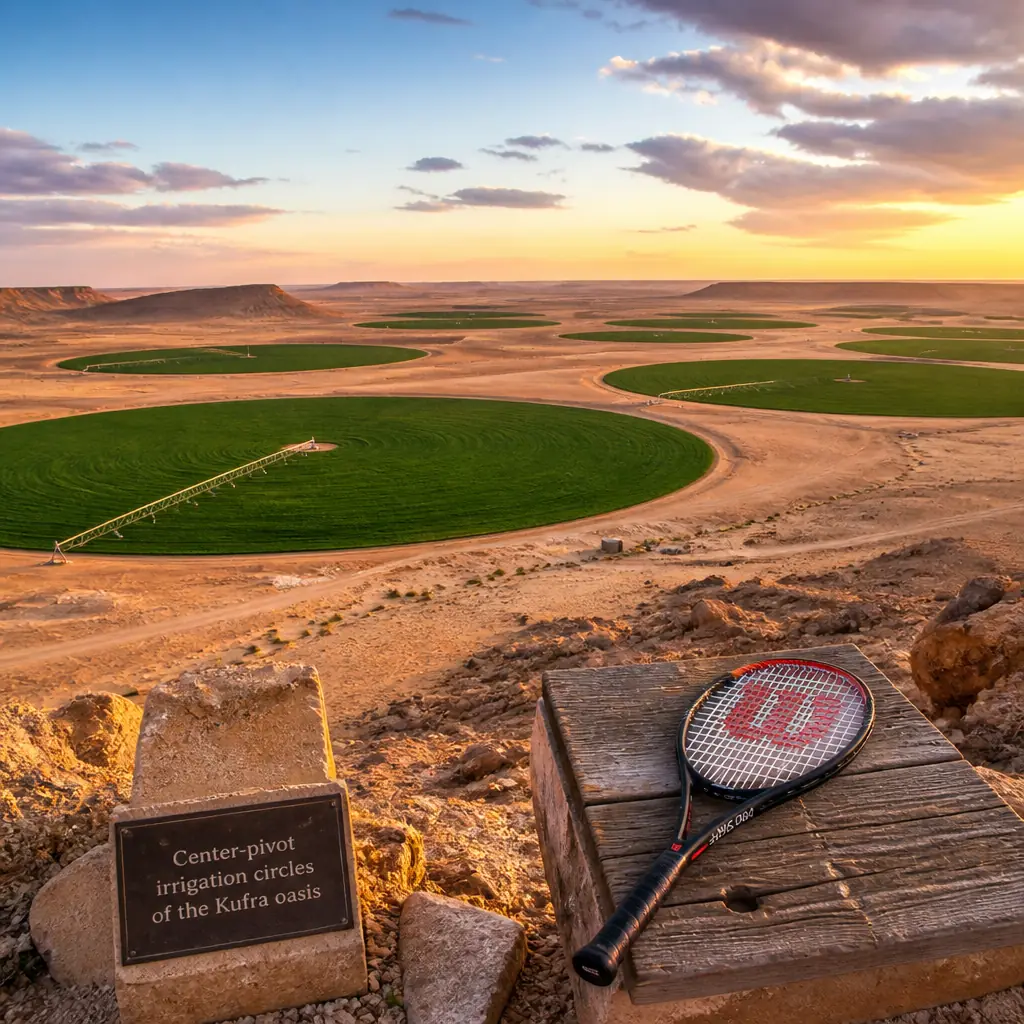
Stop three
Center-pivot irrigation circles of the Kufra oasis
Wilson Pro Staff Precision 21 Junior Tennis Racquet: Now here is something worthy of my attention. Those fields are watered by centre-pivot systems — a rotating boom anchored to a central well, each circle roughly a kilometre across, the pattern running some 32 kilometres across the Kufra basin. The water is fossil: the Nubian Sandstone Aquifer System, holding rain that fell about ten thousand years ago in a far wetter world, since this one supplies virtually none. Libya's Great Man-Made River project, launched in 1983, later piped from the same aquifer to the coastal cities. Satellites photograph these circles repeatedly. I sympathise entirely. I too am constantly photographed from a distance.
04
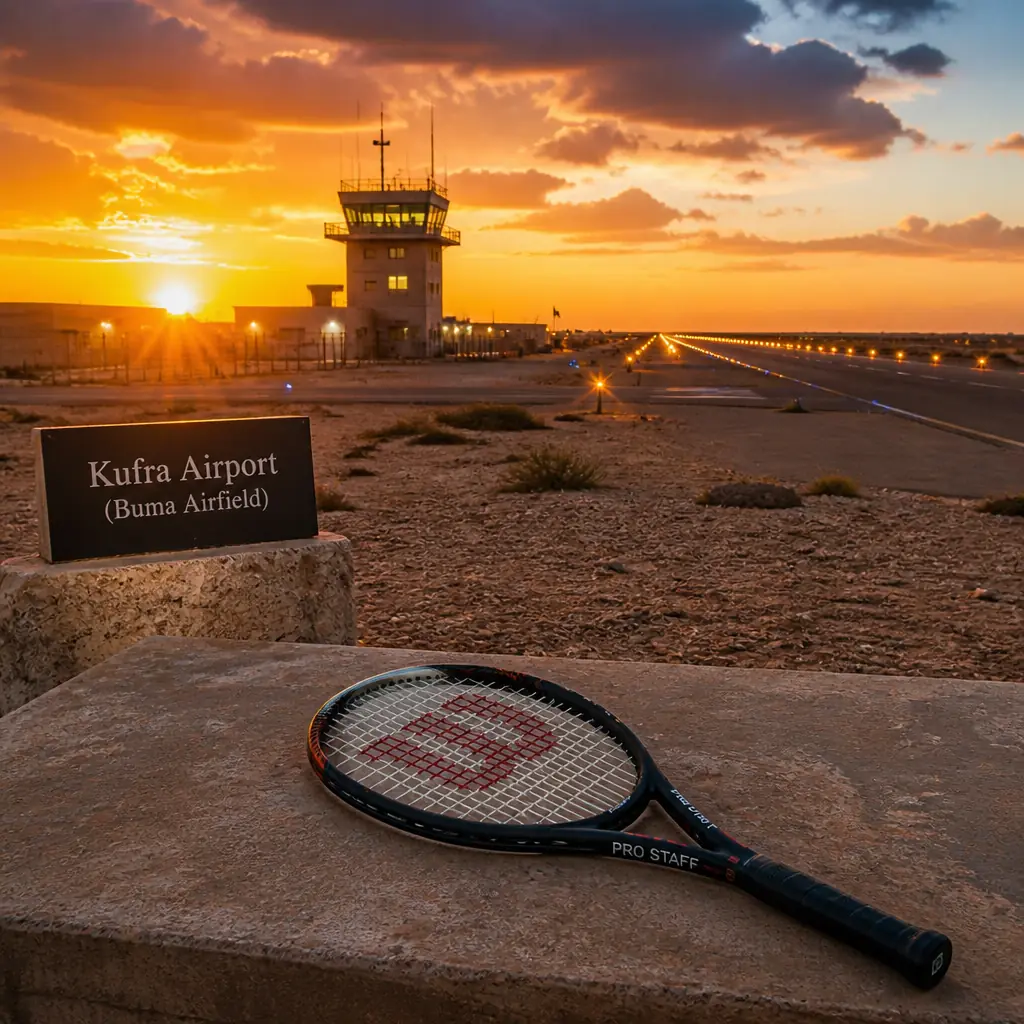
Stop four
Kufra Airport (Buma Airfield)
Wilson Pro Staff Precision 21 Junior Tennis Racquet: Built in the 1930s by Italian colonial forces as Buma Airfield, a minor facility providing an air link across the Sahara to Italian East Africa — minor, a word I use rarely and only when accurate. On 1 March 1941 Free French forces under General Philippe Leclerc captured it, part of the campaign that carried Free French troops from Chad across the desert toward Tripolitania. Leclerc. There is a name one is pleased to stand adjacent to. It was later developed into Kufra Airport, runway now over 3,600 metres, serving Al-Jawf and the wider district, operating intermittently as the region's main link to the rest of Libya.
Coverage. That is the only word that matters in my trade, and it turns out it matters in juniors' racquets too. The Pro Staff Precision Junior 21 is a 21-inch frame at roughly 7.05 oz, sized for players around five to six years old. AirLite Alloy aluminium, C Beam cross-section, Wilson's Perimeter Weighting System for torsional stability, and it arrives prestrung.
Light, forgiving, and the right length for a child whose swing is still being built. Get the length right and the technique looks after itself; get it wrong and you are watering the driveway.
Speaking of coverage: Al Jawf sits in the Kufra basin, and the fields around it are irrigated by centre-pivot systems — a rotating boom anchored to a central well, watering a circle about a kilometre across, and the pattern of circles runs across some 32 kilometres of desert. Water drawn from fossil aquifers under the Sahara. I would happily spend a year out there.
You will fly this frame everywhere from a sand-blown patch in Al Jawf to a proper hard court up on the coast, and by the way, it is also perfect for the long flat evenings out at the pivot fields, where the only two things moving are a boom and a ball.
At El Tag, on a rise above the basin, is the zawiya and tomb of Sayyid Muhammad al-Mahdi as-Senussi, who moved the Senussi order's headquarters south to Kufra in 1895 and founded the village — its name means 'the crown'. Beside it stands the Italian fort, built after Rodolfo Graziani led roughly 3,000 troops and aircraft in the conquest of the oasis in 1931.
And east of town, Kufra Airport began as Buma Airfield in the 1930s, captured by Free French forces under General Leclerc on 1 March 1941.
Buy on Amazon