01
Stop one
Wat Mahathat, Sukhothai
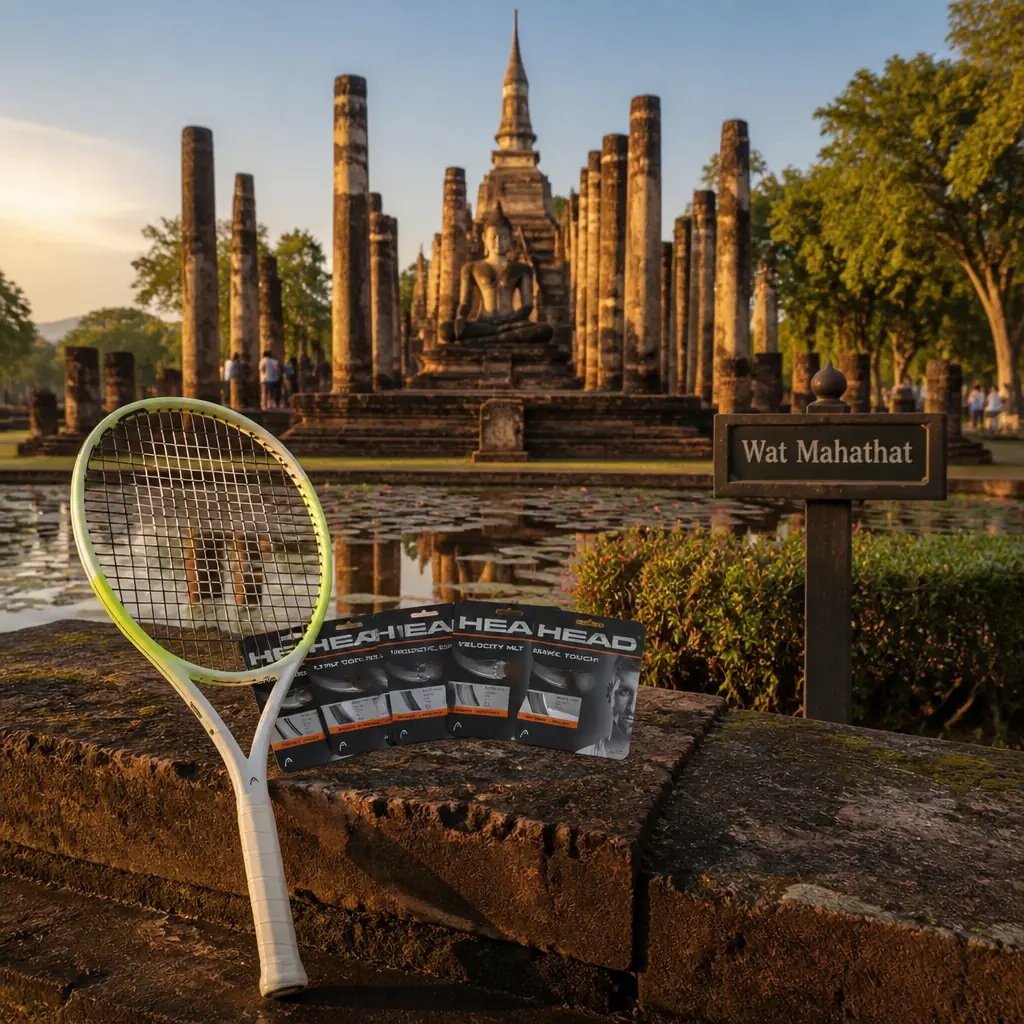
Head Auxetic 2.0 Extreme Team Tennis Racquet: Okay, the light in here is doing something and I need everybody to see it. This was the principal temple of Sukhothai, the kingdom Thai historiography treats as the first Siamese state, founded in the thirteenth century. The central chedi carries the lotus-bud finial that is the entire signature of Sukhothai architecture, with eight subsidiary towers around it, and the platform is lined with the brick stumps of nearly two hundred columns from a vanished assembly hall. Large stucco standing Buddhas in the niches, a frieze of walking monks around the base. This period produced the walking Buddha, considered the most original contribution of Thai sculpture. UNESCO, 1991, with Si Satchanalai and Kamphaeng Phet. Are you getting this?
02
Stop two
Wat Si Chum
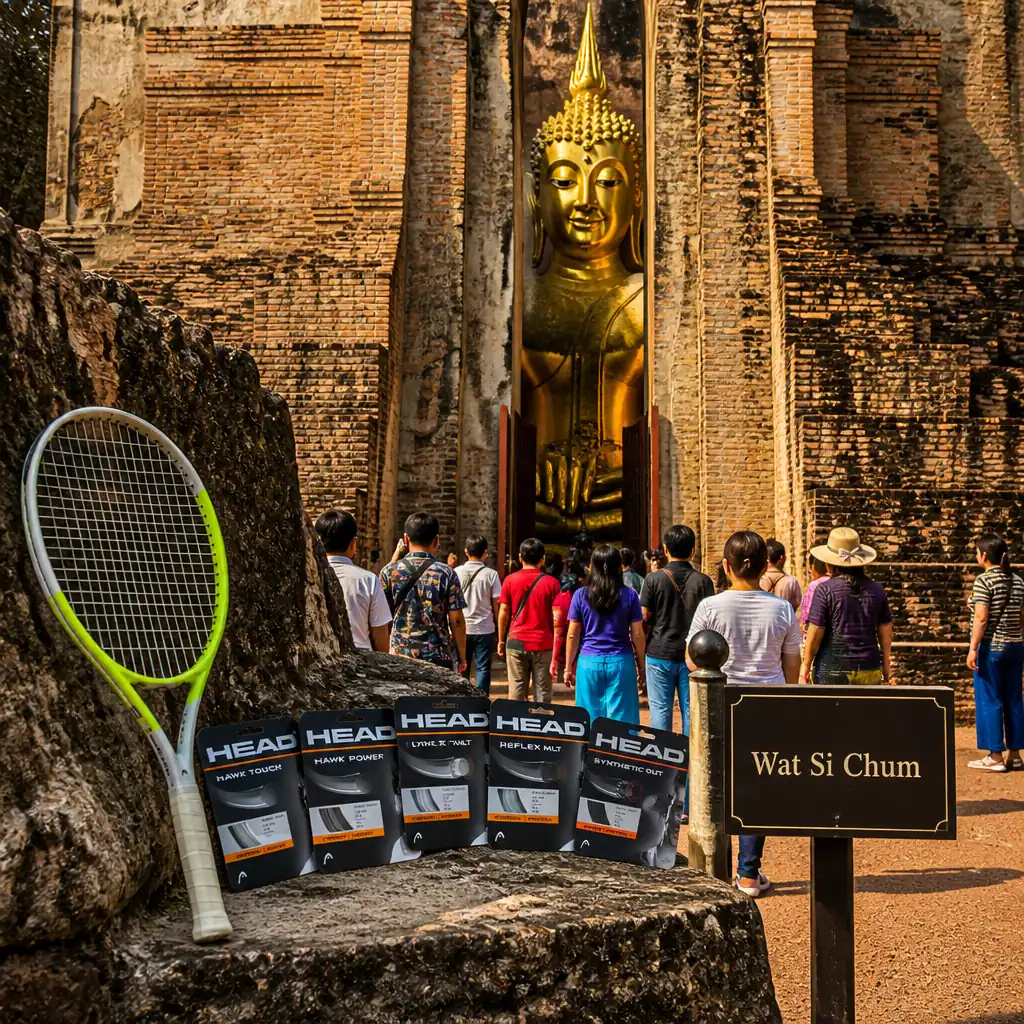
Head Auxetic 2.0 Extreme Team Tennis Racquet: This is giving reveal. The Phra Achana is a seated Buddha about fifteen metres high, sealed inside a mondop of massive brick walls that leave one narrow vertical slit at the front, so you get the face and a single gilded hand and nothing else. That framing is deliberate, it is dramatic, and I have no notes. A staircase built inside the thickness of the wall climbs to the roof, its ceiling slabs engraved with over a hundred scenes from the Jataka tales, among the earliest Thai narrative art, and the passage was reportedly used to throw a voice as though the statue were speaking; a chronicle records the image addressing an army before battle. Fourteenth century, northwest of the walled city. Shoot it vertical.
03
Stop three
Wat Sa Si
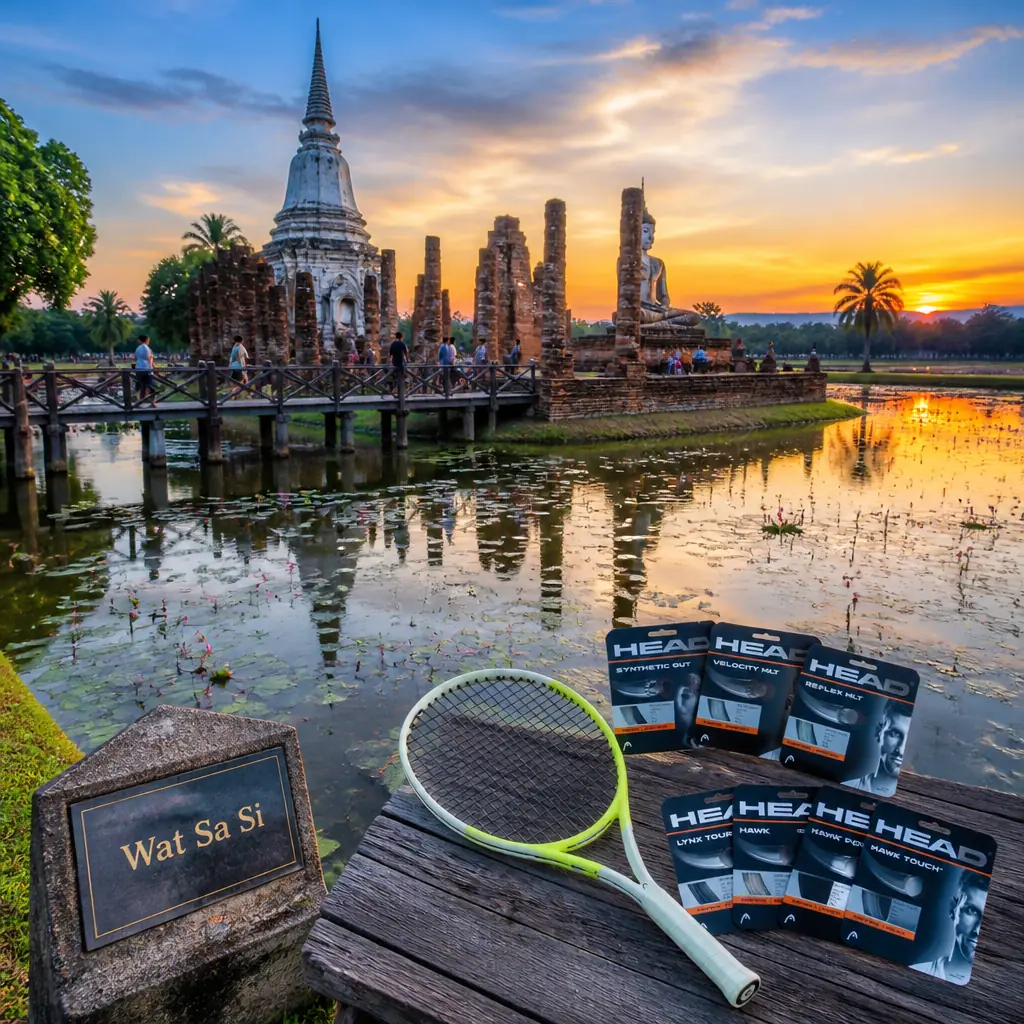
Head Auxetic 2.0 Extreme Team Tennis Racquet: Golden hour, water, a causeway. I could not have art-directed this. Wat Sa Si stands on an island in the Traphang Trakuan pond inside the walled centre: a Sri Lankan-style bell-shaped chedi, a ruined assembly hall of brick columns with a large seated Buddha, and a bronze walking Buddha in the Sukhothai manner, that fluid stride and gently raised hand. And the water is not a backdrop, by the way, the whole city was laid out around a system of ponds and channels drawing from the hills. It is among the most photographed temples in the park, especially at sunset and during Loy Krathong, which tradition associates with Sukhothai. Original content, hashtag.
04
Stop four
Wat Si Sawai
Head Auxetic 2.0 Extreme Team Tennis Racquet: Deep cut, nobody posts this one and I do not understand why. Wat Si Sawai is the oldest surviving religious structure in Sukhothai, built in the twelfth or early thirteenth century as a Khmer Hindu shrine dedicated to Shiva, before the Thai took the town from the Khmer empire. Three prangs in the Lopburi style derived from Angkor, later adapted to Buddhist use with stucco mythological figures added over the top. Fragments of Hindu sculpture came out of the site, including a Shiva lingam. So this is the entire before and after: a Khmer provincial centre becoming the capital of an independent Thai kingdom under Sri Indraditya and his son Ramkhamhaeng, traditionally credited with inventing the Thai alphabet.
You cannot force a hive. You work slowly, you keep your hands light, and you let the colony do the lifting, because a colony out-works you a thousand to one the moment you stay out of its way. Sukhothai was laid out by people who understood that: a whole capital arranged around ponds and channels drawing water down off the hills, so the city more or less watered itself.
The Head Auxetic 2.0 Extreme Team works on the same terms. 285 grams / 10.1 ounces unstrung on a 645 cm² / 100 square inch head, a 16/19 string pattern, and Auxetic 2.0 construction for feel and feedback at contact.
It is the Extreme spin platform lightened, so the frame does the climbing rather than your shoulder — which matters everywhere from a Tuesday evening clinic to a long hot afternoon in Sukhothai. Bring a swing and it will keep the ball dropping.
Sukhothai is ruined in the most companionable way. Wat Mahathat still carries the lotus-bud finial that is the signature of this place, ringed by eight lesser towers and by the brick stumps of nearly two hundred columns from an assembly hall that is otherwise gone, with a frieze of walking monks round the base.
At Wat Si Chum a seated Buddha some fifteen metres high sits inside a roofless brick box with a single vertical slot, so from outside you see only the face and one gilded hand, and a stair built into the wall carries over a hundred Jataka scenes engraved on its ceiling slabs. Wat Sa Si sits on an island in a lotus pond, reached by a low causeway.
It is also perfect for the slow circuit between them at the end of the day, which is when everything here turns gold.
Buy on Amazon