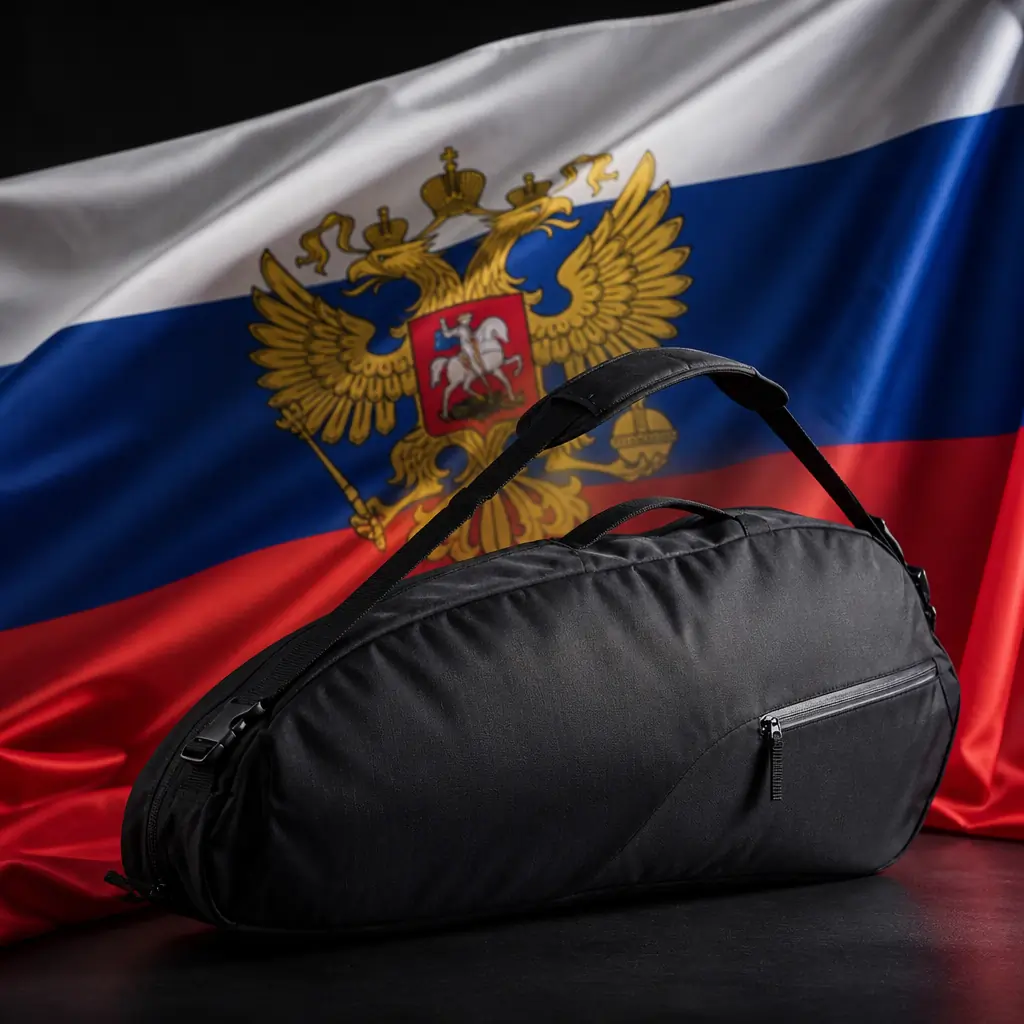
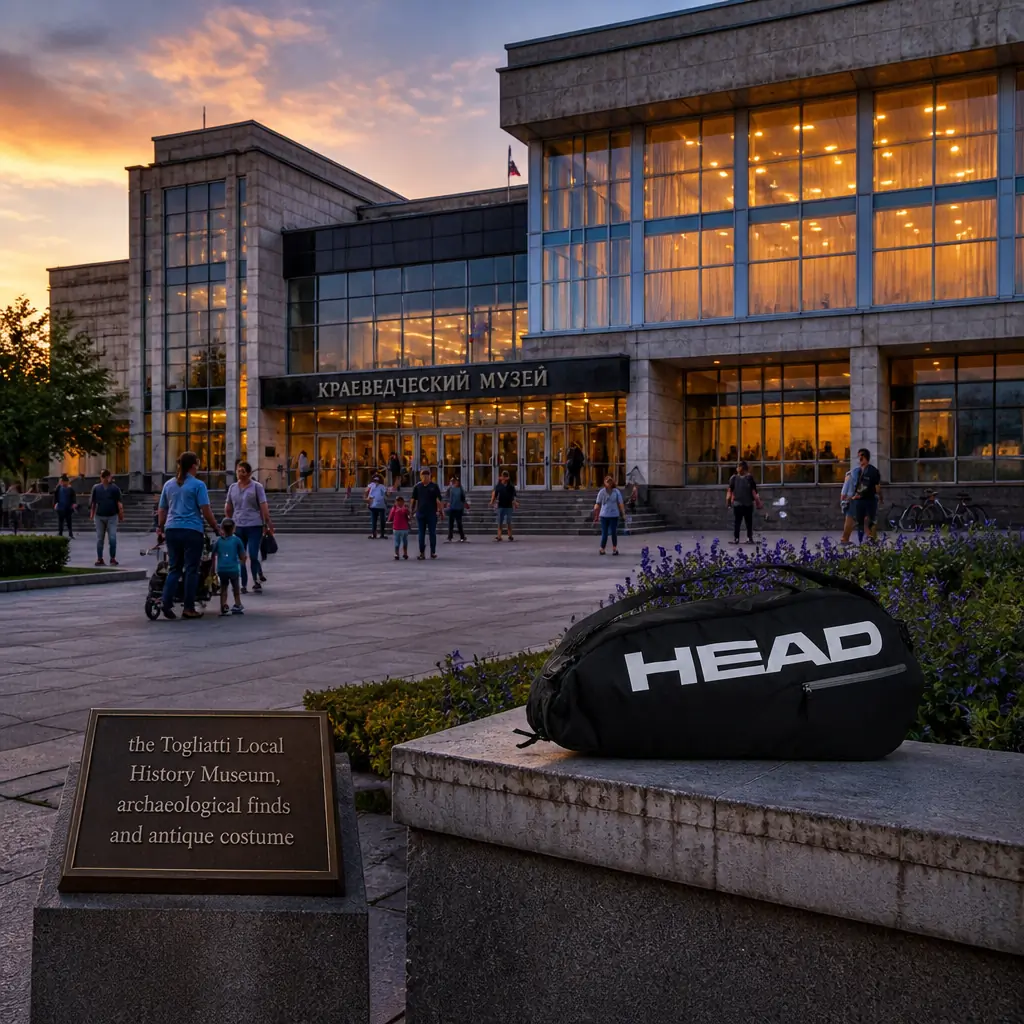
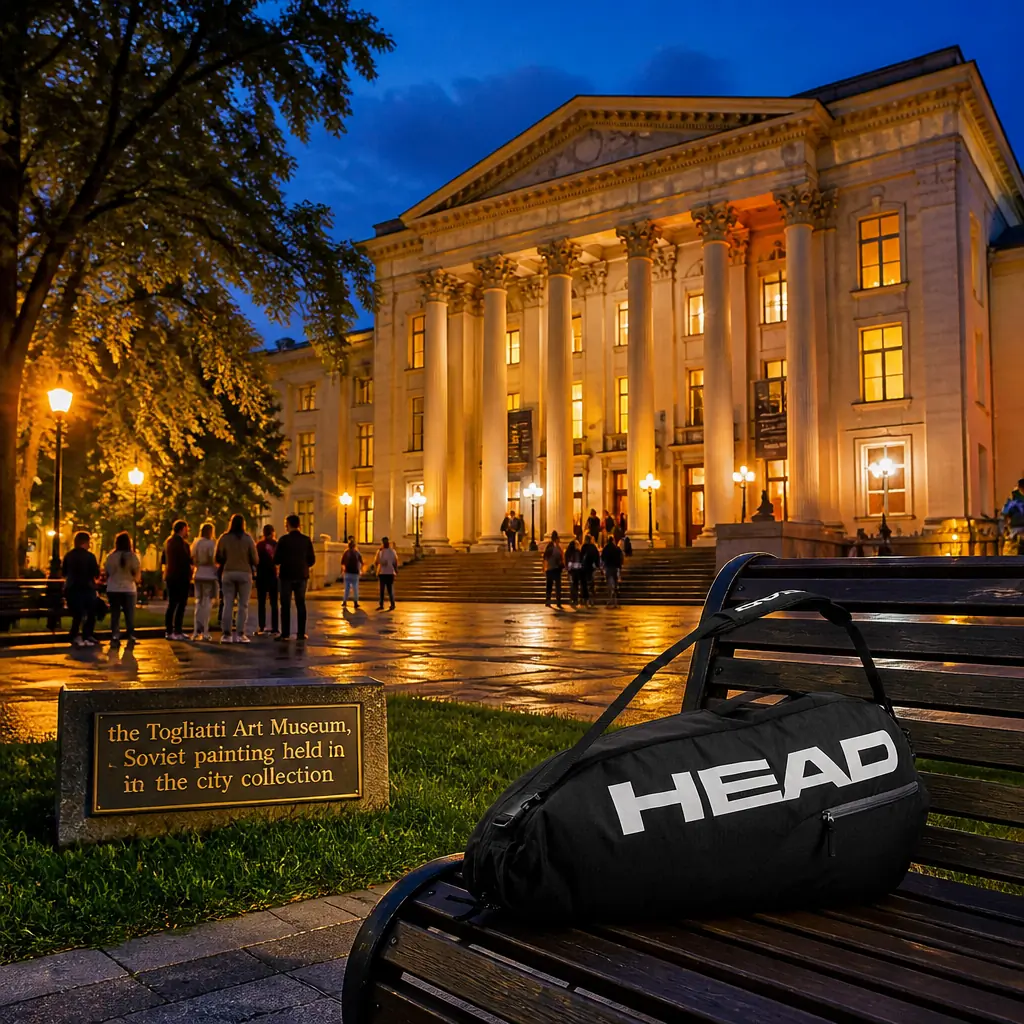
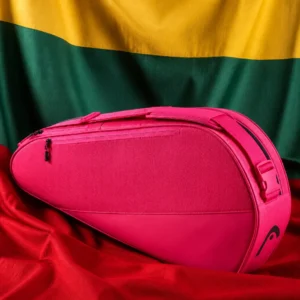
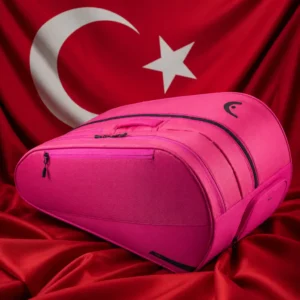
Let us start with the load case, because everything else follows from it. Three racquets, shoes, a change of clothes — that is what this bag is dimensioned for, and Head has given the number: sixteen litres, in a body measuring 76 by 32 by 9 centimetres, which is 30 by 12.6 by 6.5 inches. That is a slim section.
Slim sections are efficient in bending and terrible in torsion, which is why the interesting part of this bag is not the volume at all. It is the reinforced construction.
A racquet bag fails in one of two places, always: the handle attachment, or the point where the strap meets the body. Head reshaped this generation and added reinforcement for exactly that reason — stability and protection, in their words, which in mine means the load paths were redrawn so the stress goes into structure instead of into a seam. The handle straps are new.
The shoulder carry system is adjustable, so the moment arm sits where your back wants it rather than where the factory guessed. There is a front zip pocket for a phone, which is the only pocket a bag this size needs.
The shell is 100 per cent polyester.
Even the hangtag is recycled paper tied with hemp cord — a detail that has no structural function whatsoever, and I still respect a company that thought about the last five grams of the thing.
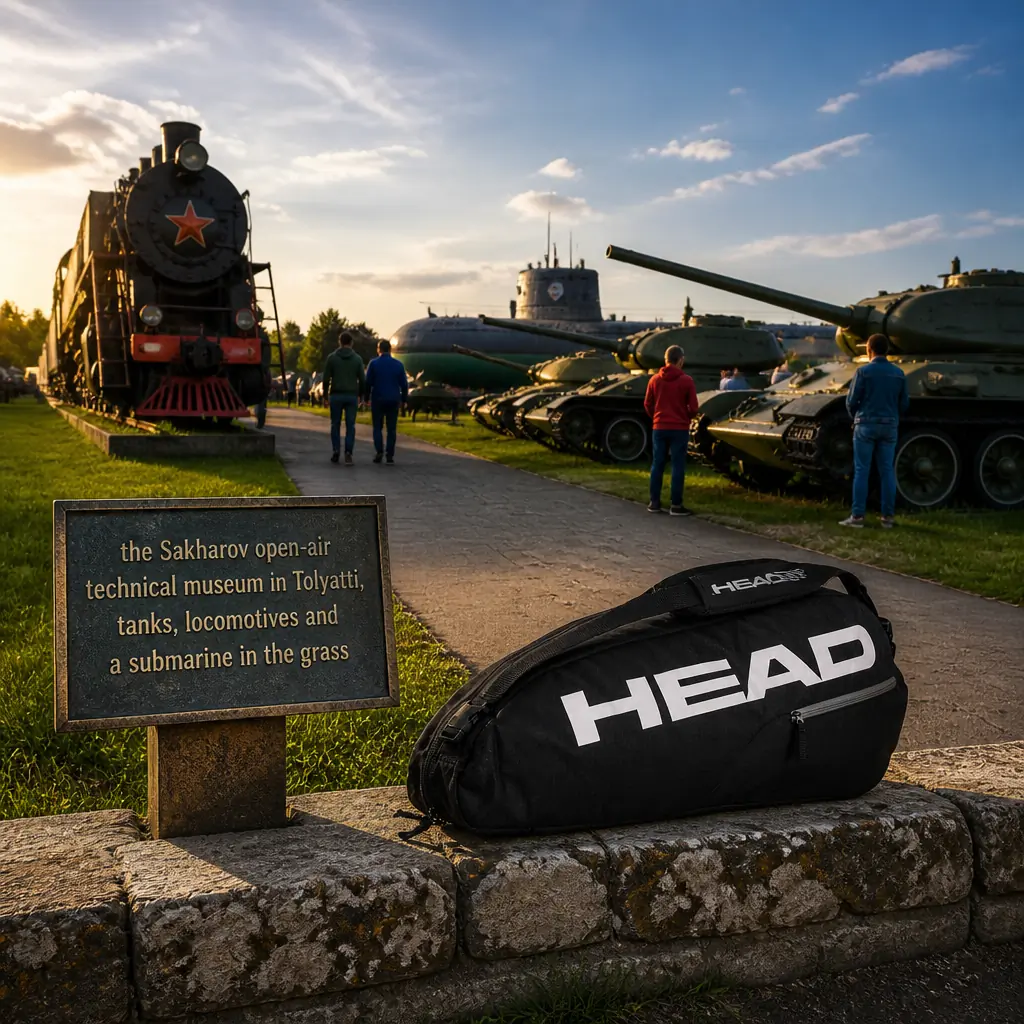
Tolyatti is a town that would understand this bag entirely. Out in the grass at the Sakharov open-air museum sit tanks, locomotives and an actual submarine — engineering left outdoors, in the weather, on purpose, so you can walk up and put your hand on the plate.
"A bag fails at the handle or at the strap. Everything else is upholstery."
Buy on Amazon