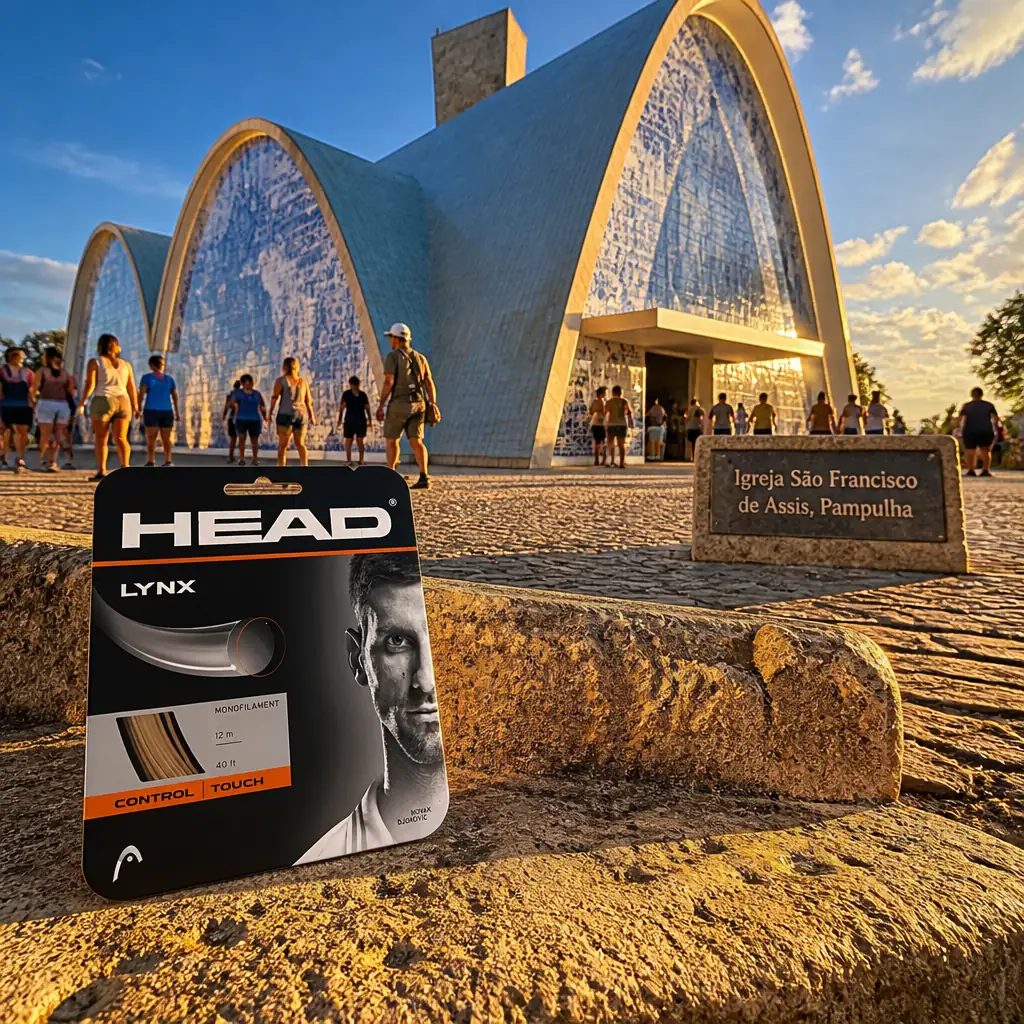
The basket is theatre and the flute is theatre; the only real thing is knowing exactly how far it can reach. Head Lynx 17g knows its reach too: a co-polyester monofilament at 1.25 mm, the balanced gauge, supplied as a 12-metre set for one racquet. It bites the ball, it holds tension respectably for a poly, and it does not send the ball a metre further than you asked it to.
Belo Horizonte. Bring the flute. This city was drawn before it existed.
We begin at the Igreja São Francisco de Assis out at Pampulha, a small modernist church of undulating concrete vaults with a blue-tiled facade facing the lagoon. Niemeyer built it in 1943 on parabolic vaults with no straight walls, and the church authorities refused to consecrate it — too modern — so it stood there finished and unusable for years, until 1959.
The tiles are by Portinari. The lagoon in front of it is entirely artificial, dammed for the city's water, which means every heron out there is standing in a reservoir.
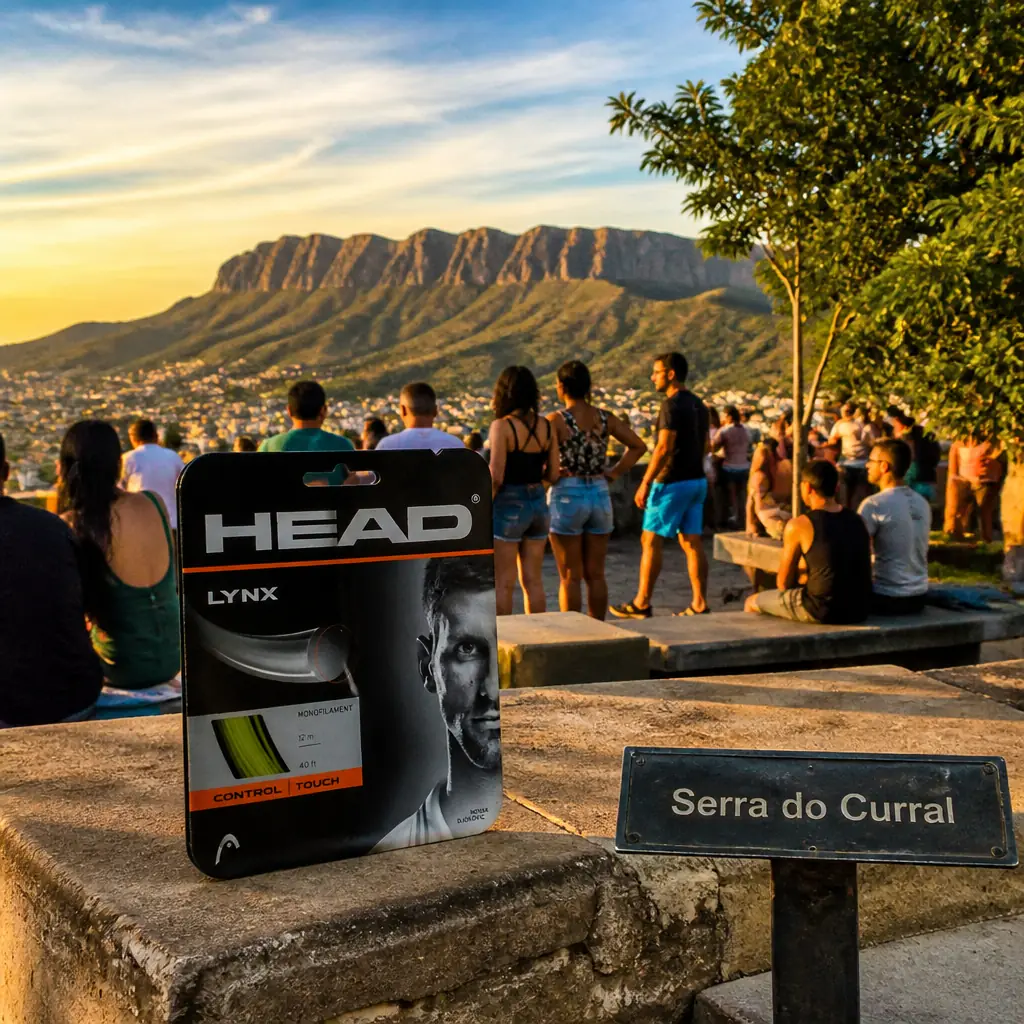
Then the Serra do Curral, the long jagged ridge that makes the southern skyline, best seen from the Praça do Papa. That is the northern edge of the Quadrilátero Ferrífero, the Iron Quadrangle: banded iron formations laid down in shallow seas billions of years ago, when the atmosphere was first filling with oxygen and dissolved iron was precipitating out of the water.
You are looking at the rusting of the early Earth in cross-section, from a public square. It is on the city's coat of arms. It has also been quarried extensively, which is the tension in the whole place — the emblem and the industry are the same rock.
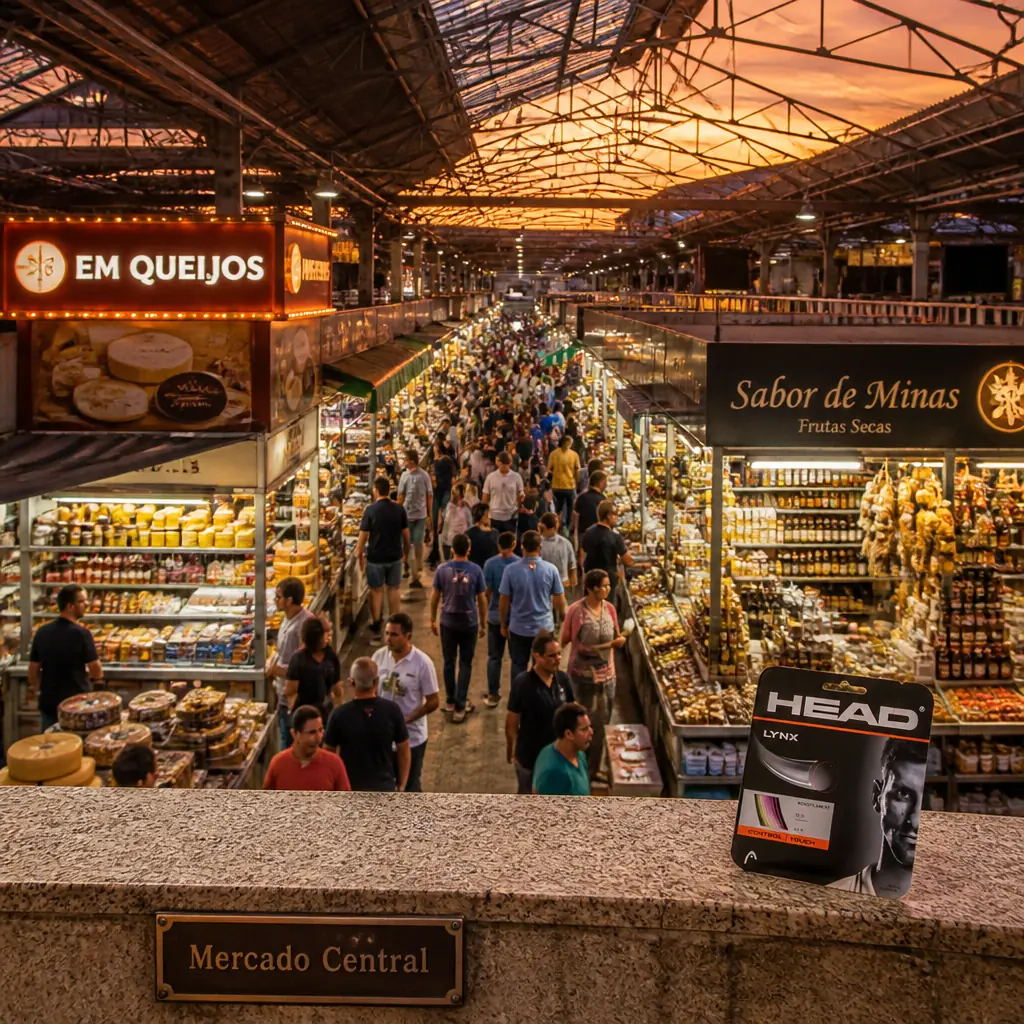
Then the Mercado Central on Avenida Augusto de Lima, opened in 1929, hundreds of narrow stalls under one roof. Queijo Minas is a microbiology exhibit sold by the wheel — particular local cultures, mountain pasture, altitude — and the cachaças infused with every plant in the state amount to a herbarium you can drink. Ask for pequi. It is a fruit with spines inside the flesh.
Bite it wrong once and you will never forget the species, which I say as somebody whose entire profession is knowing exactly where the fangs are.
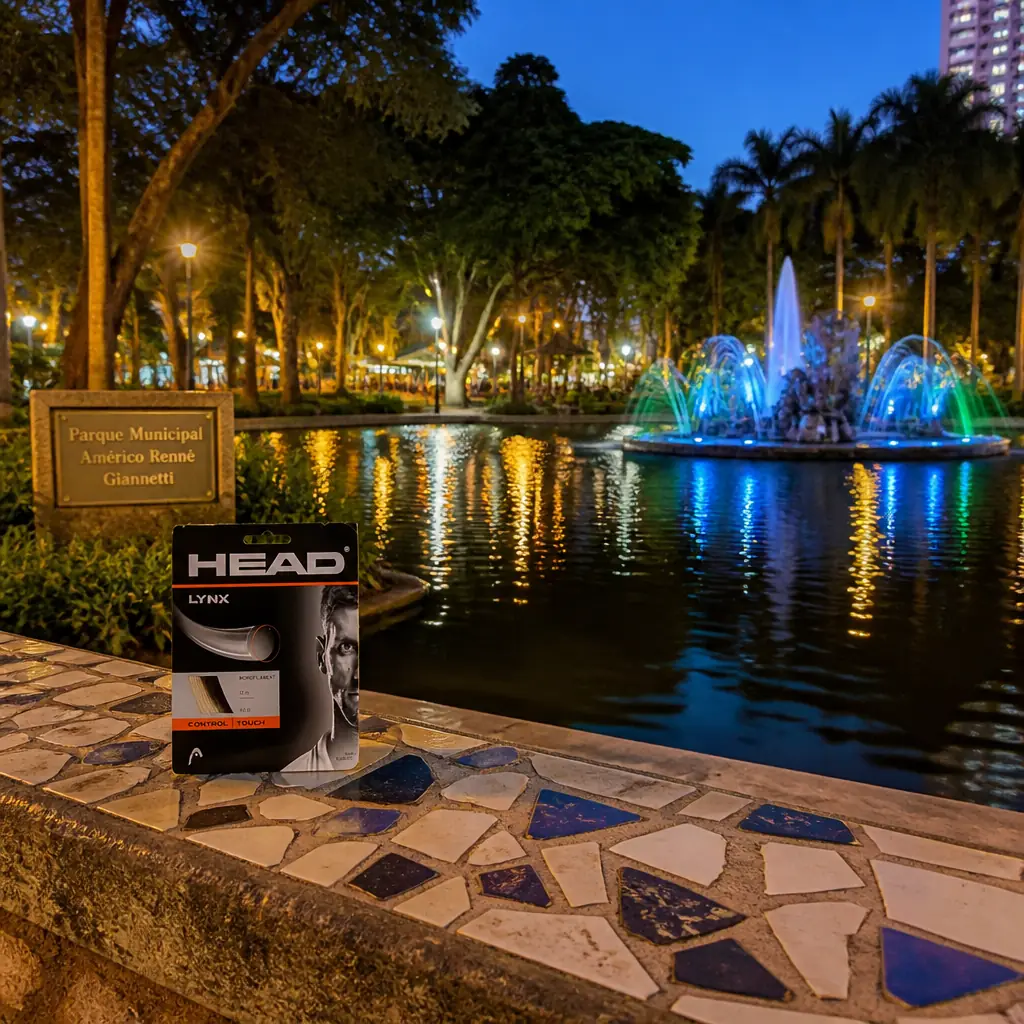
And we finish at the Parque Municipal Américo Renné Giannetti downtown, which was designed before the city was. Belo Horizonte was laid out on a drawing board in the 1890s on top of a settlement called Curral del Rei and inaugurated in 1897, a planned capital with the park drawn in from the start by a French landscape designer.
So the trees are as old as the streets, which is why there are toucans in a business district.
You will use this set everywhere from a hard court in Belo Horizonte to a clay court down in Rio six hours east, and by the way, it is also perfect for a plate of feijão tropeiro in the Mercado Central at eleven in the morning, basket open, everybody welcome.
Buy on Amazon