01
Stop one
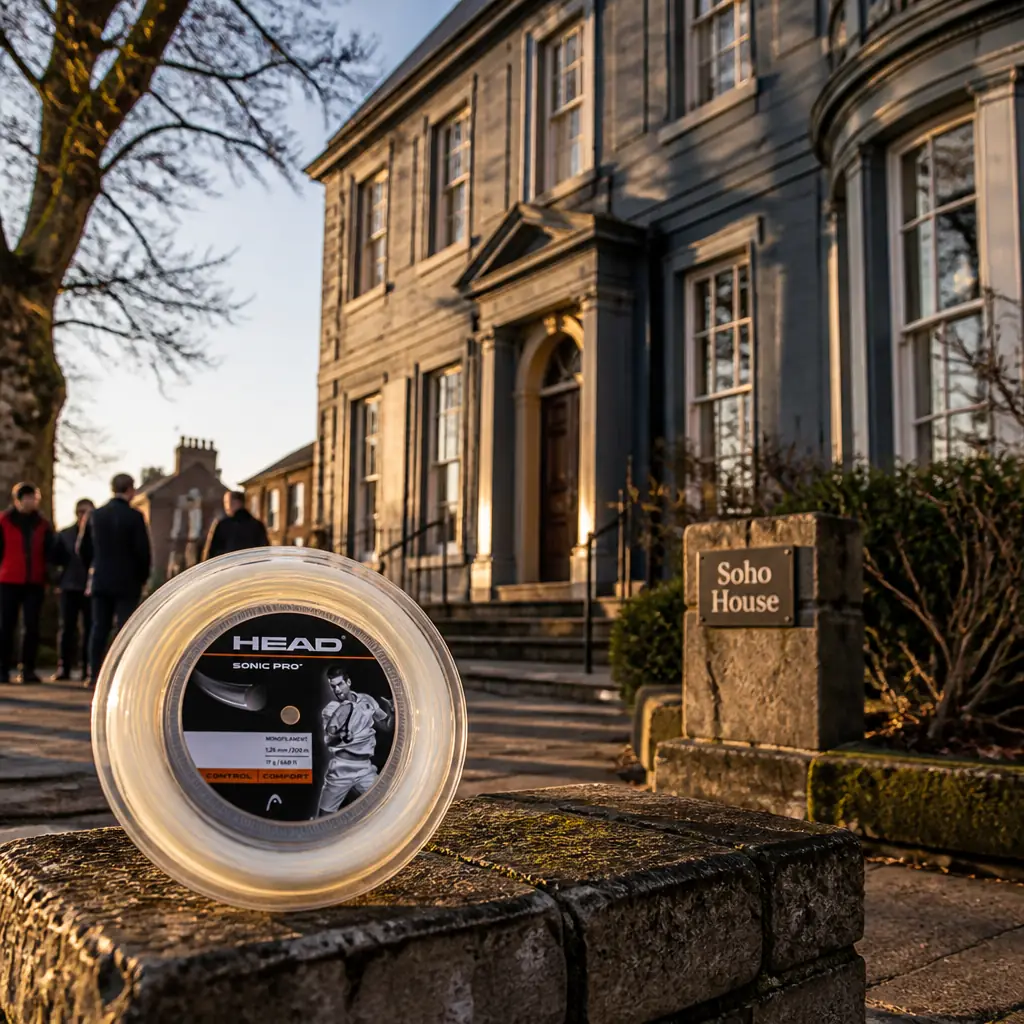
Soho House
Head Sonic Pro 17g Tennis String Reel: Lot one, Georgian house, slate-grey front, Handsworth, do I hear an opening bid. Matthew Boulton's own residence, manufacturer, and from the 1760s the finest minds in England gathering in this room under the name the Lunar Society, industrialists, chemists, engineers, all in one parlour, going once, going twice, and WHY the Lunar Society, why the moon, why that name? Because they met at the full moon, so there would be light enough to ride home without being robbed. That is the reason. The cleverest men in England, scheduling by moonlight. Steam heating in the house as well, very early, very rare, seldom comes up. Sold.
Thinner is not weaker, it is more expressive. I say that about a rind and I say it about a string, and in both cases people nod politely and then buy the thick one anyway.
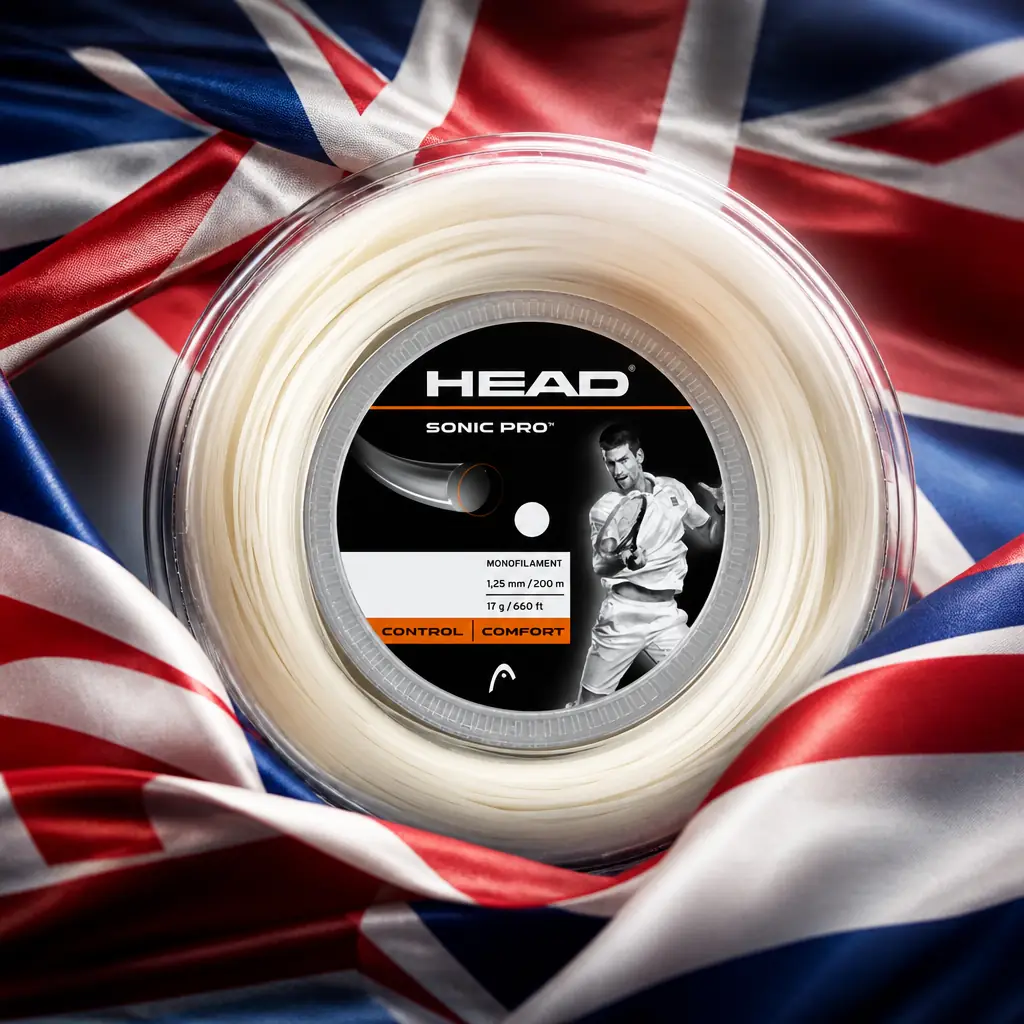
Head Sonic Pro in 17 gauge is 1.25 mm of firm co-polyester monofilament on a 660-foot (200 m) reel — around sixteen racquets, so this is the counter version, the stringer's version.
Going down from 16 to 17 gauge costs you durability and buys you feel and bite: a thinner string sinks further into the ball, grabs more of it, and lets you shape a heavy ball at a tension you can actually live with. It is still a control string. It will not hand you free power and it does not pretend to.
Drop five to ten percent off your usual synthetic tension and it comes alive.
Birmingham made its name out of small precise things, so it understands the argument.
We begin at Soho House in Handsworth, Matthew Boulton's Georgian house, where from the 1760s a group of manufacturers and scientists met as the Lunar Society — so called because they met at the full moon, so there would be enough light to get home without being robbed or falling into a ditch. The cleverest men in England, and even they were nervous about the walk home.
Boulton had steam heating put into the place, remarkably early.
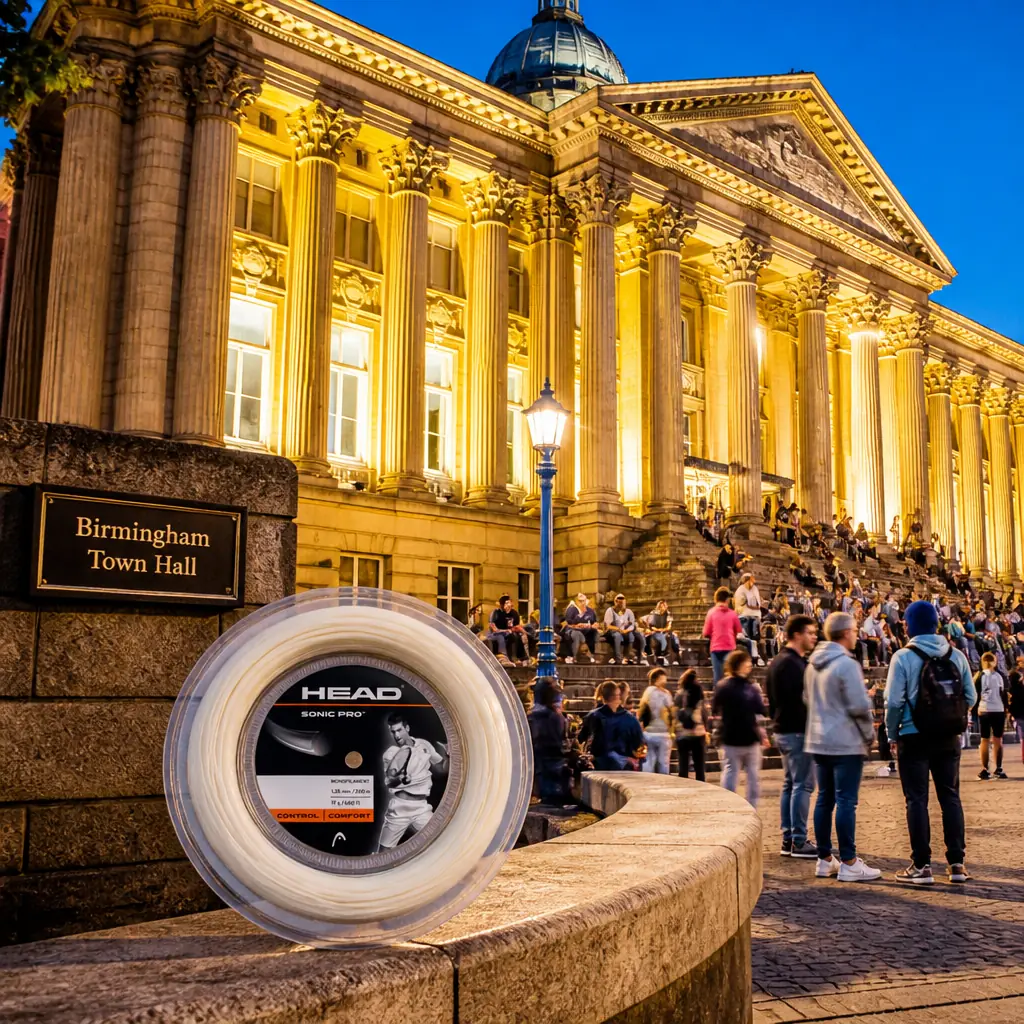
Then Birmingham Town Hall on Victoria Square, a Roman temple faced in Anglesey marble, opened in 1834 and built as a concert hall for the triennial music festival, which raised money for the hospital. In 1846 Mendelssohn conducted the very first performance of Elijah in that room — a world premiere, a foreign conductor, an enormous orchestra and chorus, a packed hall. It went brilliantly.
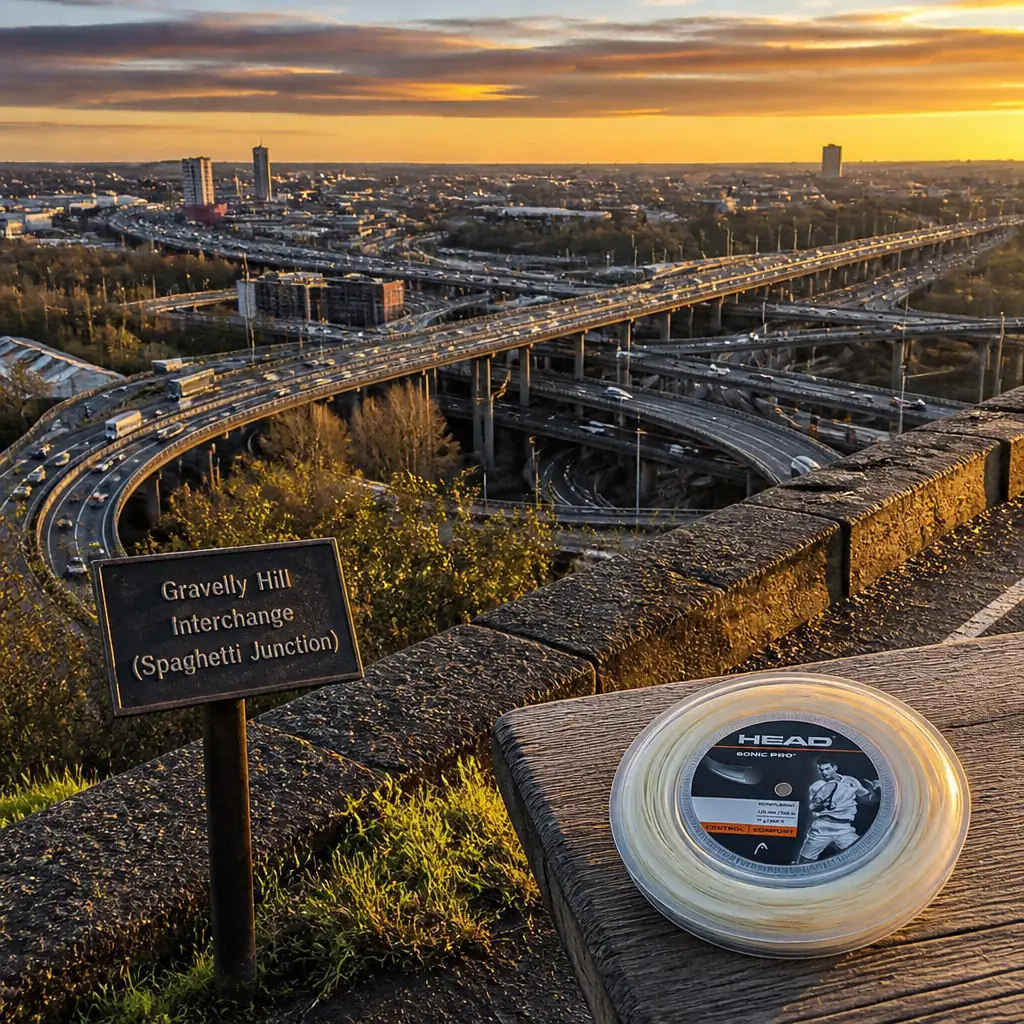
Then Gravelly Hill Interchange, which a newspaper sub-editor nicknamed Spaghetti Junction before it had even been built. It opened in 1972: five levels of road on hundreds of concrete columns, and underneath all of it two rivers, a tangle of canals and a railway, everything crossing everything. You can walk the towpath beneath it in the dark with the motorway overhead, and people do that voluntarily.
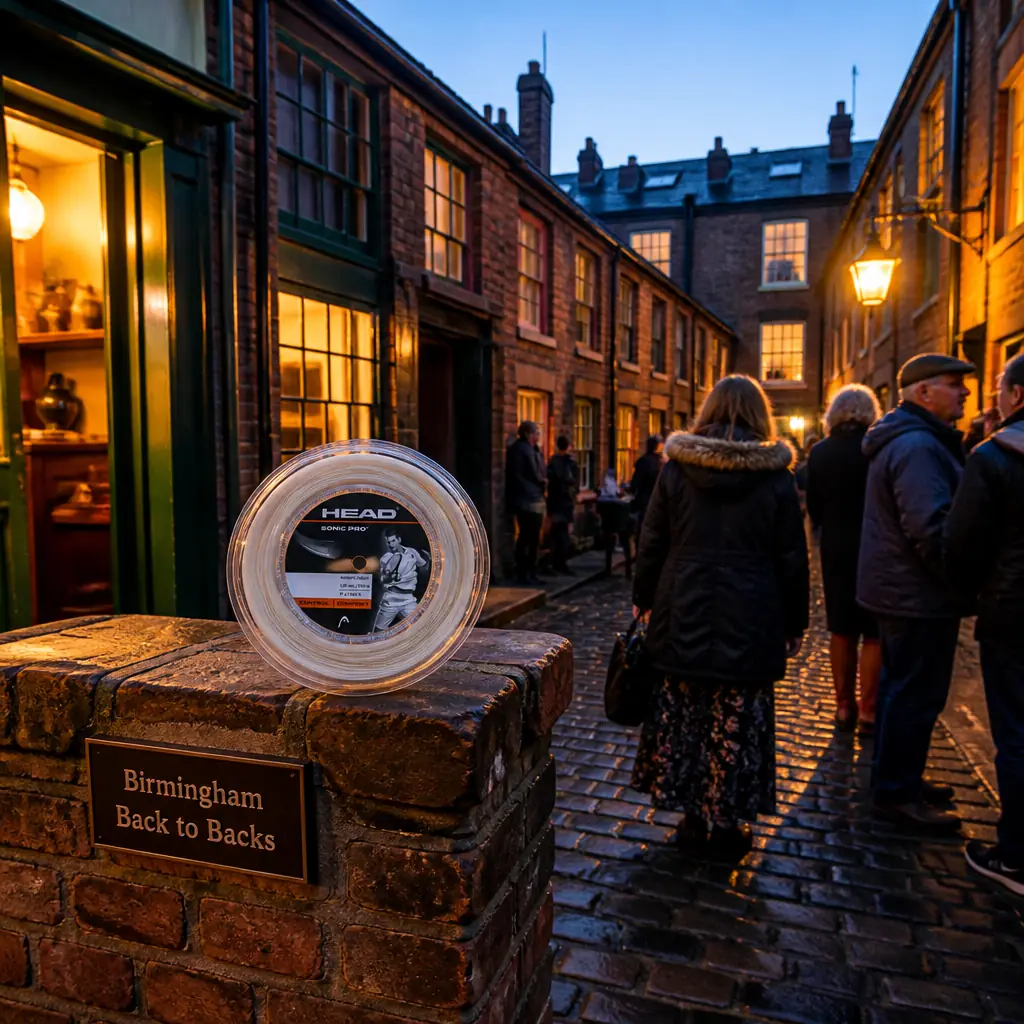
And we finish at the Birmingham Back to Backs on Hurst Street, the last surviving court of back-to-back houses in the city, entered through a narrow tunnel off the street. Houses built literally back onto one another, one room per floor, sharing a wall and a yard and a single privy for the whole court, with families of ten in them, lived in until the 1960s.
The National Trust restored them and admits people in timed groups.
You will cut off this reel everywhere from an indoor hall in Birmingham in February to a grass court at Edgbaston in June, and by the way, it is also perfect for a long lunch in the Jewellery Quarter, where everything sold is small, precise, and worth understanding before you buy it.
Buy on Amazon